Would Labor be supporting this war if it were in opposition?
- Written by: Michelle Grattan, Professorial Fellow, University of Canberra
When Canadian Prime Minister Mark Carney addressed federal parliament on Thursday his well-crafted speech had one gaping hole. It did not mention the huge issue dominating world attention – the United States-Israeli strikes on Iran and the subsequent ever-widening conflict that has engulfed the region.
Both Carney and Anthony Albanese were quick to back the action at the weekend. But their endorsements would have been given reluctantly. Despite Australia and Canada being close American allies and members, with the US, of the Five Eyes intelligence sharing agreement, neither leader was accorded any prior notice of the attack.
Elaborating after his initial reaction, Carney said: “we took a position because we view the nuclear threat and the export of terrorism of Iran over decades as one of the gravest threats to international peace and security. In that limited sense we supported that aspect. That is not a blank cheque. That is not us participating.”
Albanese has been equally anxious to keep a distance while providing backing. He has refused, for example, to be drawn into the debate about the strikes seeming to flout international law.
Rewind to 2003 and the Iraq war. Labor was in opposition and came out strongly against the action. Albanese said[1] at the time: “we do need regime change in some places of the world – it would certainly be good thing in Iraq – but it should be brought about peacefully”.
We might ask: if Labor were in opposition now, would it be against the American-Israeli action? Quite possibly.
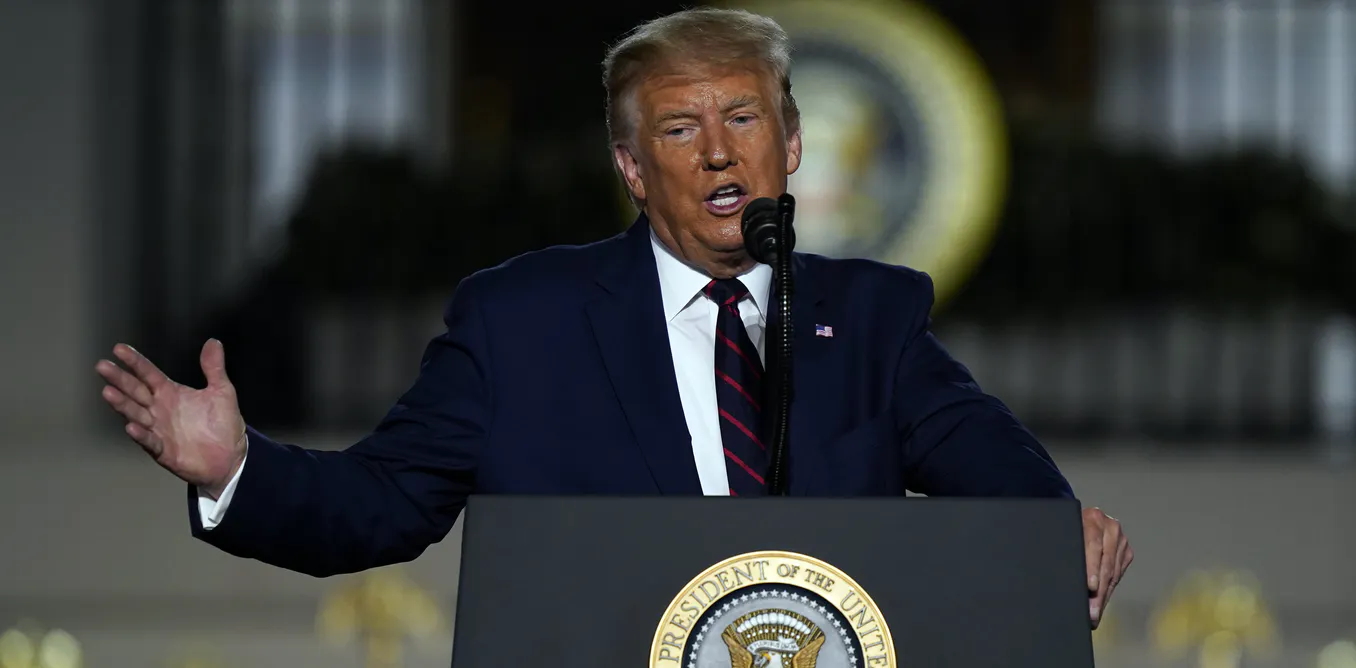
In power, however, Albanese would have judged his government had no viable choice but to back Donald Trump’s action.
Critics argue that, given the nature of the Trump administration, Australia should unwind its alliance with the US. The Albanese government rejects that view as not in Australia’s long term interests – even if it were practical, given the now-advanced integration of our defence forces, to say nothing of AUKUS.
When Albanese finally secured a meeting with the US President last year, he established what seemed a reasonable rapport.
(Of course this can disappear in an instant, as British Prime Minister Keir Starmer found this week. When Starmer didn’t cooperate with Trump’s wishes in the Middle East conflict Trump turned nasty, saying, “This is not Winston Churchill that we’re dealing with”.)
In deciding his government’s stand on the US-Israeli action, Albanese would have been mindful of not harming the relationship he has established. An angry Trump could lash out – as he did against Spain. Trump declared “we’re going to cut off all trade with Spain” after that country said it would not allow the US to use jointly-run air bases in Spain for the Iran operation.
Albanese knew quiescent caucus members would suck up any doubts they had about backing the war. Politically, the main issue the government has had to cope with is some criticism of whether it has been doing enough to help stranded Australians get home.
As petrol prices started to rise – a hot button for the average person – Treasurer Jim Chalmers, who received some good news this week with a small uptick in Australia’s growth, quickly turned his attention to the economic implications of the conflict, amid work on the May 12 budget.
“The full consequences of this conflict are uncertain, but they’re likely to be substantial,” Chalmers said. “We already had challenges in our economy with inflation and global economic uncertainty, and what we’re seeing in the Middle East will make those challenges harder rather than easier, and this will be a key focus of the budget.”
Independent economist Chris Richardson’s judgement is that the conflict will be “a small economic negative and a smaller budget positive”.
“Conflict in the Middle East leads to spikes in both uncertainty and energy prices,” Richardson said in a social media post.
“Both of those will lower world growth, though perhaps not much.
"They’ll also drag on the Australian economy, though we do get a couple of offsets. The weaker world will weigh on industrial commodity prices, such as iron ore. But there are boosts underway to both energy commodities such as gas (where we are big producers) and fear commodities such as gold (ditto).
”[In net terms] that leaves the Australian economy feeling some pain (growth and jobs both a tad weaker), while still adding to overall national income (income from gas and gold both higher). The Australian economy is running faster than it can sustain right now, so a mild growth negative isn’t much of a problem.“
The new war has predictably worsened the fraying of social cohesion we’ve seen since 2023.
There was celebration among the local Iranian community, who welcomed the US-Israel strikes and fervently hope the conflict will lead to regime change.
But some mosques held or planned memorials for Iran’s slain Ayatollah Ali Khamenei. New South Wales premier Chris Minns strongly condemned them. That invited an extraordinary blast from the Liberal mayor of Liverpool Ned Mannoun who accused Minns of having a "fetish with attacking the Islamic community”.
There were calls for funding to be halted to Muslim bodies involved in the memorials. A $670,000 grant to a Melbourne organisation was cancelled[2].
Weeks before, Minns had cancelled the premier’s Iftar dinner. The state government said this was after consultation with Muslim community leaders. The Australian Federation of Islamic Councils this week said[3] the decision “reflects the growing breakdown in the relationship between the Minns Government and the Muslim community” in the state.
“The reality is that the event would likely have faced a significant boycott from community leaders and organisations, which speaks volumes about the depth of frustration within the community,” the federation said.
Minns, questioned about police last month moving on praying Muslims, this week admitted to a “strained” relationship with the Muslim community.
“We want to rebuild the relationship, not just with me personally or the government or the Labor party, but with the civic institutions […] I don’t want to be in a situation where I’m antagonising the Muslim community, particularly during Ramadan.”
The sentiment is right, but overseas and local events have become wrecking balls for social harmony, and there are no obvious answers for repairing the damage.
References
- ^ said (parlinfo.aph.gov.au)
- ^ was cancelled (www.abc.net.au)
- ^ Islamic Councils this week said (afic.com.au)