


Albanese’s backflip on royal commission is a humiliating own goal
- Written by: Michelle Grattan, Professorial Fellow, University of Canberra
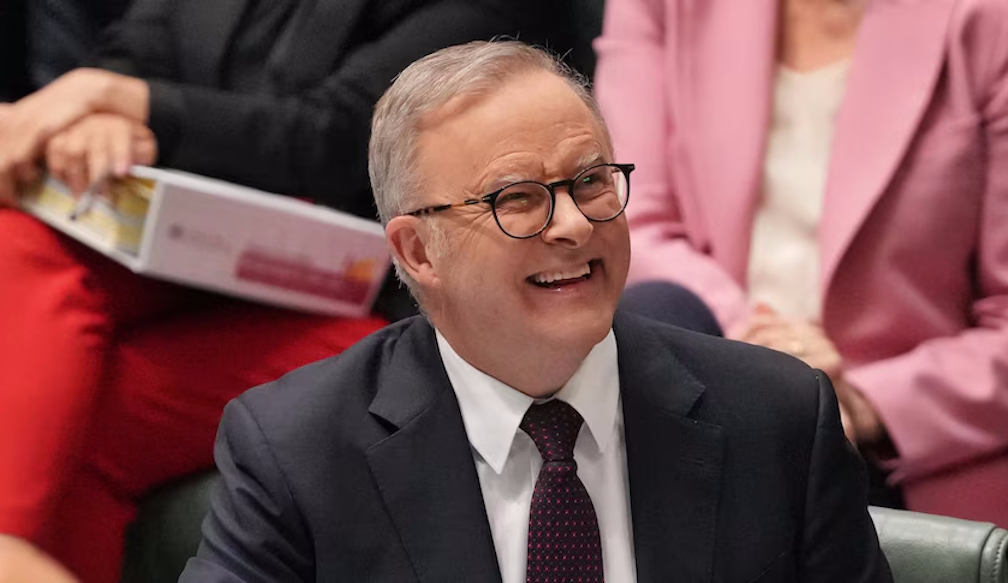
Prime Minister Anthony Albanese prides himself with being in tune with the public mood. But in holding out for weeks against a royal commission into antisemitism he misjudged that mood, making Thursday’s backdown on his hardline opposition a humiliation for him.
He knew public feeling. In a pre-Christmas Resolve poll, 48% supported a royal commission. Only 17% opposed, with 34% unsure or neutral.
Unsurprisingly, Albanese is not admitting he was wrong, putting the most positive spin on his retreat. The government had listened, he said. He also sought to give the impression the royal commission announcement was part of a deliberate process, coming at the back-end of a series of other actions. And he’d wanted to have all the detail in place, including the commissioner chosen and terms of reference worked out, before an announcement.
Albanese has absolutely (finally) reached the right decision. But leaders should be held accountable, so it’s important to recall the reasons he’d been so categorical about in earlier maintaining this was not the right course.
A long-running commission would slow the response to the Bondi massacre, he said. He insisted the inquiry being undertaken by former ASIO boss Dennis Richardson into the performance of the intelligence and security agencies, plus the planned toughening of federal hate speech laws, the national cabinet’s action on gun reform, and implementation of special envoy Jillian Segal’s recommendations on combating antisemitism, were enough.
Anyway, he argued, the New South Wales government had declared it would set up a royal commission and the federal government would cooperate with that.
Also, he feared a royal commission would put further strains on social cohesion.
Now Albanese says the problems have been overcome or subsumed and the commission is required. It will only last just under a year, reporting by the anniversary of the December 14 Bondi attack. The Richardson inquiry will be rolled in, with its original April reporting date intact. The commission won’t interfere with anything else being done. A commission that could have undermined social cohesion is now seen as needed to help build social cohesion.
Anyway, Albanese says, the planned NSW royal commission (abandoned after the federal announcement) would have amounted to a national royal commission, given federal cooperation had been promised.
Albanese would have saved himself much grief if he had announced a federal royal commission before Christmas when NSW Premier Chris Minns foreshadowed that he would establish a state one.

Instead, the prime minister waited until his situation had become politically untenable. A swell of public opinion, combined with enormous pressure from the families of Bondi victims and the Jewish community generally, a campaign of public statements from notables ranging from eminent lawyers to big sporting names, and the public raising of some voices (although still very few) within Labor, meant Albanese could hold out no longer.
He has picked respected former High Court judge Virginia Bell to conduct the commission. Bell previously was asked by the Albanese government to look into former Prime Minister Scott Morrison’s multiple ministries during COVID – her report was scathing[2].
Some in the Jewish community, including former Liberal Deputy Leader Josh Frydenberg, did not want Bell. Although her integrity was not in question, there was a concern she was Labor-friendly. But now Frydenberg and other critics have got behind her.
Her terms of reference are broad:
-
Tackling antisemitism by investigating the nature and prevalence of antisemitism and examine key drivers in Australia, including religiously motivated extremism.
-
Making recommendations to enforcement, border, immigration and security agencies to tackle antisemitism.
-
Examining the circumstances surrounding the Bondi Beach terrorist attack in December.
-
Making recommendations to strengthen social cohesion in Australia and countering the spread of ideologically and religiously motivated extremism in Australia.
Critics have questioned whether the inquiry will properly scrutinise the federal government’s efforts to combat antisemitism in the last two years. But the terms of reference should enable that.
The opposition, which has consistently called for a royal commission, is being being cautious in its response. Opposition Leader Susan Ley says the commission is a victory for advocacy; she hasn’t promised the opposition will hold its criticism of the government on antisemitism now the inquiry is underway. The opposition (incidentally facing its own internal divisions over gun reforms) wanted a three-person commission, including a commissioner from the Jewish community. Ley says the inquiry must “reach into every quarter where antisemitism is present”.

This inquiry will be a vastly tougher job for Bell, given the enormous scope of the issue, than the simple probe she did into Morrison’s behaviour.
She will be working very fast on a hydra-headed issue. It will take her everywhere, from judgements about academic freedom and free speech to how an immigrant nation handles the integration of its diverse arrivals, from the dangers of foreign interference to the preservation of religious freedoms, from the world of culture to the nature of Australian values.
The royal commission’s title embraces “antisemitism and social cohesion” – the latter is the glue that must hold together our multicultural society. That can be elusive at best, and easily weakened by external and internal pressures.
Royal commissions can start in one place and end in several vastly different ones. Some might remember the royal commission into the painters and dockers in the 1980s[4]. What started as an investigation of a crime-infested union ended by exposing industrial scale tax evasion, the notorious “bottom of the harbour” scheme, with companies asset-stripping to get around tax liabilities.
A royal commission can open a Pandora’s box – and that can be its virtue.
References
- ^ Bianca De Marchi/AAP (photos.aap.com.au)
- ^ her report was scathing (www.ag.gov.au)
- ^ Paul Miller/AAP (photos.aap.com.au)
- ^ in the 1980s (en.wikipedia.org)










