Thunderstorms are noisily kicking off summer in NZ – what’s driving them?
- Written by: James Renwick, Professor of Physical Geography (Climate Science), Te Herenga Waka — Victoria University of Wellington
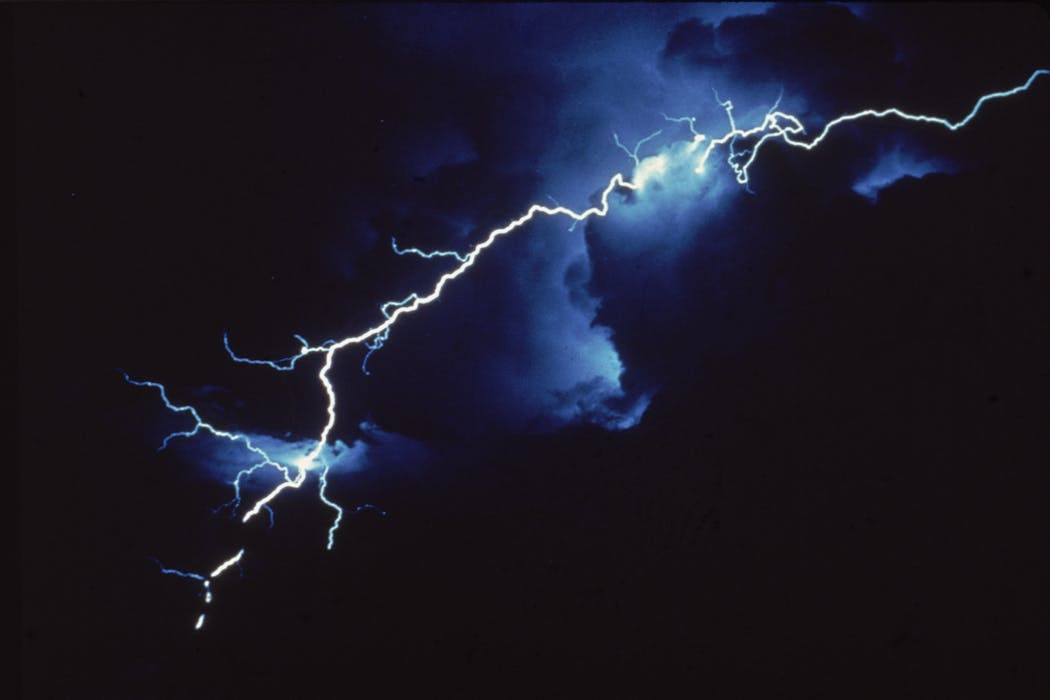
The rumble of thunderstorms across the country this week is a noisy reminder that summer is arriving – and with it, the mix of heat, humidity and unstable air that fuels these bursts of wild weather.
Strolling to the Meteorological Society of New Zealand’s annual conference[1] in Hamilton this morning, I could sense this atmospheric shift about me.
These early storms sit in a transition zone, where strong daytime heating combines with lingering spring volatility. Put the ingredients together and thunderstorms can form readily.
The influence of La Niña[2], now present in the tropical Pacific, can also provide northern parts of the country with background conditions that make for heightened mugginess, heavy downpours and thunderstorm activity.
But this is a weaker event than the La Niña summers earlier in the decade – which helped set the stage[3] for Cyclone Gabrielle and the Auckland Anniversary floods – and it may well fade by season’s end[4].
Sea surface temperatures, however, have recently increased sharply[5], with widespread and abnormally warm marine heatwave conditions[6] returning to our coastal waters.
This ocean heat is likely to last through summer, with the potential to boost evaporation and humidity, and add energy to the lower atmosphere. When weather systems arrive from the north, that extra moisture can drive heavier rain and more vigorous convection[7].
These conditions may point to a greater risk of significant rain events later in summer, especially for the North Island, with a normal or slightly elevated chance[8] of ex-tropical cyclone interactions.
In short: expect more heat, more humidity and occasional bursts of very heavy rain.
So how do thunderstorms like this week’s fit into the mix – and what does a warming climate mean for them?
How thunderstorms build their power
Thunderstorms[9] form when warm, moist air rises into cooler layers above.
As the air ascends, water vapour condenses into cloud droplets, releasing heat that adds buoyancy and lifts the air further. This fuels a strong up-and-down circulation inside the storm.
Within this turbulent environment, electrical charges separate. Collisions between droplets, ice particles and graupel (soft hail) build positive charges near the top of the cloud and negative charges near the base.
When the atmosphere can no longer insulate that imbalance, lightning discharges. The air around the lightning channel is heated to tens of thousands of degrees – hotter than the surface of the Sun – and the rapid expansion generates the shock wave we hear as thunder.
As impressive as this latest event has been – Metservice has counted more than 3,600 lightning strikes[10] since midnight, of which nearly 730 reached the ground – New Zealand’s thunderstorms are usually small by global standards, often measuring just a kilometre across.
Most are single convective cells, though they can occasionally line up into squall lines that bring intense local rain, strong winds and small tornadoes. Lightning deaths are extremely rare[11] here.
Climate change means more active weather
According to the World Meteorological Organisation[12], 2025 is likely to finish up as the world’s second or third warmest on record, with record greenhouse gas concentrations continuing to drive severe heatwaves, melt glaciers and warm oceans.
A warmer climate also means more energy and moisture in the atmosphere, making it easier for thunderstorms and heavy rain to develop when conditions allow.
Air holds about 7% more water vapour for every degree of warming[13], and when that moisture condenses, it releases heat that strengthens the storm’s updrafts. That draws in even more warm, moist air from below, allowing rainfall totals to exceed the 7% rule of thumb, especially in short, intense bursts.
NIWA (now part of Earth Sciences New Zealand) has estimated[14] that every degree of warming leads to a median 13.5% increase in hourly rainfall in a one-in-50-year event.
Atmospheric rivers[15] – long, narrow plumes of tropical moisture – are also expected to become more frequent and intense in a warmer climate and already drive many of our heaviest downpours.
Attribution studies[16], meanwhile, are increasingly showing the handprint of human-driven climate change. Scientists have found this made for more intense rainfall in the Canterbury and West Coast flood events in 2021[17], and during Cyclone Gabrielle in 2023[18].
This signal translates directly into losses: nearly a third of the damage from New Zealand’s 12 most costly flood events between 2007 and 2017 – about NZ$140 million – was directly attributed to climate change[19].
Yet, how a warming planet is likely to affect the frequency of thunderstorms themselves is still uncertain. International studies suggest increases in some regions, but the processes are complex and not yet well understood for New Zealand.
The broader picture, however, is straightforward: warmer seas and a warmer atmosphere mean more moisture, more energy in the system, and possibly more instability in the atmosphere. When thunderstorms do form, they have more to work with.
Weather systems like this week’s will come and go, but the wider, long-term trend is something we all need to be concerned about.
We are tipping the odds toward more intense downpours – and the challenge now is acting quickly enough to spare future generations a much warmer, wetter world.
References
- ^ annual conference (www.nzhsmsnzconference.co.nz)
- ^ La Niña (niwa.co.nz)
- ^ which helped set the stage (niwa.co.nz)
- ^ it may well fade by season’s end (niwa.co.nz)
- ^ recently increased sharply (niwa.co.nz)
- ^ marine heatwave conditions (niwa.co.nz)
- ^ convection (weather.metoffice.gov.uk)
- ^ normal or slightly elevated chance (niwa.co.nz)
- ^ Thunderstorms (niwa.co.nz)
- ^ counted more than 3,600 lightning strikes (www.1news.co.nz)
- ^ are extremely rare (www.rnz.co.nz)
- ^ According to the World Meteorological Organisation (wmo.int)
- ^ 7% more water vapour for every degree of warming (science.nasa.gov)
- ^ has estimated (environment.govt.nz)
- ^ Atmospheric rivers (niwa.co.nz)
- ^ Attribution studies (www.bodekerscientific.com)
- ^ the Canterbury and West Coast flood events in 2021 (www.sciencedirect.com)
- ^ during Cyclone Gabrielle in 2023 (agupubs.onlinelibrary.wiley.com)
- ^ was directly attributed to climate change (link.springer.com)