The drought is back – we need a new way to help farmers survive tough times
- Written by: Linda Botterill, Visiting Fellow, Crawford School of Public Policy, Australian National University
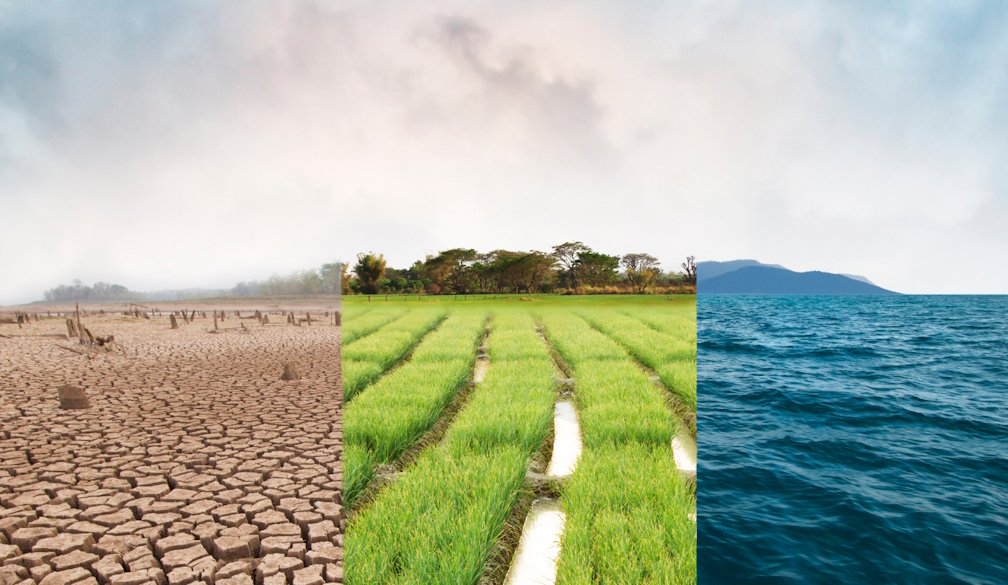
Australia in 2025 is living up to Dorothy McKellar’s poetic vision of a country stricken by “drought and flooding rains[1]”.
The clean up is underway from the deadly floods[2] in the Hunter and mid-north coast regions of New South Wales. At the same time, large swathes of Victoria, South Australia and Tasmania are severely drought affected due to some of the lowest rainfall[3] on record.
Do we have the right support arrangements in place to help farmers and communities survive the current dry period?
Or is there a better way to help primary producers through the tough times, which are predicted to become more frequent and severe under climate change?
Managing risk
Drought is not a natural disaster – at least not according to Australia’s National Drought Policy[4]. In 1989, drought was removed from what are now known as the Natural Disaster Relief and Recovery Arrangements[5].
The decision was made for several reasons, including the high level of expenditure on drought relief in Queensland. The federal finance minister at the time, Peter Walsh, suggested the Queensland government was using[6] the arrangements as a “sort of National Party slush fund to be distributed to National Party toadies and apparatchiks”.
The more considered reason was that our scientific understanding of the drivers of Australia’s climate, such as El Niño, suggested drought was a normal part of our environment. Since then, climate modelling[7] points to droughts becoming an even more familiar sight in Australia as a result of global warming.

So the focus of drought relief shifted from disaster response to risk management.
Building resilience
The National Drought Policy[9] announced in 1992 stated drought should be managed like any other business risk.
Since then, the language of resilience has been added to the mix and the government lists three objectives[10] for drought policy:
- to build the drought resilience of farming businesses by enabling preparedness, risk management and financial self-reliance
- to ensure an appropriate safety net is always available to those experiencing hardship
- to encourage stakeholders to work together to address the challenges of drought.
Since 1992, various governments have introduced, and tweaked, different programs aimed at supporting drought-affected farmers.
The most successful program is the Farm Management Deposits Scheme[11]. This has accumulated a whisker under A$6 billion[12] in farmer savings, which are available to be drawn down during drought to support farm businesses.
Others have come and gone – for example, the much-criticised Exceptional Circumstances Program[13].
More help needed
In 2025, the federal government is using the Future Drought Fund[14] to invest $100 million per year to promote resilience. It also offers support through the Farm Household Allowance[15] and concessional loans for farms and related small businesses.
Apart from the Farm Management Deposit Scheme and the Farm Household Allowance, these programs do not offer immediate financial assistance to the increasing number of farmers across southern Australia being impacted by drought. If the drought worsens, it is likely there will be increasing calls for greater support.
This provides the government with a dilemma: it is already investing significantly in the risk and resilience approach to drought, but politically, it is hard to resist cries for help from farmers who are a highly valued[16] group in our community.
A better way?
There is a solution available to government to improve support. It can be done through the provision of “revenue contingent loans” for drought-affected farmers. Financial support would be available to farmers when they need it, consistent with the risk management principles underpinning the national drought policy.
Our detailed modelling[17], extending now over 25 years, shows compellingly that revenue-based loans would mean taxpayers spending less on drought arrangements. But the assistance compared with other forms of public sector help would be greater.

Capacity to repay would be the defining feature of the scheme. A revenue contingent loan is only paid down in periods when the farm is experiencing healthy cash flow. If a farm’s annual financial situation is difficult, no repayments are required.
These loans would also remove foreclosure risk associated with an inability to repay when times are tough. Loan defaults simply can’t happen, a feature which also takes away the psychological trauma associated with the fear of losing the property due to unforeseen financial difficulties.
Good policy
These benefits would address governments’ main motivation with drought policy, which is risk management. That is because repayment concerns and default prospects would be eliminated. With farming, in which there is great uncertainty, these are very significant pluses for policy.
Revenue contingent loans are a proper risk management financial instrument that requires low or no subsidies from government. They would complement the Farm Management Deposit Scheme and be an effective replacement for the concessional loans currently on offer.
A win-win for farmer and taxpayer, alike.
References
- ^ drought and flooding rains (www.dorotheamackellar.com.au)
- ^ deadly floods (www.theguardian.com)
- ^ lowest rainfall (www.bom.gov.au)
- ^ National Drought Policy (www.agriculture.gov.au)
- ^ Natural Disaster Relief and Recovery Arrangements (www.disasterassist.gov.au)
- ^ using (parlinfo.aph.gov.au)
- ^ climate modelling (iceds.anu.edu.au)
- ^ Supplied/AAP (photos.aap.com.au)
- ^ National Drought Policy (www.agriculture.gov.au)
- ^ three objectives (www.agriculture.gov.au)
- ^ Farm Management Deposits Scheme (www.ato.gov.au)
- ^ A$6 billion (www.agriculture.gov.au)
- ^ Exceptional Circumstances Program (www.pc.gov.au)
- ^ Future Drought Fund (www.agriculture.gov.au)
- ^ Farm Household Allowance (www.servicesaustralia.gov.au)
- ^ highly valued (doi.org)
- ^ modelling (onlinelibrary.wiley.com)
- ^ Mick Tsikas/AAP (photos.aap.com.au)