

Did the Anthropocene start in 1950 – or much earlier? Here's why debate over our world-changing impact matters
- Written by Noel Castree, Professor of Society & Environment, University of Technology Sydney
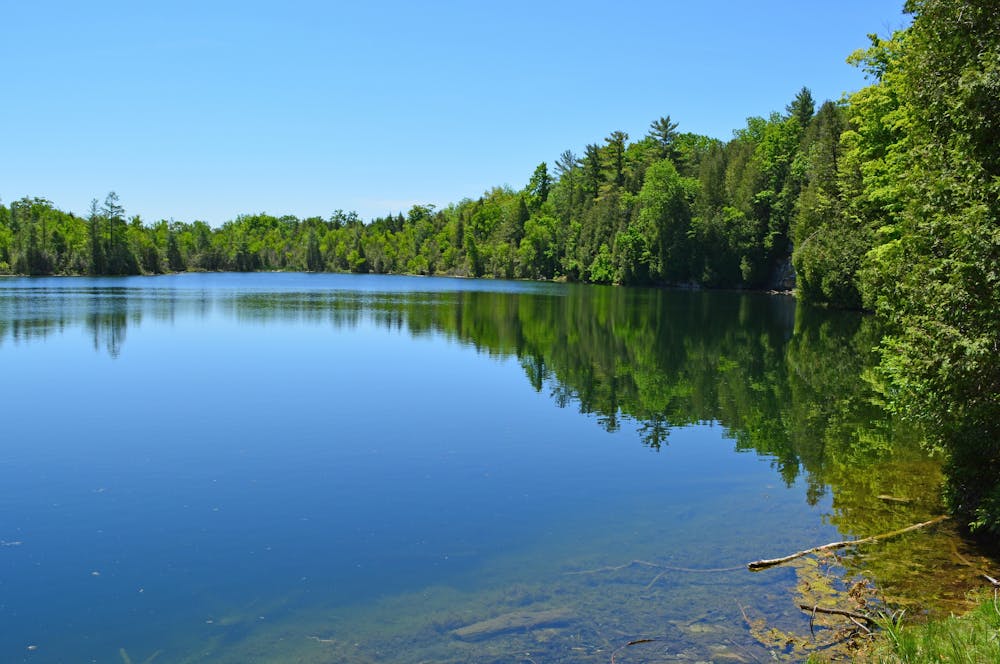
It made world news last week when a small lake in Canada was chosen as the “Golden Spike[1]” – the location where the emergence of the Anthropocene is most clear. The Anthropocene is the proposed new geological epoch defined by humanity’s impact on the planet.
It took 14 years of scouring the world before the geoscientists in the Anthropocene Working Group[2] chose Lake Crawford – the still, deep waters of which are exceptionally good at preserving history[3] in the form of sediment layers. Core samples from the lake give us an unusually good record of geological change, including, some scientists believe, the moment we began to change everything. For this group, that date is around 1950.
But what didn’t get reported was the resignation of a key member, global ecosystem expert Professor Erle Ellis, who left the working group and published an open letter[4] about his concerns. In short, Ellis believes pinning the start of our sizeable impact on the planet to 1950 is an error, given we’ve been changing the face of the planet for much longer.
The other working group scientists argue 1950 is well chosen, as it’s when humans started to really make their presence felt through surging populations, fossil fuel use and deforestation, amongst other things. This phenomenon has been dubbed the Great Acceleration[5].
The disagreement speaks to something vital to science – the ability to accommodate dissent through debate.
What’s the debate about?
Would the public embrace the idea that our actions are making the world almost wholly unnatural? The answer, of course, depends on the quality of the science. Since most people aren’t scientists, we rely on the scientific community to hash out debate and present the best explanations for the data.
That’s why Ellis’s departure is so interesting. His resignation letter is explosive:
It’s […] [im]possible to avoid the reality that narrowly defining the Anthropocene […] has become more than a scholarly concern. The AWG’s choice to systematically ignore overwhelming evidence of Earth’s long-term anthropogenic transformation is not just bad science, it’s bad for public understanding and action on global change.
It’s not that Ellis thinks the way we live is problem-free. The central issue, in his view, is that there’s powerful evidence of much earlier global-scale impacts caused by pre- and proto-capitalist societies.
For instance, as Earth systems experts Simon Lewis and Mark Maslin have shown[6], the violent Portuguese and Spanish colonisation of Central and South America indirectly lowered atmospheric carbon dioxide levels. How? By killing millions of indigenous people and destroying local empires. With the people gone, the trees regrew during the 17th century and covered the villages and cities[7], expanding the Amazon rainforest.
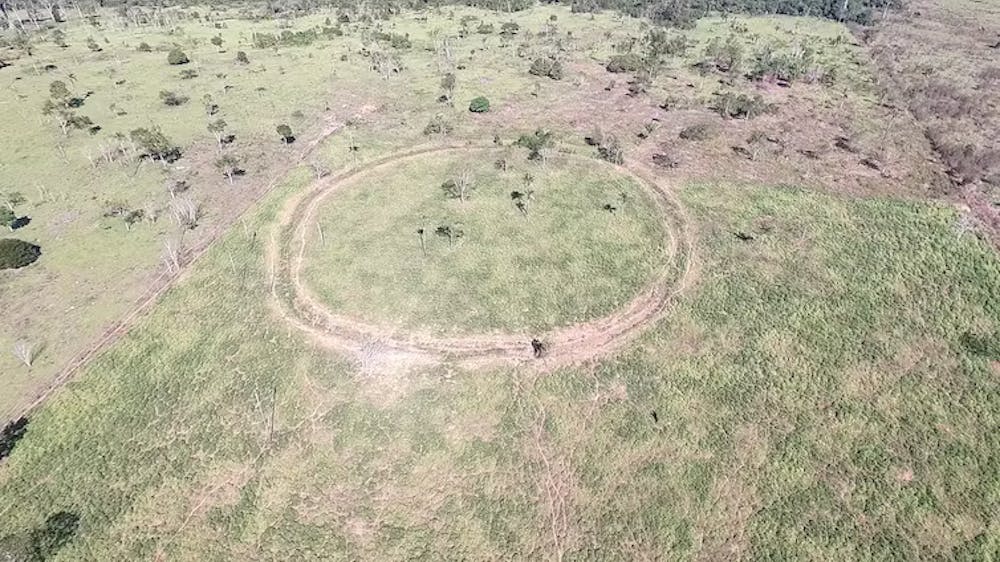 Villages and towns dotted many parts of the Amazon before colonisation. This image shows what’s left of a village.
University of Exeter, CC BY[8]
Villages and towns dotted many parts of the Amazon before colonisation. This image shows what’s left of a village.
University of Exeter, CC BY[8]
Why we should welcome honest disagreement in science
Scientists have been debating in recent years over whether the Anthropocene should be deemed an “epoch” with a specific start date, or else an historically extended “event” caused by different human practices in different places, such as early agriculture, European colonisation and the spread of European and North American capitalism worldwide.
Ellis’ resignation stems from this debate. He’s not alone – other group members and experts have also worked to refute[9] the epoch idea.
As philosopher of science Karl Popper and others have argued, productive scientific debate can only occur if there’s space for dissent and alternative perspectives. Ellis clearly believes the Anthropocene group has gone from debate to group think, which, if true, would challenge the free exchange at the heart of science.
Read more: A Canadian lake holds the key to the beginning of the Anthropocene, a new geological epoch[10]
Longer term, a compromise may well be reached. If the Anthropocene group were to shift tack and label the start of the epoch a multi-century event (a “long Anthropocene”), we’d still benefit from having labels for periods such as our current one where the human impact ramped-up significantly.
One issue with such tensions is what happens when they hit the media. Consider Climategate, the 2009 incident in which an attacker stole emails from a key climate research centre in the United Kingdom. Bad faith actors seized on perceived issues in the emails and used them[11] to claim anthropogenic climate change was fabricated. The scientists at the heart of the controversy were cleared of wrongdoing, but the whole affair helped seed doubt and slow our transition away from fossil fuels.
The risk here is that if the public gets only a glancing, oversimplified view of these debates, they may come to doubt the abundant proof of our impact on Earth. It falls to journalists and science communicators to convey this accurately.
As for our trust in science, the case for declaring the Anthropocene will be subject to very close scrutiny and may not be ratified by the International Commission on Stratigraphy, the body responsible[12] for separating out deep time[13] into specific epochs.
Stratigraphers such as Lucy Edwards have argued[14] that an emerging epoch isn’t a fit subject for stratigraphy at all because all the evidence cannot, by definition, be in.
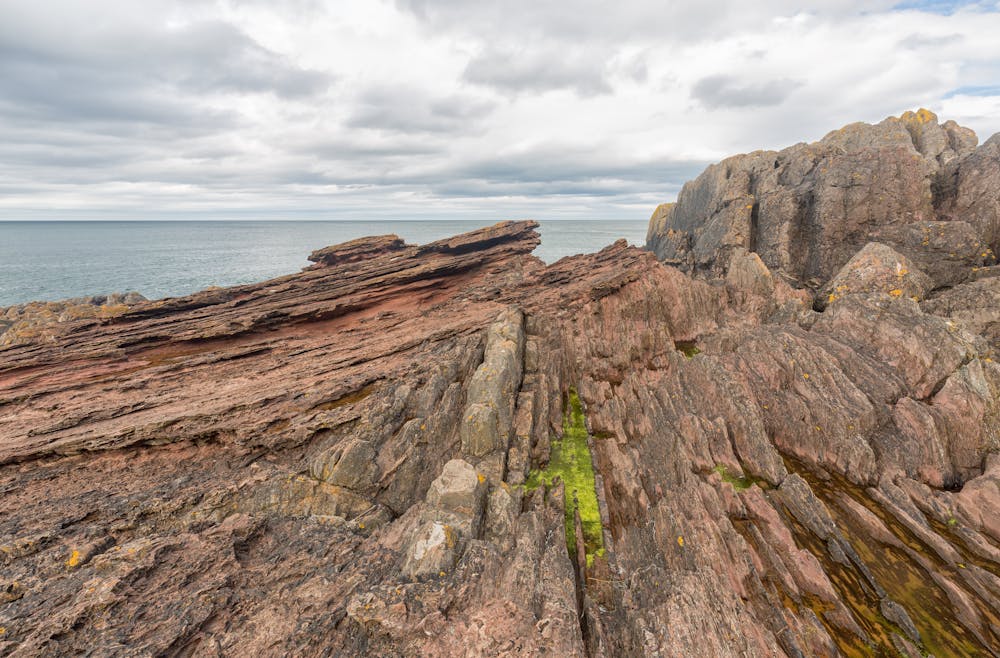 This unassuming rock formation in Scotland is the site of a famous geological discovery, where James Hutton first realised the boundary between two types of rock separated geological epochs.
Shutterstock
This unassuming rock formation in Scotland is the site of a famous geological discovery, where James Hutton first realised the boundary between two types of rock separated geological epochs.
Shutterstock
What does this tension mean for the Anthropocene?
The epoch versus event debate doesn’t mean we’re off the hook in terms of our impact on the planet. It is abundantly clear we have become the first species in Earth’s long history to alter the functioning of the atmosphere, cryosphere, hydrosphere, biosphere and pedosphere (the soil layer) all at once and very quickly. Species such as cyanobacteria or blue-green algae had huge impact[15] by adding oxygen to the atmosphere, but they did not affect all spheres with the speed and severity we have.
While we did not set out to alter the planet, its implications are profound. Humans are not only altering the climate but the entirety of the irreplaceable envelope sustaining life on the only planet known to have life. This is a complex story and we should not expect science to simplify it for political or other reasons.
Read more: Why the Anthropocene began with European colonisation, mass slavery and the 'great dying' of the 16th century[16]
References
- ^ Golden Spike (www.vox.com)
- ^ Anthropocene Working Group (quaternary.stratigraphy.org)
- ^ preserving history (www.nytimes.com)
- ^ open letter (anthroecology.org)
- ^ Great Acceleration (www.igbp.net)
- ^ have shown (theconversation.com)
- ^ villages and cities (www.discovermagazine.com)
- ^ CC BY (creativecommons.org)
- ^ worked to refute (onlinelibrary.wiley.com)
- ^ A Canadian lake holds the key to the beginning of the Anthropocene, a new geological epoch (theconversation.com)
- ^ used them (www.theguardian.com)
- ^ body responsible (stratigraphy.org)
- ^ deep time (theconversation.com)
- ^ have argued (rock.geosociety.org)
- ^ huge impact (asm.org)
- ^ Why the Anthropocene began with European colonisation, mass slavery and the 'great dying' of the 16th century (theconversation.com)