



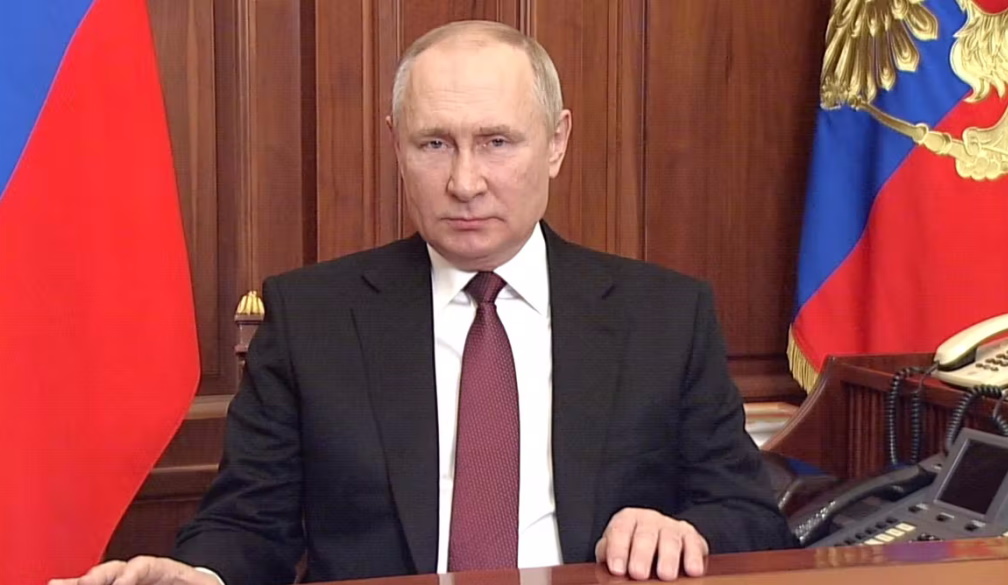
With the full-scale invasion of Ukraine, Vladimir Putin has overstepped an important line. The west sat by and did little when Russia invaded Georgia in 2008 and annexed Crimea in 2014. But the full-scale invasion of Ukraine that is currently underway is impossible to ignore. Putin’s actions and his justifications cast serious doubt over the possibility of any kind of credible diplomacy with Russia at this stage of the conflict.
The Russian president’s intentions have been crystal clear since his rambling speech on February 21 in which he talked of Russia’s “empire”, after which he recognised the breakaway republics of Donetsk and Luhansk as independent states. Now he is directing a “special military operation” in Ukraine, supposedly justified by threats to Russia from Ukraine. Diplomacy has failed to deter Putin and to pull Russia back from the brink. It is unlikely to be useful, or welcome, in the current situation.
What is needed now is a policy of containment and the reassurance of Nato and EU members. Russia needs to feel real deterrence against any further military escalation which brings home to Putin the cost of sustaining this adventurism. The latter would involve further increasing sanctions on Russia – including on Putin and his inner circle and their wider families – and everything that will support Ukraine militarily, but, for now at least, short of actual troop deployments by western countries.
It will also be important to cooperate, as much as possible, with China as part of this process. Relations between China and the west may not be at their warmest, but both sides share an interest in stability in the region where China has made significant investments through its Belt and Road Initative over the past decade. China has repeatedly balanced its support for Russian demands for a new European security order with an emphasis on the importance of respecting the sovereignty and territorial integrity of states.
Thus, it is by no means inevitable that China will offer a potential “lifeline” to Russia in terms of economic and financial support once western sanctions begin to bite, as well as by offering Putin political and diplomatic backing at the UN and in other regional and international forums. While it is unlikely that China will openly side with the west against Russia, it could play a vital role of pushing Russia towards a return to diplomacy out of self-interest, given its substantial investments in Ukraine.
Under Putin, Russia has also tried to reassert its great power status elsewhere –from Central Asia to the south Caucasus, from Syria to Libya and Mali. This gives the west potentially additional leverage to put pressure on Russia, drain its resources and make Putin’s military invasion of Ukraine unsustainable.
Security first
The question is, what should happen when we reach a stage at which diplomacy may once again be a useful tool to restore international peace and security? First, the issue will be about what format discussions with Russia might take. Given the complexity of the crisis, these would need to happen locally, between Russia and Ukraine, and more broadly, between Russia and the west.
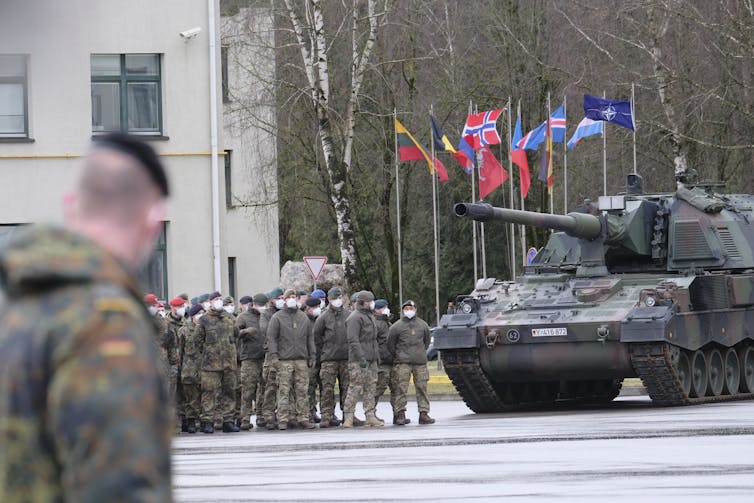
This is because humanitarian issues need to be addressed alongside the restoration of Ukraine’s sovereignty and territorial integrity and the establishment – or revitalisation – of mechanisms to prevent future crises from escalating into war. Such a process needs to recognize that the issues and stakes are much wider than Ukraine.
These discussions will not be possible in the short term. But in the medium to long term, there is no viable alternative to renewed diplomatic engagement. This is not to predict the success of future diplomacy, which will be difficult to achieve given the very different visions of possible endgames that the different players have at the moment. Instead, it is to recognise that diplomacy is a necessary mechanism to restore order from the current instability.
Restoring and sustaining international order
For Ukraine, the immediate concern is an end to the invasion and a stabilisation and de-escalation of the situation on its internationally recognised borders. Beyond that, maintaining the support of a united international stance of non-recognition of Russia’s land-grab in Crimea and Donbas is crucial.
Recovering from what will most likely become a protracted and damaging military confrontation on Ukrainian soil will put additional strain on Ukraine’s institutions and social fabric and will require broad international financial and technical support. In the long-term, restoration of its full sovereignty and territorial integrity needs to remain in focus.
For the west, containing Russia’s aggression and keeping the western alliances (EU and Nato) united and intact are the obvious key short-term objectives. With a longer-term focus, the restoration of a viable European (and international) security order needs to be achieved – this will involve managing the west’s broader security relationship with Russia.
By contrast, Putin – and this is where the challenge for diplomacy arises – will want to see an acceptance of the new status quo that he hopes will emerge. This would allow him the consolidation of his own Eurasian sphere of influence that keeps both the west and China at bay and establishes Russia as a third pole in a new tri-polar world order.
Will diplomacy achieve the miracle of working out an acceptable and sustainable compromise? Any answer to this question can only be speculative at this point. But what we do know – to some extent – is that much will depend on individual leaders. The “big three” – America’s Joe Biden, Xi Jinping of China, and Putin himself – will be the key to what comes next in diplomatic terms. But second-tier leaders, such as those at the helm of the EU, Germany, France, and the UK, will be critical to this dialogue as well.
It will also depend on the costs inflicted on Russia in response to its transgressions and whether these in turn create domestic pressures at home for Putin.
And diplomatically, it will depend on the effectiveness of the formats in which diplomacy will be conducted: both specific to the current crisis and more generally in relation to the future international order.
This article first appeared in TheConversation and is republished with permission









