Father's Day on a Budget vs Splashing Out: How Much Are Australians Really Spending?
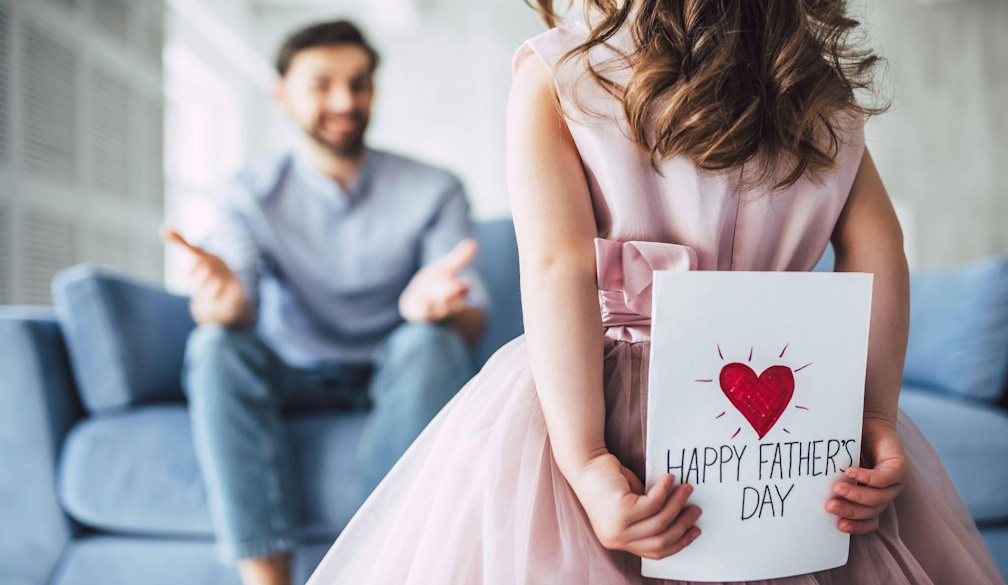
Every September, Australians face the same quiet dilemma. Dad says he doesn't want anything, the household budget says he might be right, and yet nobody actually wants to turn up to the family barbecue empty-handed. So what do we actually spend on the man of the moment, and does spending more even make for a better gift?
The numbers tell an interesting story. Research from the Australian Retailers Association in partnership with Roy Morgan found that around 4.7 million Australians spent a combined $720 million on Father's Day gifts in 2025, down $100 million on the year before as cost-of-living pressures continued to bite. Fewer people bought gifts, but here's the twist: those who did participate planned to spend more per person, averaging around $145 per gift-buyer, a jump of nearly 44 per cent on 2024.
In other words, Australia has split into two camps. Some households have pulled back on the occasion altogether, while others have decided that if they're going to mark the day, they're going to do it properly. Whichever camp you fall into this year, the good news is that a memorable Father's Day has never really been about the receipt. Whether you're browsing father's day gifts online or planning something homemade, the difference between a gift that lands and one that gathers dust comes down to thought, not spend.
What Australians actually buy
The gift categories barely move from year to year. Alcohol and food, clothing and footwear, grooming products and tech items consistently top the list, alongside experiences such as dinners or trips, and around 28 per cent of Australians plan to celebrate over a meal, whether at home or at a restaurant or café.
There's comfort in the classics, but there's also a reason so many Father's Day gifts end up forgotten in a drawer by October. A bottle of wine is consumed and gone. Socks are socks. The gifts that survive are usually the ones tied to the person rather than the occasion.
The case for keeping it cheap
If the budget is tight this year, you're in good company, and you're not shortchanging dad by spending less. Some of the most appreciated gifts cost almost nothing.
The homemade breakfast has endured for generations because it works. So does the handwritten card, especially from adult children who haven't written one since primary school. A printed photo of a moment he'd forgotten, framed from the discount shop, routinely beats gadgets ten times the price. Time is the other free gift that isn't really free: an afternoon helping him with a project, a walk, a long lunch where nobody checks their phone.
The budget approach has one rule. Cheap and thoughtful wins; cheap and generic doesn't. A five-dollar card with something real written inside it beats a fifty-dollar novelty mug with nothing behind it.
The case for splashing out
At the other end, there's a logic to the big-spend camp too. If Father's Day is one of only a couple of occasions a year the family gathers around dad, some households would rather make it count than spread thin gestures across the calendar.
The splurge gifts that justify themselves tend to share a trait: they get used constantly or kept forever. Quality over quantity is the theme. One good jacket instead of three average shirts. A proper tool he'll use for a decade instead of a drawer of gadgets. An experience, whether it's a hot laps day, a fishing charter or a weekend away, that becomes a story he retells for years.
Where big spending goes wrong is when the price tag does the emotional work. An expensive gift chosen in a hurry can feel strangely hollow, and dads, who are famously hard to read on gift day, notice more than they let on.
The middle path: personal beats pricey
Here's what both camps often miss: the strongest predictor of whether a gift lands isn't the amount spent, it's whether the gift could only belong to him.
This is where personalisation has quietly become one of the bigger shifts in Australian gifting. An engraved watch box, a customised BBQ set for the man who guards the grill, a beer glass marked with an in-joke only the family understands, or a keyring stamped with the date of a milestone. These items span every price point, which is exactly why they suit both the budget-conscious and the big spenders. A personalised gift under $30 can carry more weight than a generic one at $200, because it answers the question every dad silently asks when he unwraps something: did they actually think about me?
It also solves the perennial problem of the father who insists he wants nothing. He may genuinely not want more stuff. What he's rarely opposed to is evidence that his kids know him.
Making either budget work this September
Father's Day 2026 falls on Sunday 6 September, which leaves plenty of time to plan rather than panic-buy on the Saturday afternoon.
If you're keeping it lean: pool funds between siblings, prioritise a shared meal over an object, and put your effort into the words in the card. If you're spending up: buy one significant thing rather than several small ones, favour experiences and keepsakes over consumables, and personalise where you can so the money is felt as thought rather than expense.
The research shows Australians are recalibrating what the day costs, but not what it means. Participation may dip when household budgets tighten, yet the people who celebrate are leaning in harder than ever. That tells you something. Father's Day was never really a retail event that families attend. It's a family event that retail happens to orbit. Whether you spend $15 or $150 this September, the dads of Australia will judge the gift the same way they always have: not by what it costs, but by who it shows you think they are.