


How Much Sunscreen Is Actually Enough? What Most People Get Wrong
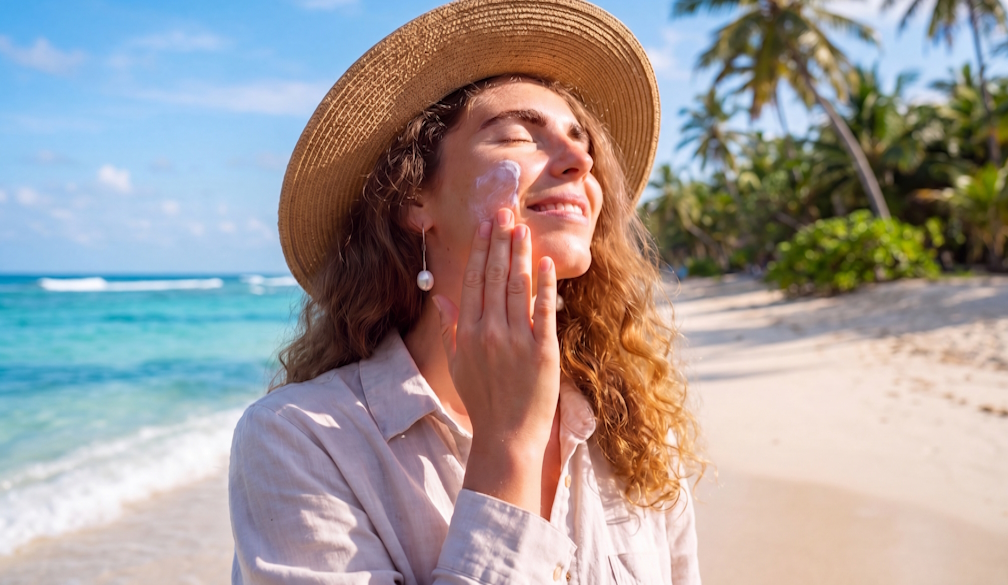
Most Australians would consider themselves sunscreen users. They own a bottle, they apply it before a day at the beach, and they genuinely believe they're doing the right thing. But there's a significant gap between applying sunscreen and applying it in a way that actually provides the protection the label promises, and that gap is wider than most people realise.
The honest truth is that the majority of Australians are getting sunscreen wrong in at least one of three ways: not enough product, not soon enough, and not often enough. Each of those errors costs you protection, and on the Gold Coast, where UV levels rank among the highest in the country, those errors add up over a lifetime.
The Number on the Bottle Isn't the Whole Story
When you buy SPF50+ sunscreen, you're trusting that it will block around 98% of UV radiation. And it will, if you apply it the way it was tested. The problem is that the SPF rating on a product is determined in a laboratory using a specific, carefully measured quantity of sunscreen. In real life, almost nobody applies that amount.
According to Cancer Council Australia, the correct amount for full body coverage is about 35ml, the equivalent of seven teaspoons, one for each major body area: face and neck, each arm, each leg, and the front and back of the torso. That's a substantial amount. It's roughly what most people use across a week of daily face application.
What happens when you apply less? You get less protection, and not proportionally less. Studies consistently show that applying half the recommended amount doesn't give you half the protection; it can drop your effective SPF dramatically. So that SPF50+ you paid good money for might be functioning more like an SPF15 by the time it's on your skin.
The mental adjustment most people need is simple but not particularly intuitive: more than you think, every time.
Timing Matters More Than You Might Expect
Sunscreen isn't instantaneous. Chemical sunscreens, which work by absorbing UV radiation, need time to bind to your skin before they start doing their job properly. The recommendation from ARPANSA (Australian Radiation Protection and Nuclear Safety Agency) is to apply sunscreen at least 20 minutes before you go outside.
Most people apply it at the door, in the car, or when they're already at their destination. That 20-minute window gets skipped almost universally, particularly when you're in a rush, which is most of the time.
This matters more in Queensland than almost anywhere else in Australia. Our UV index regularly hits extreme levels during summer, and on those days the time it takes for unprotected skin to begin burning can be very short. Getting your sunscreen on before you leave, every time, is one of the simplest things you can do to actually get the protection you're paying for.
Reapplication Is Where Most People Fall Down
Here's where the gap between intention and reality is largest. Sunscreen wears off. It degrades with exposure to UV radiation, gets rubbed off by clothing, sweated away, and washed off in the water. No sunscreen, regardless of its SPF or water resistance rating, stays fully effective all day.
The guidance from every major Australian health authority is consistent: reapply every two hours, and reapply after swimming, towelling off, or heavy sweating.
A major survey of Australian sun protection behaviours, funded by Cancer Council Australia and conducted by the Australian Bureau of Statistics across more than 8,500 Australians, found that only two in five Australians (38.1%) used sunscreen on most days during summer when daily use is recommended. Men fared considerably worse, with just 27% using sunscreen regularly, roughly half the rate of women. The same research found that almost 1.5 million Australians had been sunburned in the week before being surveyed.
That's not a small problem. Those are sunburns happening to people who, in many cases, probably thought they were protected.
SPF30 vs SPF50+: Does It Actually Matter?
The difference in UV filtering between SPF30 and SPF50+ is smaller than most people assume. SPF30 blocks around 97% of UVB rays; SPF50+ blocks around 98%. That sounds almost identical, and when products are applied correctly, the practical difference is modest.
But here's the catch: because almost everyone applies less sunscreen than the tested amount, the higher SPF provides a useful buffer. If you're applying roughly half what you should be, starting with SPF50+ means your real-world protection is still meaningful. Starting with SPF30 under the same conditions brings you closer to very limited protection.
The Gold Coast recommendation, consistent with national guidelines, is SPF50+ broad-spectrum sunscreen. "Broad-spectrum" matters too, it means the product protects against both UVB radiation (which causes burning) and UVA radiation (which causes deeper skin damage and contributes to skin cancer and ageing). Some products protect against one but not the other.
The Spots People Always Miss
Even when Australians are applying a reasonable amount of sunscreen, there are areas that routinely get missed, and those missed patches accumulate sun damage year after year.
The ears are one of the most common sites for skin cancers in Australia, particularly in men, and they're almost universally ignored during sunscreen application. The back of the neck, the scalp along a parting or hairline, the tops of the feet, and the backs of the hands are other frequent oversights.
Lips are another overlooked area. The lower lip in particular is a common site for squamous cell carcinoma, a type of skin cancer that, left untreated, can become serious. An SPF lip balm takes seconds to apply.
If you use foundation with SPF, that helps, but it almost never provides the coverage or quantity needed to deliver the SPF it claims. Wearing SPF foundation alone isn't a substitute for a dedicated sunscreen applied to your face.
Sunscreen Is One Part of the Picture
It's worth being clear: even perfectly applied, perfectly timed, and properly reapplied sunscreen is one part of sun protection, not the whole answer. Cancer Council Australia's SunSmart approach recommends sunscreen alongside protective clothing, a broad-brimmed hat, shade, and UV-protective sunglasses when the UV index reaches 3 or above. On the Gold Coast, that means most of the year.
And sunscreen does nothing for skin damage that has already accumulated. If you've spent years in the Queensland sun, as most people who grew up here have, that history doesn't disappear because you're now diligent with SPF50+. Existing damage still needs to be monitored.
When Did You Last Have a Skin Check?
Sunscreen is prevention. A skin check is detection. Both matter, and they work together, but they're not interchangeable.
At our leading Gold Coast skin clinic, we see patients regularly who have been consistent sunscreen users their whole lives and still develop skin cancers. UV exposure accumulates over decades, and it doesn't take many bad summers in childhood or young adulthood to leave a lasting mark.
A Gold Coast skin cancer check gives you a baseline, a thorough, head-to-toe assessment of everything currently on your skin, by clinicians who do this every day. If something is developing that you haven't noticed, catching it early is what changes the outcome.
Sunscreen is the right habit. But if you haven't had your skin checked recently, that's the next step.










