


Why Tube Laser Cutting Is Becoming the Default Choice for Precision Manufacturing Projects
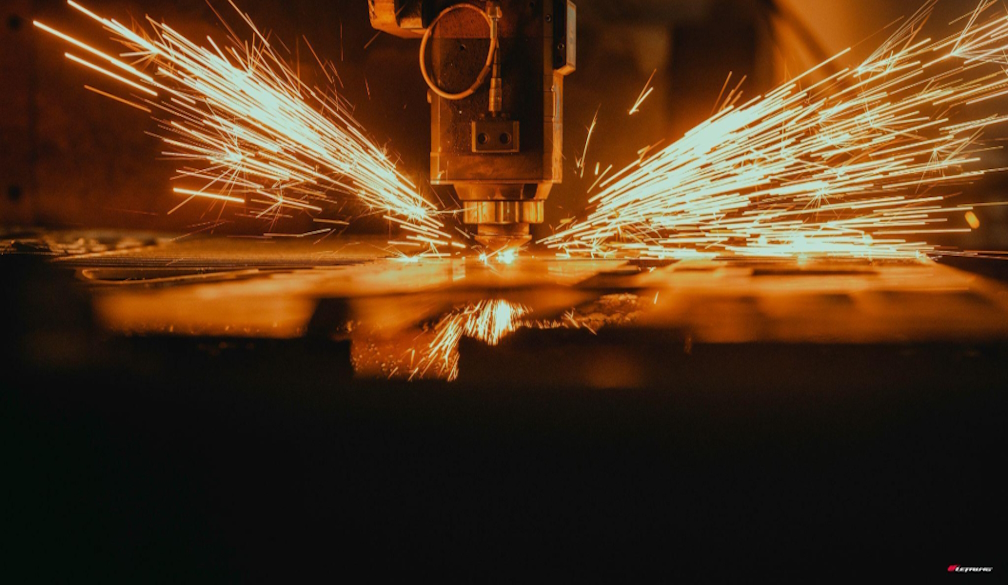
Manufacturing tolerances have tightened consistently across almost every industry over the past two decades, and the cutting technologies that were adequate when tolerances were looser have struggled to keep pace with what precision projects now demand. Tube laser cutting has filled that gap in a way that no previous technology managed quite as completely, and its adoption across construction, automotive, medical, furniture, and industrial manufacturing has moved from early adoption to mainstream expectation in a relatively short period.
The shift isn't driven by novelty. It's driven by a genuine performance gap between what tube laser cutting delivers and what the alternatives can consistently produce. For businesses evaluating fabrication options for projects where precision, consistency, and turnaround time all matter, understanding what's behind that gap is more useful than taking the technology's reputation on faith.
The Limitation That Traditional Cutting Methods Never Fully Solved
Mechanical cutting methods for tubular and structural profiles, including sawing, drilling, and punching, have always involved a fundamental tension between speed and accuracy. At production speeds that make commercial sense, mechanical methods introduce variability that compounds across a production run. Tool wear changes cutting geometry gradually. Setup adjustments between different profile shapes or cut angles consume time that adds up significantly across complex projects. And the contact between tool and material creates heat and deformation that affects dimensional accuracy in ways that are difficult to fully control.
For projects with straightforward requirements, those limitations were manageable. As the complexity of tubular components increased, with angled cuts, notched profiles, slot patterns, and connections that needed to fit together with tight tolerances, the limitations became harder to work around and more expensive to compensate for through additional finishing and adjustment work. The industry needed a method that could handle complex profiles accurately and repeatedly without the variability that mechanical methods introduced, and tube laser cutting provided exactly that.
How Tube Laser Cutting Changes the Production Equation
The fundamental difference between tube laser cutting and mechanical methods is that the cutting tool never contacts the material. A high-powered laser directed through precision optics does the work, which eliminates tool wear, removes the deformation that contact cutting produces, and allows the cutting geometry to be maintained consistently across every piece in a production run regardless of volume.
The practical implications of that difference are significant. Angled cuts, cope cuts, and slot patterns that required multiple setups on mechanical equipment can be executed in a single automated sequence on a tube laser machine. Profile shapes that were difficult or impossible to cut accurately with mechanical methods, including complex structural sections like channel steel and angle steel, are handled with the same precision as standard round and rectangular tubes. And the accuracy tolerances achievable, to within plus or minus 0.1mm, produce components that fit together as designed without the adjustment work that looser tolerances require.
For businesses working with precision tube laser cutting Melbourne providers who have invested in current tube laser technology, the production equation changes in ways that go beyond accuracy alone. A single setup handles operations that previously required the material to be repositioned multiple times, which reduces production time and the risk of cumulative error across complex cutting sequences. The result is a faster path from design to finished component with less material waste and fewer points at which human intervention can introduce variability.
The Material and Profile Versatility That Makes It Broadly Applicable
One of the factors that has accelerated tube laser cutting's adoption across industries is how broadly the technology applies across different materials and profile shapes. Unlike some precision cutting methods that perform well on specific materials but lose their advantage on others, tube laser cutting maintains its precision and speed characteristics across stainless steel, carbon steel, aluminium, and galvanised steel.
Profile versatility extends the application range further. Round tubes are the most common profile in many industries, but rectangular tubes, oval profiles, and structural sections including angle steel and channel steel are all handled effectively by tube laser systems. That breadth means a single technology covers the cutting requirements of projects that would previously have required different equipment or processes for different profile types, simplifying both the production process and the supplier relationship for businesses managing complex fabrication projects.
For industries where the same project might involve structural sections, decorative tubular elements, and precision mechanical components, that versatility has practical value that extends beyond the capability of any individual cut.
What the Production Economics Actually Look Like
The cost comparison between tube laser cutting and mechanical alternatives is more favourable than the equipment investment might initially suggest, particularly for projects where complexity and volume combine to expose the inefficiencies of mechanical methods.
Setup time is the first area where the economics shift. A tube laser machine programmed for a complex cutting sequence executes that sequence automatically without manual repositioning or tool changes between operations. For projects involving multiple cut types across a production run, the time saving over mechanical methods is substantial and translates directly into lower labour costs per unit.
Material waste reduction adds further to the financial picture. The precision of laser cutting produces cleaner cuts with narrower kerf widths than mechanical methods, which means more usable material from each length of tube and less offcut waste across a production run. For projects using expensive materials like stainless steel, that reduction in waste has a cost impact that compounds significantly at volume.
Rework and adjustment costs are the third area where tube laser cutting's economics tend to outperform the alternatives. Components cut to tight tolerances fit together correctly the first time, which eliminates the adjustment and remediation work that looser-tolerance cutting consistently generates downstream. That downstream saving is often underestimated when comparing cutting methods on headline cost per cut alone.
Why Adoption Tends to Change More Than Just the Production Line
Businesses that integrate tube laser cutting into their fabrication capability consistently report that the technology changes not just their production efficiency but the range of projects they can confidently take on. Components that were previously beyond their practical capability, whether because of geometric complexity, tolerance requirements, or the volume at which they needed to be produced, become achievable without the risk of quality inconsistency that made them difficult to commit to before.
That expansion of capability has a commercial dimension that goes beyond the direct cost savings of more efficient production. Being able to take on projects that require precision tubular components with confidence, and deliver them to specification and on time, is a competitive position that the businesses still relying on mechanical cutting methods can't fully match. The technology's adoption trajectory reflects that commercial reality as much as its production efficiency, and it's why tube laser cutting has moved from specialist option to default choice across the industries where precision in tubular fabrication genuinely matters.










