


The Parramatta Commuter’s Back: How Long Travel Times Can Add Up
If you live around Parramatta, you probably don’t need a lecture on commuting. You’ve done the M4 shuffle, the train platform stare, the bus that arrives full, the quick dash through Parramatta Station when you’ve cut it too fine. Some days it’s smooth. Other days it feels like your morning has already been “spent” before you’ve even opened your laptop.
And here’s the sneaky part. That commute doesn’t just eat time, it can quietly load your body in the background.
People often go looking for chiropractic and wellness care because their back or neck pain feels “random”, when it’s not random at all. It’s patterned. It has a rhythm. It flares on certain days, settles on others, then comes back with a bit of attitude.
If you’re nearby in places like Oatlands, North Parramatta, Westmead, Dundas, or Carlingford, you’ll also notice how local routines shape aches and niggles. Even something as simple as trying to fit movement into a packed day can be the difference between “fine” and “why does my lower back feel like a stiff hinge?”. That’s where health and wellness for Oatlands locals and the wider Parramatta region starts to look less like a buzz phrase and more like a practical problem to solve.
The research is starting to connect the ‘health’ dots
This is where it stops being just a vibe and starts being evidence.
A 2025 study looking at commuting time and musculoskeletal pain found a significant association between longer commuting times and increased prevalence of musculoskeletal pain, including back pain. The authors also noted the effect may be worse when long commutes combine with long working hours or shift work.
Now, no single study gets to declare your commute “the cause” of your pain. Bodies are complicated. But it’s a solid nudge in the direction many commuters already feel in their bones: long travel times can stack strain onto strain.
It’s also happening in a country where back problems are already common. The Australian Institute of Health and Welfare estimates around 4.0 million people (16%) in Australia are living with back problems. So when you’re thinking, “Is it just me?”, the answer is… no. Not even close.
Your back doesn’t forget
The commute isn’t only about posture. It’s about load, and load is broader than people think.
There’s physical load, like sitting, braking, twisting to grab your bag, lugging a laptop on one shoulder, standing on a train with your weight dumped into one hip. Then there’s mental load, like deadlines, social pressure, the low-key tension of being late, the constant switching between work mode and home mode.
Your nervous system doesn’t separate those neatly. Stress can change muscle tone, breathing patterns, and how sensitive you feel pain. So you can have a back that’s structurally fine, but still feels reactive, tight, “on edge”. That can be frustrating, because you want a single fix. An adjustment, a massage, a magic stretch, something you can tick off.
And sometimes hands-on care really does help. It can reduce pain, improve movement, and calm things down enough that you can get back to living normally. But it works best when it’s part of a wider plan.
Where does a chiropractor fit into this?
If you’ve ever heard someone say chiropractic care is “all about cracks”, that’s a bit like saying dentistry is “all about drills”. Technically there’s truth in it, but it misses the actual point.
The World Health Organization’s guidance on chronic primary low back pain includes recommendations such as education programmes, exercise programmes, some physical therapies (including spinal manipulative therapy and massage), psychological therapies like CBT, and certain medicines like NSAIDs in appropriate cases.
That’s the bigger picture: education, movement, and the right supportive therapies, tailored to the person.
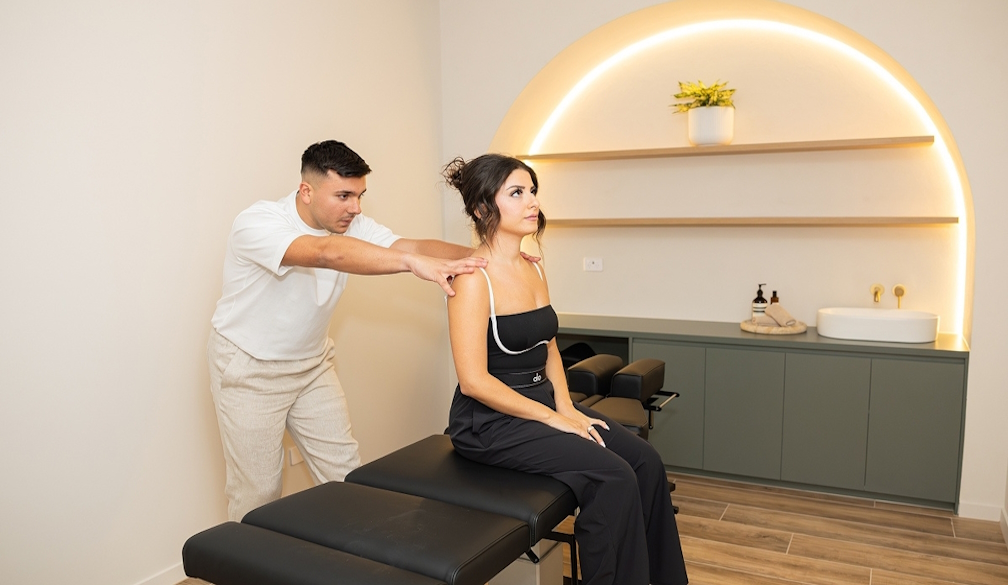
Chiropractic care can sit inside that “supportive therapies” lane. For some people, spinal manipulation or mobilisation may improve pain and movement enough to get them active again, which is often where longer-term change happens. For other people, the helpful bit is the assessment, reassurance, and a structured plan that doesn’t feed fear.
Because fear is a big player. When your back feels fragile, you move less. When you move less, you get stiffer. Then the commute feels worse. Then you tense more. It snowballs.
The health and wellness ‘stack’
There’s a point where self-management stops being clever and starts being avoidant.
If pain keeps returning, if it’s radiating down the leg with ongoing numbness or weakness, if it’s disrupting sleep, or if you’re changing your life around it, it’s time for a proper assessment. Not because you’re broken, but because you deserve a plan that matches your reality.
That plan might include manual therapy, sure. It might include spinal manipulation or mobilisation. It should also include education, graded exercise, and strategies that reduce flare-ups over time, not just the pain of the week. WHO’s guidance supports a non-surgical approach built around those elements for chronic primary low back pain.
And if you’re a Parramatta commuter reading this and thinking, “Okay, but I don’t have time,” that’s exactly why the plan has to be commuter-proof. It has to fit your actual day, not an imaginary day where you meditate at sunrise and do a 45-minute mobility session at lunch.
So what should Parramatta and Oatlands locals do?
Your commute is part of your health environment. Parramatta’s growth and work opportunities are exciting, but long travel times and busy schedules can shape the way your body feels.
The good news is you’re not powerless here. Most people aren’t looking for perfection; they’re looking for momentum. Less flare-ups. More freedom. Fewer mornings where you wake up and immediately start bargaining with your spine.
If you build a coherent mix of care, movement, recovery, and realistic habit changes, your back often stops feeling like an unpredictable coworker. It starts behaving like a body part again. Not silent, not flawless, just manageable.
And honestly, for a Parramatta and Oatlands commuter, that’s a win worth taking.










