The Pros and Cons of Custom-Made Kitchens You Need to Know
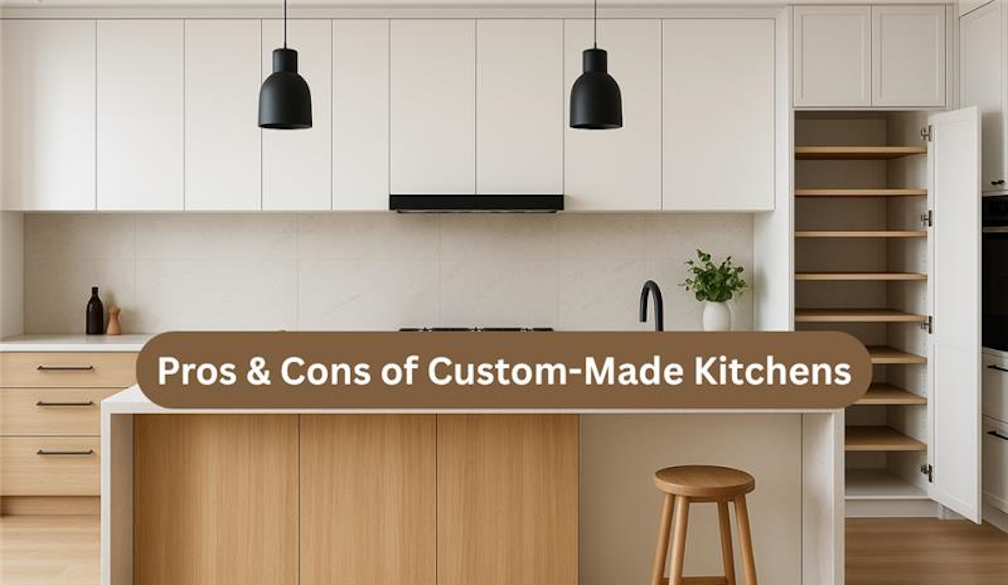
When renovating your home or building a new one, the kitchen often becomes the heart of the decision-making process. A custom‑made kitchen promises uniqueness, flexibility, and a space built just for you. But it’s not without its trade-offs. Before you commit, here’s a balanced guide to the pros and cons of custom kitchens, helping you decide whether it’s the right path for your next renovation.
A modern custom kitchen design doesn’t just focus on aesthetics — it blends craftsmanship, functionality, and premium materials to create a space that enhances both lifestyle and property value.
Pros of Custom-Made Kitchens
1. Personalised Space & Layout
One of the greatest advantages of a custom kitchen is that it can be designed specifically around your lifestyle. You’re not constrained by standard sizes or modules; instead, you can create work zones, storage areas, and cabinet layouts that reflect how you cook, socialise, and move through the space. For example, if you bake often, you might include deep drawers for trays; if you have children, you might include a low “kids’ zone” for snack prep or school projects.
2. Endless Design & Material Options
Unlike prefabricated or modular kitchens with limited options, custom kitchens give you the freedom to mix and match finishes, materials, hardware, and textures to achieve your ideal look. You can integrate high-end timber, unique joinery details, or striking feature elements that reflect your personal style. From minimalist Scandinavian looks to Contemporary kitchens Sydney, homeowners love, custom designs let you explore every detail to achieve your perfect result.
3. Built to Last
By having influence over material choices and craftsmanship, custom kitchens can deliver superior durability. Rather than settling for mass‑market products, you can opt for high‑quality cabinetry, durable hardware, and finishes that are better suited to your lifestyle and local conditions. This often results in lower maintenance and a longer lifespan.
4. Increased Market Value
Kitchens are one of the most scrutinised spaces by potential homebuyers. A well‑designed, high‑quality custom kitchen from kitchen renovations melbourne specialists can significantly boost your home’s resale value. Because it’s tailored and unique, it can become a key selling point.
Cons of Custom-Made Kitchens
1. Higher Cost
Custom work comes at a premium. Every detail, from design and joinery to finishes and hardware, is bespoke. This translates to higher labour, material, and project management costs. For homeowners on a budget, this can be a major limitation.
2. Longer Lead Times
Since everything is designed and fabricated to your specifications, custom kitchens generally take more time than off-the-shelf solutions. Delays in material supply, site readiness, or coordination between trades can stretch timelines further.
3. Complexity & Maintenance
Custom designs can sometimes introduce challenges. Intricate layouts or special materials might complicate future repairs or renovations. If a unique component needs replacement, it may be costly or difficult to source.
4. Risk of Budget Overruns
It’s not uncommon for custom kitchen projects to go over budget. Scope creep, site issues, or changes in design can lead to unexpected costs. Without strong planning and management, these projects can quickly spiral.
5. Dependence on Skilled Labour
The final outcome of a custom kitchen depends heavily on the quality of the professionals you hire, from designers to cabinetmakers to installers. Mistakes, miscommunication, or substandard workmanship can impact the final product.
How to Mitigate the Drawbacks
- Set a clear brief and realistic budget: know your non-negotiables and where you can compromise.
- Work with experienced professionals: check references and previous work before committing.
- Use visual planning tools: 3D renders or mock-ups can help you understand how the final design will look and function.
- Choose materials carefully: balance visual appeal with durability and ease of maintenance.
- Allow for contingencies: both in budget and time, to handle unforeseen issues calmly.
When Does Custom Make Sense?
Custom kitchens are ideal for homes with unique layouts or when your design needs exceed what modular options can offer. They’re especially suitable if you’re planning to stay in your home long term and want a kitchen tailored to your lifestyle. However, if you’re renovating for resale or have a standard layout, a modular or semi-custom kitchen may provide better value.
Alternatives to Custom Kitchens
- Modular or Prefabricated Kitchens: Standard modules that are quick to install and cost-effective.
- Semi-Custom Kitchens: A mix of modular components with some custom features.
- Flat-Pack Kits: Affordable, fast, and widely available, but with limited personalisation.
Conclusion
A custom kitchen can be a dream come true if it’s done right. It gives you the chance to build a space that fits your lifestyle, tastes, and home perfectly. But it’s not the only option, and it’s not always the most practical one.
Weigh the pros and cons, talk to experienced kitchen renovators in Sydney, and make the choice that works best for your timeline, budget, and goals. Whether you go custom or not, your ideal kitchen is out there, and with the right plan, you’ll get there.