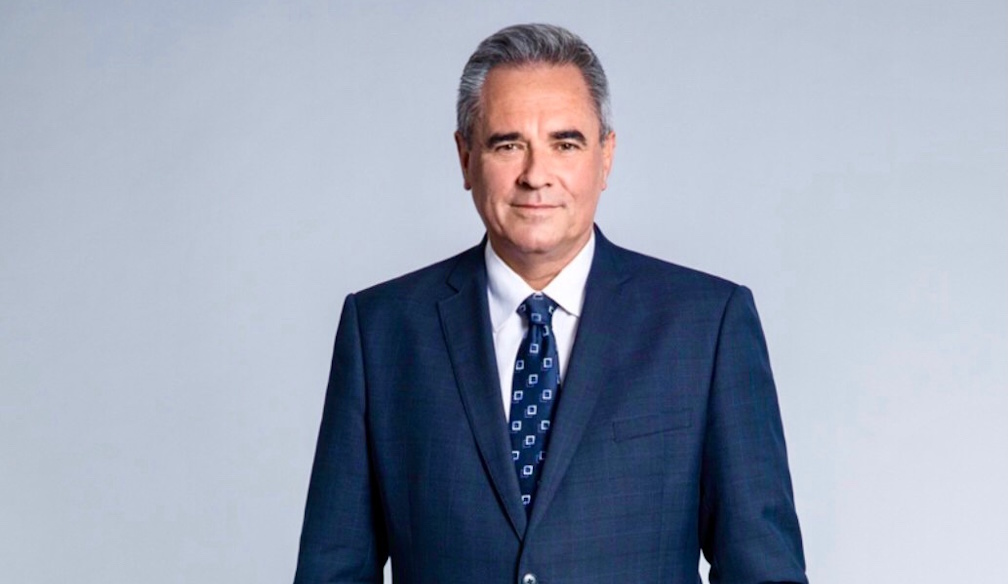
From physio to CEO: Why healthcare is the unexpected path to business leadership

When people imagine the typical founder, they tend to picture someone with a background in finance, consulting or technology. Yet an increasing number of successful business leaders are emerging from a far less conventional profession - healthcare.
For Emma Davison, CEO of Virtual Headquarters, the journey to the boardroom began in a physiotherapy clinic.
After qualifying and working as a physiotherapist, Davison made an unexpected career pivot into business. Today, she is the chief executive of Virtual Headquarters, an Australian company that provides premium virtual business addresses, mail management and receptionist services to small businesses and entrepreneurs. With a network of more than 60 premium business address locations nationwide, Virtual Headquarters has helped thousands of Australian businesses establish a professional presence over more than two decades.
Her career change reflects a broader shift in how leadership is being viewed. While technical expertise and commercial acumen remain important, employers and investors are placing greater value on qualities that cannot easily be taught - empathy, communication, resilience and the ability to build trust.
"They're often described as 'soft skills', but there's nothing soft about them," Davison says. "In healthcare, you're constantly listening, solving problems under pressure and helping people through difficult situations. Those are exactly the skills leaders need when they're building businesses and leading teams."
Working alongside thousands of Australian business owners, Davison believes the founders who achieve sustained growth often have one thing in common. They understand people before they understand processes.
"In physiotherapy, no two patients are the same. You have to listen carefully, understand what's really causing the problem and adapt your approach," she says. "Business is remarkably similar. Every client, employee and challenge is different."
The transition from healthcare to business may appear unconventional, but the underlying skillset is increasingly relevant in an economy where relationships often determine competitive advantage.
Empathy, once lower on the business agenda, is now being recognised as a driver of stronger cultures, improved customer loyalty and better decision-making. Active listening can uncover opportunities that data alone cannot reveal, while experience making decisions in high-pressure environments helps leaders remain calm during periods of uncertainty.
Davison argues these capabilities are becoming even more valuable as artificial intelligence automates many technical and administrative tasks.
"Technical knowledge can be learned, and increasingly it can be augmented by technology," she says. "What technology can't replace is genuine human connection, trust and the ability to understand what people really need."
Her own career has challenged the assumption that professional backgrounds define future success. Rather than viewing career changes as setbacks, she believes they can give leaders a different lens through which to approach business, people and problem-solving.
"Changing careers can be daunting because it can feel like you’re starting all over again,” she says. "In reality, you’re not leaving everything you’ve built behind. You’re bringing years of experience and perspective with you, just applying them in a new way”.
As more professionals seek career reinvention and businesses place greater emphasis on emotionally intelligent leadership, backgrounds once considered unconventional may become increasingly valuable.
The next generation of business leaders, it seems, may be just as likely to come from a treatment room as a trading floor.