Australian coal mine and power station workers’ prospects look bleak – unless we start offering more targeted support
- Written by: Adam Triggs, Visiting research fellow, Australian National University
Workers who were made redundant in coal-fired power plants between 2010 and 2020 saw their incomes plummet by 69% in the year after they lost their jobs.
This was the staggering finding[1] of research by Dan Andrews, Elyse Dwyer and Lachlan Vass at the e61 Institute reported by The Conversation in 2023.
Andrews, Dwyer and Vass called for a national discussion about support for workers made redundant by Australia’s energy transition.
On Wednesday, Opposition Leader Peter Dutton offered his own form of support, saying the Coalition’s plan to put nuclear power plants on the sites of former coal-fired stations would help retain jobs[2] in regions that had provided Australia with energy for decades.
But where replacement jobs can’t be easily found for former fossil fuel industry workers, an important question remains: which workers need specially targeted support? That’s what we set out to discover.
Our jobs study, based on a real coal mine
Some displaced coal miners and coal-fired power station workers will find new jobs easily.
As an example, there’s plenty of demand for electricians, meaning targeting support towards them makes little sense.
But others could be unemployed for years, or the rest of their lives.
To find out which displaced workers are most at risk of long-term unemployment, Rojan Joshi and I applied ten years of national job advertisement[3] data to the hypothetical case of an actual New England coal mine closing.
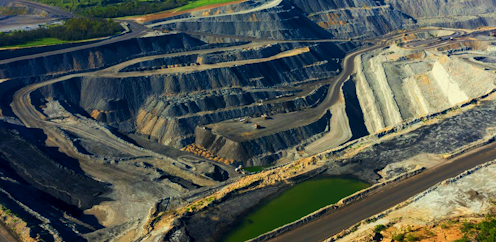
The coal mine is real. It employs 766 people. The largest groups of employees are miners, truck drivers and fitters. Most live locally.
We modelled what would have happened if the mine had closed seven years ago.
The job advertisement data gave us an idea of how long it would take those workers to find new jobs, based on their occupations and whether they were willing to relocate within New South Wales or move interstate.
What happened depended on who would move
The results were mixed[4]. Motor mechanics, metal fabricators, truck drivers and electricians would have had the easiest time finding new jobs, followed by shotfirers (they handle explosives), mechanical engineers and fitters.
Those who would have struggled the most to find new jobs were drillers, production managers, coal miners themselves, mine deputies and mining engineers.

But it all depended on whether they were willing to move.
Of workers not prepared to relocate, 28% of those in the 12 biggest occupations would have found a new job within one year, 35% within two years, 39% within three years and 43% within four years.
Put differently, most workers – 57% – wouldn’t have a new job without relocating, even after four years.
Of workers willing to relocate within the state, 52% would have found a job in one year, 67% in two years, 85% in three years and 100% in four years.
Of those willing to relocate anywhere in Australia, 99% would have found a new job in one year and 100% in two years.
Different occupations were impacted in different ways. The results suggested the government should focus on helping people relocate and pay particular attention to drillers, production managers, miners, mine deputies and mining engineers.
What we need to know to better support workers
Providing broader support to those who might not need it risked diluting the support available to those who needed it the most. It also risked deadening the incentives for workers who are able to find new jobs to do so.
But there are four limitations of our study to keep in mind.
First, we looked at only one coal mine in New England. Different mines have different workforces, as do coal-fired power stations fed by those mines.
Second, some mines have fly-in-fly-out workers. We picked a mine that did not.
Third, we didn’t examine retraining and re-skilling. Some workers who struggle to find a job in their existing occupation might be able to retrain and get a job in another one.
Fourth, we didn’t examine wages. People who would have found new jobs might not have been able to find them at the same pay.
Read more: Here's what happens to workers when coal-fired power plants close. It isn't good[6]
Despite these limitations, our results make clear that supporting workers who lose their jobs as a result of Australia’s energy transition will be complex.
Government forecasts predict a fall in Australia’s coal exports of 50% to 80%[7] over the next two decades. By 2035[8], the two biggest remaining coal-fired power plants in NSW and the biggest in Victoria are scheduled to have closed.
If we want the energy transition to benefit Australians, we need to pay closer attention to those it could leave behind.
References
- ^ staggering finding (theconversation.com)
- ^ retain jobs (www.peterdutton.com.au)
- ^ job advertisement (lightcast.io)
- ^ mixed (mandalapartners.com)
- ^ myphotobank/shutterstock (www.shutterstock.com)
- ^ Here's what happens to workers when coal-fired power plants close. It isn't good (theconversation.com)
- ^ 50% to 80% (www.treasury.nsw.gov.au)
- ^ 2035 (www.leadingedgeenergy.com.au)
Authors: Adam Triggs, Visiting research fellow, Australian National University