Slippery rocks, currents and daredevil jumpers make Australia’s waterways surprisingly deadly
- Written by: Richard Franklin, Professor of Public Health, James Cook University
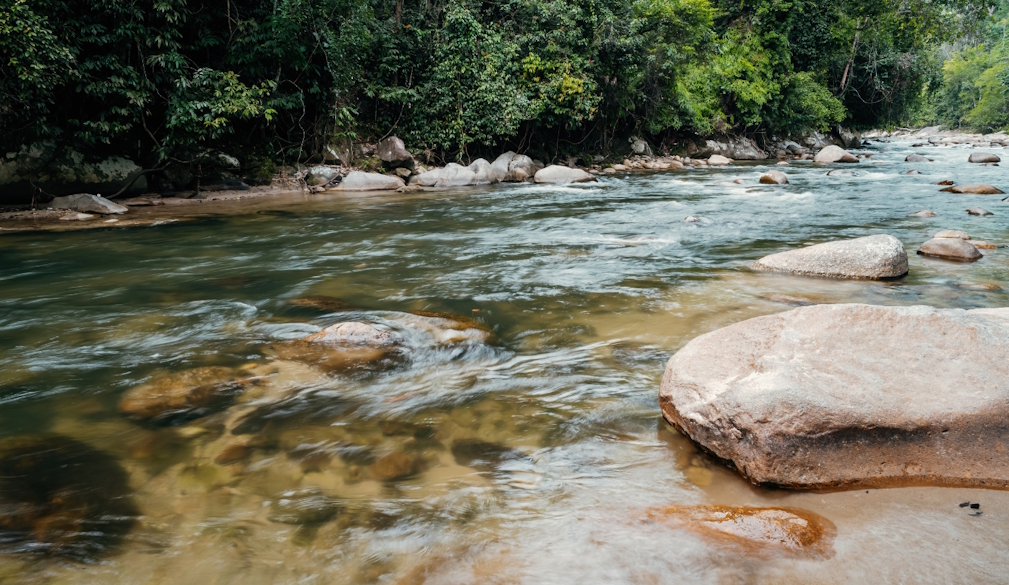
Every summer, Australians look for ways to cool down. Millions of us head to the beach. Those inland head for rivers, waterholes and waterfalls. But cooling off comes with risks, from dangerous rips in the ocean to hidden logs in rivers.
In recent years, a surprising number of people have died at waterfalls and waterholes. These natural spectacles have hidden dangers, from slippery rocks to unexpected currents, to turbulent water.
While many of us know about the risks of drowning in the ocean, rivers are actually more deadly. Over the last 22 years, slightly more people have drowned in rivers and creeks than any other body of water. The drowning figures[1] from 2022–23 show 76 people died in rivers and creeks, compared to 75 at beaches.
Every drowning death leaves a trail of grief. Here’s what you can do to stay safe.
How common are these deaths?
Deaths at popular waterfalls in recent years include:
- Isabella Falls, inland from Cairns: three deaths[2] in the last two years
- Millaa Millaa Falls, inland from Cairns: two deaths[3] this year
- Dangar Falls in northern New South Wales: three deaths[4] since 2012.
Then there are locations such as Babinda Boulders south of Cairns. While more waterhole than waterfall, this famous location has claimed[5] 21 lives since 1959, leading authorities to fence off dangerous channels and pools where churning water can push swimmers under and keep them there. Even so, deaths continue[6].
Why are waterfalls dangerous? As water cascades, it often carves out a deep pool, known as a plunge pool. Visitors often swim at these pools, drawn by the natural beauty and deeper water.

But these idyllic scenes come with hidden risks. For instance, where the waterfall hits the pool, it creates turbulence and currents. If large volumes of water are falling, the pressure can be enough to push people underneath. Currents can also carry people underneath a rock ledge and trap them.
Adrenaline-seekers might jump off the lip of the waterfall. This is very risky, especially if you don’t know how deep the water is.
Droplets and mist from the falls mean the rocky sides are inevitably slippery and often covered in algae or moss.
Finally, there’s the popularity factor. The more inexperienced people who go, the higher the chance of something going wrong. Social media reels of influencers at beautiful locations encourage more people[8] to seek out secluded waterfalls.
Are these deaths getting more common? We don’t know. That’s because deaths at waterfalls are rolled into statistics for river-related deaths. By one estimate[9] 5% of drownings in inland water sources took place at waterfalls or swimming holes over the ten years to 2021.
We do know there’s been a surge[10] in selfie deaths worldwide in recent years. Some of these deaths[11] take place at waterfalls, usually when visitors jump the fence or make their way to the lip of the waterfall before slipping and dying. When you’re searching for the perfect selfie location, you’re not paying close attention to risks.
If you do get into trouble, help is often a long way away. Rescuers can take hours to arrive, while drowning happens very quickly. While popular beaches usually have lifeguards able to spring into action, waterfalls, waterholes and rivers do not.
 Waterfalls are often spectacular. But beautiful doesn’t always mean safe. Pictured: King George Falls in the Kimberley, Western Australia. Philip Schubert/Shutterstock[12]
How can we stay safe?
Waterfalls are some of the world’s great natural spectacles. The most famous attract millions of visitors each year, from Niagara Falls on the Canada-United States border to Victoria Falls between Zambia and Zimbabwe to Venezuela’s Angel Falls, the tallest uninterrupted waterfall. They are created[13] when soft rock is washed away, or where a river meets a natural drop such as a cliff.
We’re drawn to these places, and that’s not going to change. So how can we visit safely?
Authorities have put up signs around many popular swimming spots, including waterfalls. These can be useful to indicate danger or prohibit an activity. But most people simply ignore them, according to[14] a Queensland government spokesperson.
The most important thing is to proceed with caution. Just as you would check a new beach for signs of rip currents or dangerous waves, you should check waterfalls and waterholes for hidden dangers. Don’t assume picturesque places are safe because they’re pretty.
Familiarity matters too. Many people who have died at waterfalls have been visitors, whether from interstate or overseas[15]. If you grew up near a waterfall or waterhole, you’re more likely to have learned about the dangers.
If you’ve checked the swimming hole, swimming should be reasonably safe. But it’s best to avoid going directly under the waterfall.
Climbing waterfalls is very dangerous. It might look fun, but slippery rocks can send you crashing to your doom, while turbulent water and hidden rocks under the surface can be lethal. The lip of a waterfall is extremely slippery and gravity is not on your side.
The lip of a waterfall is usually extremely slippery. This video shows a hiker in Hawaii slipping down a 15 metre waterfall. She survived.Alcohol and waterfalls are a bad mix. Alcohol makes some people take more risks. Swim first, drink later.
Check the chance of rain before you go, and not only at the waterfall but upstream. Intense rain upstream can create flash floods surprisingly quickly, sweeping you off your feet[16].
And if you’re in northern Australia, you need to do one more vital check – for crocodiles. Many popular waterfalls and swimming holes are seen to be safe because they are elevated or far from the sea. But crocs can pop up in unexpected places[17].
Does this mean you should avoid waterways entirely? No. As Paul McCartney[18] advised:
Don’t go jumping waterfalls
Please, keep to the lake
People who jump waterfalls
Sometimes can make mistakes.
References
- ^ drowning figures (www.drowningprevention.org.au)
- ^ three deaths (www.abc.net.au)
- ^ two deaths (www.theguardian.com)
- ^ three deaths (www.abc.net.au)
- ^ has claimed (www.abc.net.au)
- ^ deaths continue (7news.com.au)
- ^ Visual Collective/Shutterstock (www.shutterstock.com)
- ^ encourage more people (theconversation.com)
- ^ one estimate (www.royallifesaving.com.au)
- ^ a surge (pmc.ncbi.nlm.nih.gov)
- ^ these deaths (www.jmir.org)
- ^ Philip Schubert/Shutterstock (www.shutterstock.com)
- ^ are created (qg.web.amu.edu.pl)
- ^ according to (www.newsport.com.au)
- ^ overseas (www.jcu.edu.au)
- ^ off your feet (au.news.yahoo.com)
- ^ unexpected places (www.abc.net.au)
- ^ Paul McCartney (www.youtube.com)