The prime minister earns $607,000 a year. Why does his top public servant earn more than $1 million?
- Written by: Chris Wallace, Professor, School of Politics Economics & Society, Faculty of Business Government & Law, University of Canberra
Tasmanian Senator Jacqui Lambie represents the lowest-income Australians, with median weekly earnings of $1,208 a week[1]. In the Australian Capital Territory, where the nation’s highest median weekly earners live, including the brains trust of the Australian Public Service, it’s $1,688 a week[2] – 40% higher.
As a federal politician, Lambie shuttles between these two starkly different earnings worlds and is not happy about the disparity.
Of course, Lambie herself is on a reasonable wicket. Parliamentarians’ base salaries are $233,660 a year, according to an Instagram post she made this month drawing attention to the issue.
At a time of considerable financial stress for Australians hit by the combination of inflation, high interest rates and housing shortages, Lambie struck a nerve with her post, which listed a range of public roles drawing big six figure-plus annual salaries.
In doing so, Lambie underlined the far higher salaries paid to senior public servants compared to the ministers to whom they’re responsible.
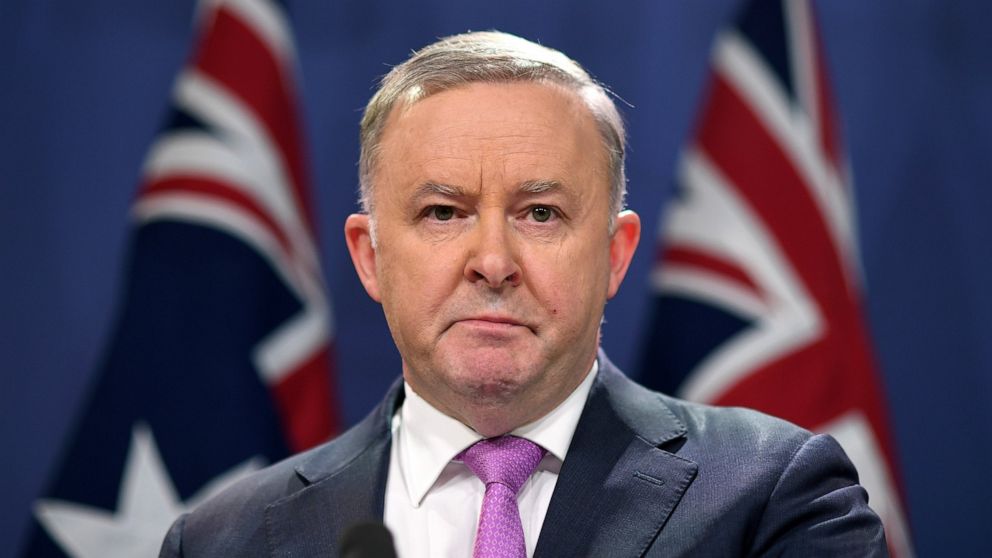
Department of Prime Minister and Cabinet Secretary Glyn Davis earns $1,011,410 a year, 66% more than the man he serves, Prime Minister Anthony Albanese, who earns[3] $607,516.
Treasury Secretary Steven Kennedy’s salary is more than double that of Treasurer Jim Chalmers, who is paid $438,112. Another three departmental secretaries each earn $960,840.
Lambie’s Instagram post drew hundreds of comments including:
How does a public servant earn more than the prime minister? That’s wrong!!
Politicians get flak about their salaries from belligerent constituents, but also keenly feel the injustice of earning far less than senior public servants.

Higher pay for higher risk
The salaries of both politicians and public servants have long and specific histories. Without an income, only the rich could afford to be politicians, so publicly paid allowances and salaries[5] have historically been an important equity and inclusion measure. They remain so today.
The original framers of the public service[6] component of our Westminster system of government believed that to prevent conflicts of interest that drive corruption, the bureaucracy ought to be staffed by “permanent officers” with job security. In exchange for what, barring wrongdoing, was going to be a lifetime career, public service pay was historically adequate but not extravagant.
This nexus was broken when, in exchange for higher pay, the Keating government introduced five-year contracts for departmental secretaries in March 1994. Three departmental secretaries refused contracts and continued as “permanent officers”. The rest took the money and the increased employment risk that went with it.
Two years later, the Keating government lost office and incoming Prime Minister John Howard summarily fired nearly a third of departmental secretaries, fatally eroding the “frank and fearless” tradition of public service advice underpinned by security of employment.
Compromised advice
Contract employment for secretaries, who effectively can now be fired at will, not only created pressure for public servants to tell ministers what they wanted to hear, but also untethered their salaries from historical norms. Higher pay reflected that insecurity. The flow-on effect meant other salaries in the senior executive service also floated upwards.
Contracts for secretaries have also been central to the revolving door that’s developed between the top of the public service and large consulting firms, creating conflicts of interest unknown in the traditional Westminster public service.
The big four consulting firms are attractive alternative employers for highly paid and insecure departmental secretaries.
Little wonder, then, that a quasi-privatisation of public service advice through consultancy contracts to those firms occurred, at vast expense to taxpayers – something Finance Minister Katy Gallagher has made strong efforts to reverse.
Lambie’s push for answers
Lambie has introduced the Remuneration Tribunal Amendment (There for the Public Service, Not Profit) Bill[7] 2025 to cap senior APS pay at $430,000. It’s a bid to address remuneration which has raced far beyond ministerial salaries, and well beyond reasonable public expectations.
The Lambie bill has been referred to a Senate committee[8], which presents an opportunity to evolve debate on the deeper reasons for what has gone awry in the public service and to devise a response[9] that gets to the root of the problem.

The precarity of contract employment for departmental secretaries, which is used to justify high salaries, is both unnecessary and harmful to the quality of public policy and administration in Australia.
The intrinsic interest and challenge of working for the nation and the betterment of its citizens has always paid well in terms of a “psychic wage” on top of senior public servants’ actual salaries. If the complaint is that an executive could make much more in the private sector, they’re probably not the right person to work in the public service anyway.
One reply to Lambie’s Insta post summed up the situation:
It’s the pollies that made this mess.
Politicians are the ones who are going to have to clean it up.
It is neither likely nor plausible that highly paid public service leaders will cut their own salaries in return for an end to the five year contract system for secretaries.
But that is what a return to good public service governance – and to frank and fearless advice in the national interest – now requires.
References
- ^ $1,208 a week (www.abs.gov.au)
- ^ $1,688 a week (www.abs.gov.au)
- ^ earns (www.theguardian.com)
- ^ Lukas Koch/AAP (photos.aap.com.au)
- ^ salaries (www.remtribunal.gov.au)
- ^ public service (www.civilservant.org.uk)
- ^ Bill (parlinfo.aph.gov.au)
- ^ committee (www.aph.gov.au)
- ^ response (theconversation.com)
- ^ Mick Tsikas/AAP (photos.aap.com.au)