Do you speak other languages at home? This will not hold your child back at school
- Written by: Valeria Maria Rigobon, Lecturer in Literacy, Australian Catholic University
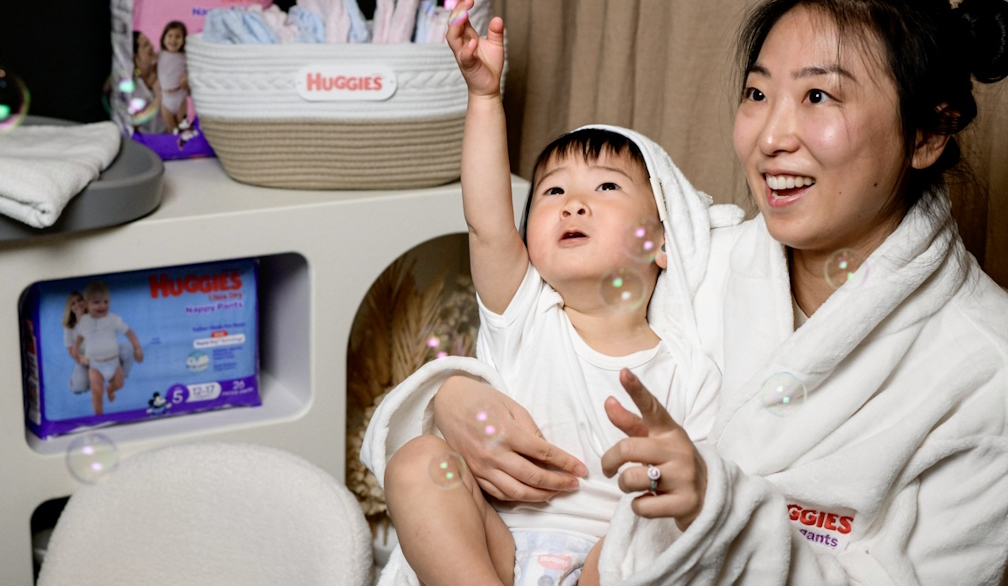
It is common for Australian children to grow up with languages other than English in their family lives.
More than one-fifth of Australians[1] report speaking a language other than English at home.
But when it comes time to start school, it’s common for parents to worry[2] about raising a child to be bilingual or multilingual.
They may wonder, am I harming my child’s English development if I speak another language at home?
The short answer is no. Research shows speaking more than one language doesn’t hinder a child’s academic progress – in fact, it can even help.
What does the research say?
Up until the 1980s, some studies[3] incorrectly suggested early exposure to more than one language could harm a child’s academic achievement. But these findings have since been widely criticised[4] because many of the children in the studies came from economically disadvantaged backgrounds (and so were already disadvantaged in terms of their schooling).
More recent Australian research[5] has found when socioeconomic status is accounted for, multilingual children are “indistinguishable from their monolingual peers” in literacy and numeracy by the time they are eleven years old. This is provided they have adequate English vocabulary skills by the time they finish Year 2.
Some studies show multilingual students[6] even surpass monolingual children in different academic areas. This includes[7] English reading, writing, spelling, grammar and punctuation as well as numeracy. Research suggests[8] multilingual students’ enhanced mental flexibility from switching between languages may explain their higher academic performance later in school, but this is not yet confirmed.
Do you need to learn one language before starting the other?
Research shows[11] children can learn multiple languages at the same time, starting from infancy.
This means you don’t have to wait for a child to become fluent in one before you start learning another.
Similarly, a child does not have to be a highly skilled English speaker to start to learn to read in English. They can develop their spoken and written/reading language skills at the same time[12].
It is also important to look at children’s skills across all the languages they know.
Research on children aged up to 30 months[13] found multilingual children often had smaller vocabularies in English than their monolingual peers. But they had a healthy range when assessed on words they knew in all languages.
A common misconception is multilingual children may “confuse” words between languages, but this is not the case. They actually learn quite quickly[14] whom they can communicate with in each language, and switch between languages without much effort.
For example, Valeria’s niece Aurora is four and is already fluent in Hungarian, Spanish and Ukrainian. There are videos of Aurora speaking Spanish with her Venezuelan father and grandmother, turning to respond to her grandfather in Hungarian, and switching to Ukrainian to speak with her mother, all in one conversation.
How can I help my child learn multiple languages?
Research shows[17] it is important a child receives lots of exposure[18] to each language through meaningful interactions with people who speak those languages.
There is no clear definition of the amount needed, but it should be regular – for example, everyday talk with parents or visits or phone calls with grandparents who share the home language.
Also, if you’re worried your child isn’t getting enough English exposure outside school, do not abandon your home language[19]. Instead, create other English opportunities, such as in playgroups, toddler sensory classes and dance classes, daycare, sports teams or other out-of-school activities.
Ultimately, the best thing parents can do to support their children’s multilingual learning is build a community[20] filled with native speakers of English and the home language(s).
Staying consistently connected to this community of people who value each language, especially after children start school, will also support a child’s motivation to keep growing in each language.
References
- ^ one-fifth of Australians (www.abs.gov.au)
- ^ common for parents to worry (www.tandfonline.com)
- ^ some studies (www.degruyter.com)
- ^ widely criticised (journals.sagepub.com)
- ^ recent Australian research (www.tandfonline.com)
- ^ show multilingual students (www.tandfonline.com)
- ^ includes (dataandreporting.blob.core.windows.net)
- ^ suggests (doi.org)
- ^ PNW Promotion/ Pexels (www.pexels.com)
- ^ CC BY (creativecommons.org)
- ^ shows (www.cambridge.org)
- ^ at the same time (journals.sagepub.com)
- ^ aged up to 30 months (onlinelibrary.wiley.com)
- ^ actually learn quite quickly (www.thieme-connect.com)
- ^ Tima Miroshnichenko/ Unsplash (www.pexels.com)
- ^ CC BY (creativecommons.org)
- ^ shows (www.academia.edu)
- ^ lots of exposure (journals.sagepub.com)
- ^ do not abandon your home language (digitalcommons.wayne.edu)
- ^ build a community (www.bilingualism-matters.ppls.ed.ac.uk)