As the government rejects Trump’s stands, Liberal leadership aspirant Andrew Hastie sounds decidedly Trumpian
- Written by: Michelle Grattan, Professorial Fellow, University of Canberra
After the work was over, Anthony Albanese went to the Australian-owned and themed “Old Mates Pub”, in Lower Manhattan, and poured the beers. He felt his week had been mission accomplished.
In international politics, dodging the negatives can be as important as racking up the positives. The prime minister will believe he’s done some of both on his New York visit for United Nations leaders’ week.
Although the government disputes this, it would have been better if he’d secured his first sit-down with Donald Trump in New York (a bit like getting past a necessary visit to the dentist). But it would have been disastrous if he hadn’t nailed down a firm meeting date – which is to be October 20 in Washington.
When Albanese flew to the US, the prospect of a meeting on the sidelines of the UN were dropping away (and becoming less attractive) but the likelihood of locking in one later had become strong – although the Australians were left dangling over when the White House would make an announcement.
The New York trip has given Albanese the opportunity to highlight policies that are significant to audiences at home – the recognition of Palestine and the government’s latest climate change ambition (a 2035 target of reducing emissions by 62–70% on 2005 levels).
A supporting cast from cabinet, headed by Foreign Minister Penny Wong, backed his promotion of the Australian story.
Climate Change Minister Chris Bowen lobbied Emine Erdoğan, wife of the Turkish president, as part of Australia’s effort to pressure Turkey to withdraw from the battle to host next year’s climate change conference (COP).
Communications Minister Anika Wells left the fallout from the Optus triple zero crisis to be at Australia’s event explaining the coming ban on children signing up to social media accounts. Apart from responding to international interest, the government may be looking to shore up support for any future battles with the tech giants.
Albanese enjoys the foreign limelight and strives to be seen to have Australia as active as possible whenever he can.
In his speech to the General Assembly (chief crafter of which was speech writer James Newton) he pushed Australia’s bid for a non-permanent seat on the Security Council in 2029-30.
The government is already signed up to the Coalition of the Willing on Ukraine. Asked whether Australia would be a part of a post-conflict peacekeeping force in Gaza, Albanese said, “we’ll give consideration to that at an appropriate time”.
Albanese has found the Coalition of the Willing productive in a wider sense than just bringing a focus on Ukraine. It has given him a direct link to a significant group of leaders, which has facilitated bilateral contacts and relationships as well.
The past few days have put in lights Australia’s differences with American policy on certain issues, notably Palestine and climate change. But on these, it is the US that is isolated rather than Australia. Also and importantly, these issues are not central to the Australian-American alliance. They shouldn’t be irritants at the Albanese-Trump meeting.
Australia’s recognition of Palestine (together with a batch of other countries) puts in place a long-held position of Albanese, and responds to calls from the Labor Party at large.
Given Israel’s intransigence, however, the latest recognitions are not expected to have any tangible effect; indeed the risk is they might cause Israeli Prime Minister Benjamin Netanyahu to further double down.
On climate, Trump’s extraordinary diatribe to the General Assembly, denouncing climate change as a con job and renewables as a joke, was so OTT as to make it nearly irrelevant to the debate in Australia. More significant probably, is China’s announcement of a 2035 emissions reduction target of only up to 10%.
Albanese, who has been pointing to China’s expansion of renewables, had to admit some disappointment. “It is good that there is progress being made. We, of course would like there to be more, but it is a step forward, and indeed, China has exceeded its previous targets.”
The opposition can pick up on China’s limited ambition. But it can’t engage properly in the climate and energy debate until it sorts out its position on net zero. There is an increasing feeling it needs to come to a position on that by Christmas.
While Trump continued to shock most mainstream Australian politicians and voters, this week Liberal leadership wannabe Andrew Hastie was sounding decidedly Trumpian.
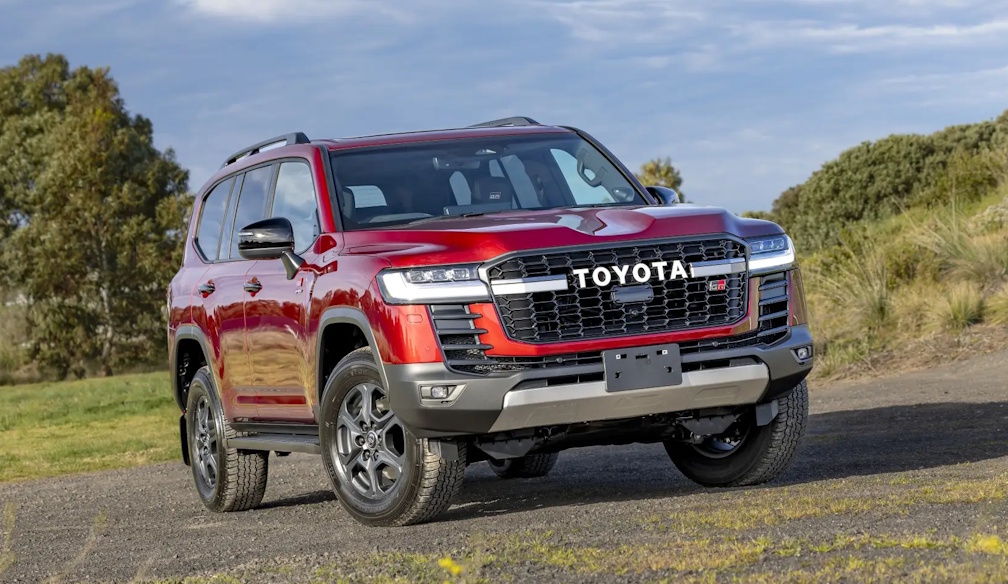
Hastie, who is in competition with fellow frontbencher Angus Taylor to be Sussan Ley’s successor, began by posting a video, showing him with a 1969 Ford and the caption “It’s time to put Australians first”.
He lamented the disappearance of Australia’s car industry, waxed nostalgic about those cars with horsepower, heritage and grit, and condemned the government for wanting to “fill our streets with silent, soulless cars” from China. After he received some blowback from anonymous colleagues, he lashed out at “nameless cowards” and “muppets”.
This was followed by a post attacking “unsustainable” immigration with the provocative line “We’re starting to feel like strangers in our own home”, carrying the obvious overtones.
Previously Hastie has said if the Liberals stick with their commitment to net zero, he is off the frontbench.
In a Thursday radio interview, Hastie – who still publicly claims to support Ley (“anyone who’s speculating otherwise is being mischievous”) said his “main concern is that the centre right is fragmenting.”
“Unless we [the Liberals] get our act together, we’re going to be potentially in further decline and perhaps one day extinct,” he said.
He’s not the only Liberal who fears the party might fall apart. But the more realistic of the Liberal conservatives realise that the glue to stop it must come from the prospect of success, and that such success won’t be achieved, given the nature of the current Australian electorate, from moving further right.
The big two cohorts where the Liberals need to make inroads are women and younger people – cohorts that are leaning progressive.