“Go west!” Is housing affordable for a single-income family — and where should they look?
- Written by: The Times
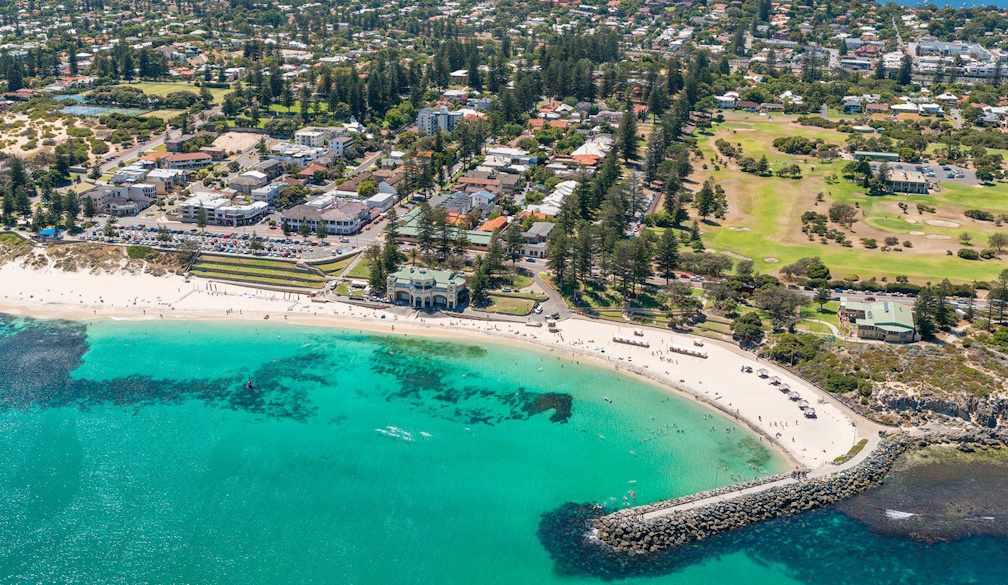
For decades, “Go west!” has been shorthand advice for Australians priced out of Sydney and Melbourne. It’s said half-jokingly, half-seriously — but in 2025, for many single-income families, it’s no longer a punchline. It’s a genuine strategy.
With east-coast housing affordability stretched to breaking point, Western Australia — and parts of Australia’s western and regional corridors — are increasingly being viewed as places where a household can still survive, and in some cases thrive, on one income.
But is it really affordable? And if so, where exactly should a single-income family be looking?
The single-income reality in modern Australia
A single-income family today faces pressures that simply didn’t exist a generation ago:
-
Mortgage serviceability tests are tougher
-
Deposits are larger relative to wages
-
Childcare costs often cancel out a second income
-
Secure full-time work is harder to find
-
Living costs have risen faster than wages
For many households, the idea of both parents working is not a lifestyle choice — it’s a necessity. That’s what makes the question of single-income housing affordability so confronting.
In Sydney, Melbourne, Brisbane and Canberra, median house prices and rents increasingly assume two full incomes. Trying to buy or rent on one income in these cities often means extreme compromise: long commutes, overcrowding, or permanent financial stress.
This is where the “Go west” argument gains traction.
Why the west looks different
Western Australia — particularly Perth — operates under a different set of economic and housing dynamics.
1. Lower entry prices
Perth house prices remain materially lower than Sydney, Melbourne and Brisbane. While prices have risen, the gap between Perth and the east coast remains wide enough to change borrowing outcomes for single earners.
Lower purchase prices mean:
-
Smaller deposits
-
Lower mortgage repayments
-
Less reliance on dual incomes
That difference alone can determine whether ownership is possible at all.
2. Wages that punch above their weight
WA’s economy is still underpinned by resources, construction, logistics and infrastructure. While not everyone works in mining, wage benchmarks across many trades and technical roles are higher than their east-coast equivalents.
For a single-income household, that wage premium can offset higher transport costs or occasional employment volatility.
3. A different housing culture
Detached housing remains common in Perth and surrounding areas. Unlike inner Sydney or Melbourne, families are not automatically pushed into high-density living or strata arrangements.
For single-income households, this often translates into:
-
Lower strata and body corporate costs
-
More space for children
-
Greater long-term stability
Where should single-income families actually look?
“Go west” doesn’t mean “anywhere west.” Some areas remain unaffordable or unsuitable depending on work, schooling and lifestyle needs.
Here are realistic categories worth considering.
1. Greater Perth — but not the prestige ring
Inner-city and coastal prestige suburbs are increasingly out of reach, even in Perth. The opportunity lies in middle-ring and outer-metro suburbs with infrastructure, schools and employment access.
Single-income families should prioritise:
-
Established suburbs with train lines
-
Areas near hospitals, logistics hubs or industrial precincts
-
Communities with family-oriented amenities
The goal isn’t cheap housing at any cost — it’s sustainable affordability with access to jobs.
2. Satellite cities and corridors
Outside Perth proper, WA offers several cities where housing remains meaningfully cheaper than east-coast capitals.
These areas often suit single-income families where:
-
One partner works locally
-
Employment is tied to health, education, trades or services
-
Lifestyle trade-offs are acceptable
Longer distances from Perth CBD are less of a deterrent when commuting is occasional or unnecessary.
3. Regional WA — with caution and planning
Regional Western Australia can offer genuine affordability, but it is not a universal solution.
It works best for:
-
Tradespeople
-
Health workers
-
Teachers
-
Remote or hybrid workers
-
Families with strong local employment certainty
It works poorly for households reliant on niche roles, single employers, or volatile industries.
The affordability advantage can evaporate quickly if employment is disrupted — so job security matters more here than price alone.
What about lifestyle and community?
Housing affordability is only one part of the equation. Single-income families also need:
-
Access to public schooling
-
Healthcare availability
-
Child-friendly neighbourhoods
-
Community connection
One of WA’s under-appreciated advantages is time.
Shorter commutes, less congestion, and a more relaxed pace of life can reduce burnout — particularly when one income is supporting an entire household.
For many families, lifestyle savings (less fuel, less childcare, less stress) are as important as mortgage savings.
The trade-offs no one should ignore
Going west is not a magic solution. Single-income families must weigh real compromises.
Distance from extended family
Moving interstate often means losing informal childcare, family support, and social safety nets.
Employment concentration
Some industries are more centralised in the eastern states. Career progression can be slower in certain fields.
Market cycles
WA’s economy can be cyclical. Families need buffers — savings, insurance, conservative borrowing — to withstand downturns.
Affordable housing loses its appeal if it comes with chronic insecurity.
Is renting on one income easier than buying?
In many cases, yes — but not without challenges.
Perth’s rental market has tightened, and competition exists, particularly for family homes. However, rent-to-income ratios remain more manageable than in Sydney or Brisbane.
For single-income families, renting first is often the smartest strategy:
-
Test employment stability
-
Understand local schools and services
-
Build savings without over-committing
Buying becomes a second step, not the first.
Who “Go west” works best for
The strategy tends to succeed for:
-
Trades and technical workers
-
Health and education professionals
-
Defence and government roles with transferability
-
Remote-capable professionals
-
Families prioritising stability over status
It is less suitable for households relying on:
-
Highly specialised corporate roles
-
Fragile or casual income streams
-
Proximity to east-coast networks
So — is housing affordable on one income?
In much of eastern Australia, the honest answer is: rarely, and increasingly not at all.
In Western Australia, the answer is more hopeful: yes — but only with careful choices.
Affordable housing for single-income families still exists, but it is no longer accidental. It requires:
-
Geographic flexibility
-
Conservative borrowing
-
Realistic lifestyle expectations
-
Employment planning
“Go west” is not about escaping reality. It’s about recalibrating it.
For families willing to trade proximity and prestige for space, stability and breathing room, the west remains one of the last places in Australia where a single income can still support not just housing — but a life.
And in 2025, that may be the most valuable affordability of all.