new study reveals why Labor won the 2025 federal election
- Written by: Sarah Cameron, Senior Lecturer in Public Policy, Griffith University
The 2025 Australian federal election was a resounding win for the Australian Labor Party. Labor won 94 seats in the House of Representatives and a commanding majority. The Liberal-National Coalition was reduced to just 43 seats in the House of Representatives, more than 30 seats short of a majority and the lowest seat share on record for the combined Coalition parties.
The Australian Election Study is a comprehensive survey of voters fielded after every Australian federal election since 1987. The newly released 2025 Australian Election Study provides insights into what shaped the election result.
A combination of short-term and long-term factors explain this historic win for Labor, and major loss for the Coalition. Short-term factors including the policy issues and leadership are important during the election campaign. Long-term factors, including partisan dealignment, gender influences on the vote, and generational change are gradually reshaping politics in Australia, and having an impact on the relative fortunes of the two major parties.
Short-term influences
The policies in the election campaign set the two major parties apart for voters. In 2025, Labor had the preferred policies on nine of 10 issue areas examined. The only exception being national security, which was not a salient issue in the election.
It is unprecedented for a single party to dominate almost all policy areas. Usually, Labor has the lead as preferred party on environmental and social policy issues, while the Coalition is preferred on economic policy. In 2025, for the first time on record, Labor overtook the Coalition as the preferred party on economic management and taxation. Being the preferred party across a range of policy areas was a clear and unprecedented advantage for Labor in the 2025 election.
Leaders are an important influence on voter behaviour. In 2025, 11% of voters indicated party leadership was the top consideration in their vote. Leaders also shape overall perceptions of the parties and communicate policies to voters. Having a popular or an unpopular leader can therefore make a major difference to a party’s fortunes in the election.
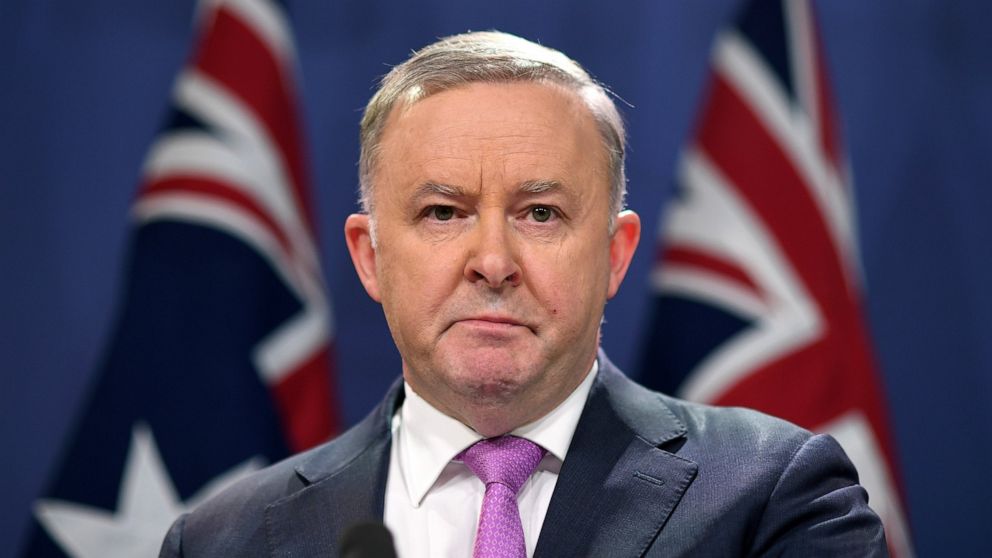
In the 2025 election, voters expressed a clear preference for Anthony Albanese over Peter Dutton. On a scale from 0 to 10 of how much respondents liked the leaders, Albanese had a mean score of 5.1, compared to 3.2 for Dutton. Albanese had the strongest lead relative to the other major party leader on record.
Dutton’s unpopularity continued a trend of declining leader popularity, with more recent elections having less popular leaders. Albanese was also the preferred leader across a range of leadership characteristics, including compassion, honesty, trustworthiness, and inspiration. Qualities that are particularly important to Australian voters are honesty and trustworthiness. Albanese led Dutton on both these traits by 19 percentage points.
Long-term influences
In addition to the short term-factors that made an impact during the campaign, there are several long-term factors gradually transforming politics in Australia. This includes voters no longer being “rusted on” to a particular party, the gender gap in voting, and generational change. These long-term factors also benefited Labor and disadvantaged the Coalition in the 2025 federal election.
Australians have gradually become detached from the two major political parties. Partisanship for Labor reached a record low in 2022, slightly recovering in 2025, with 31% of Australians identifying as Labor partisans.
Liberal partisanship reached a record low in 2025, with just 24% of Australians identifying as Liberal partisans. The proportion of Australians who do not identify with any political party has been steadily growing over time. For the first time on record, in 2025 the proportion of non-partisans (25%) exceeds the proportion of Liberal partisans (24%).
This move away from the major parties contributed to the record high vote for minor parties and independents in the 2025 election. While it has affected both major parties, so far it is the Liberals that have felt its impact in terms of losing previously safe seats to independent candidates.
Another long-term factor shaping the 2025 election result is the gender gap in voter behaviour. In 2025, the Coalition attracted 9% more votes from men compared to women. Labor attracted 5% more votes from women than men.
These patterns are part of a longer-term transformation of how gender influences voter behaviour in Australia. In the 1990s, women were slightly more likely than men to vote for the Coalition. Conversely, men were slightly more likely to vote for Labor.
Over time, the gender gap in voter behaviour reversed and widened. Now women are further to the left in how they vote, and men are further to the right. While both parties have a gender gap in voting, the size of the Coalition gender gap is around double that of Labor’s. The Coalition attracted votes from just 28% of women in 2025, the lowest level on record. It is very difficult for a party to win government with such a low level of support from such a significant group of the population.
A third long-term factor shaping the result is generational change. Younger generations, including Generation Z and Millennials, are further to the left of older generations. These generations are making up a growing proportion of the electorate.
The Australian Election Study shows they are not shifting to the right as they get older. Processes of generational replacement over time are benefitting Labor and creating challenges for the Coalition. The generations that support the Coalition, including Baby Boomers, are a shrinking proportion of the population.