‘Dark tourism’ is attracting visitors to war zones and sites of atrocities in Israel and Ukraine. Why?
- Written by: Juliet Rogers, Associate Professor Criminology, The University of Melbourne
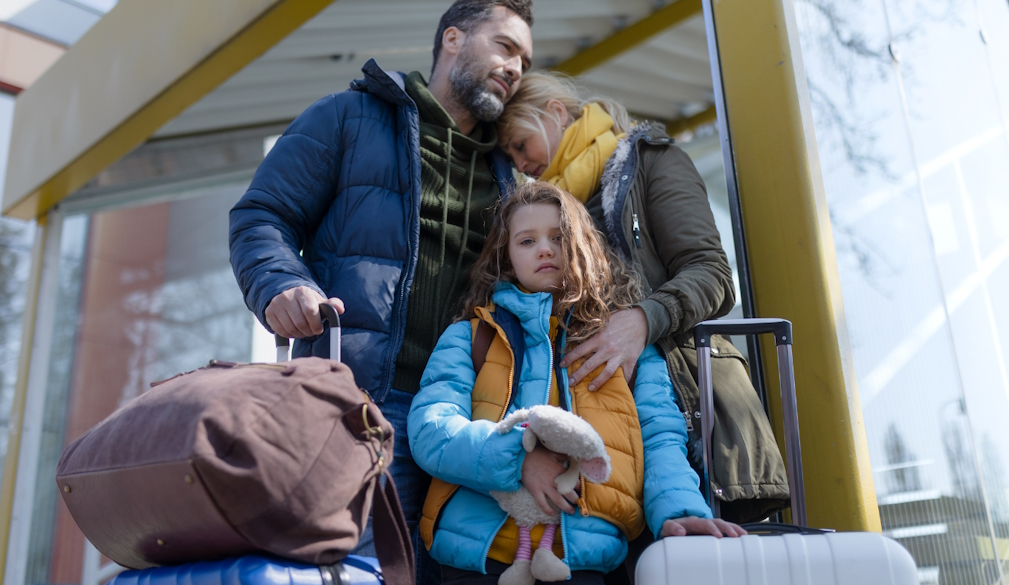
There is a disturbing trend of people travelling to the sadder places of the world: sites of military attacks, war zones and disasters. Dark tourism is now a phenomenon, with its own website[1] and dedicated tour guides. People visit these places to mourn, or to remember and honour the dead. But sometimes they just want to look, and sometimes they want to delight in the pain of others.
Of course, people have long visited places like the Auschwitz-Birkenau[2] Memorial, the site of the Twin Towers[3] destroyed in the 9/11 attacks, Robben Island Prison[4], where Nelson Mandela and others spent many years, and more recently, the Chernobyl nuclear power plant[5]. But there are more recent destinations, connected to active wars and aggression.

Since the Hamas military attacks[6] of October 7 2023, in which around 1,200 people were killed and more than 250 taken hostage, celebrities and tourists have visited the related sites of the Nova music festival and the Nir Oz Kibbutz in Palestine/Israel.
The kibbutz tours, guided by former residents, allow people to view and be guided through houses of the dead, to be shown photographs and bullet holes. Sderot, the biggest city targeted by Hamas, is offering what it describes as “resilience tours”[7], connecting tourists with October 7 survivors.
Similar places are visited in Ukraine[8]. The “popular” Donbas war tour, for instance, takes visitors to the front lines of the conflict and offers “a firsthand look at the impact of the war on the local population”, introducing them to displaced locals, soldiers and volunteer fighters. There’s also a Kyiv tour[9], which takes in destroyed military equipment and what remains of missile strikes.
 Southern Israel’s Nir Oz Kibbutz is a new ‘dark tourism’ site. Francisco Seco/AAP
Solidarity tours
These tours have various names, but one Israeli company[10] calls them “solidarity tours”. The idea of solidarity lessens the presumption of voyeurism, or the accusation of ghoulish enjoyment of pain or suffering. It suggests an affinity with those who have died or those who have lost loved ones.
But solidarity is a political affiliation too. These tours are not only therapeutic. They are not only about “bearing witness”, as many guides and visitors attest. They are also about solidarity with the struggle.
What is this struggle? Genocide scholar Dirk Moses has written thoughtfully[11] on this after October 7. Colonial states seek not just security, but “permanent security”. This makes them hyper-defensive of their borders. Israel was created as a nation by the newly formed United Nations[12] in 1947, two years after the end of World War II and in the shadow of the Holocaust: it was an inevitable product of the Balfour Declaration[13] (1917) that carved up the Middle East.
The creation of the Israeli state turned relationships between Palestinians and Jewish people into borders to navigate and police, producing a line of security to defend.
 The creation of the Israeli state turned relationships between Palestinians and Jewish people into borders to navigate and police. Abir Sultan/AAP
These borders have long been sites of humiliation and denigration toward Palestinians, whose homelands have been now occupied for many generations. Israeli Defense Force soldiers themselves have spoken passionately[14] about the brutal and arbitrary violence that occurs there, including “creative punishments”[15]. These were the borders that protected the sites targeted by Hamas. The Nova music festival was five kilometres from one of these borders.
For many Israelis, any breach of those borders, any sense of loss of control, courts the terrors of the past. It raises the spectre of the Holocaust: the destruction of European Jewry, the loss of sovereignty over family, home, and over life, the loss of millions of lives, again. For Israel, as for any colonial state, security is a permanent aspiration, in Moses’s terms. The stakes are high.
Dark tourism, seen in this light, is not only solidarity with those who have lost loved ones on October 7. It is solidarity with the border, with those who have lost that security. And that loss is profound, traumatic and, at least psychologically, can provoke violent reactions in an effort to have the borders – geographical and psychological – reasserted.
‘I stand with you’
 Nelson Mandela dances in celebration at the end of a ceremony to mark the handover of the final report of the Truth and Reconciliation Commission. Tim Zielenbach/AAP
Transitional justice mechanisms such as the truth commissions in South Africa[16], Timor Leste[17] and Argentina[18] apply legal frameworks to heal nations from the trauma of crimes against humanity. These mechanisms are one choice after experiences of mass violence. Ironically, their catchphrase is Nunca Mas (never again), which was the title of the 1984 report by Argentina’s National Commission on the Dissappeared[19].
Permanent security of the kind Israel is seeking is another choice – and its catchphrase might well be the same. Never again will Israel’s borders be breached, never again will Jewish life be subjected to mass destruction with impunity.
This is what solidarity can mean: not only grieving alongside those who have suffered, but attachment to an identity and borders, which are reinforced through participation. “I stand with you” is perhaps what the visits are for. I stand with you on this land, at this time, and perhaps for all time.
But stand beside you in what now? In grief, yes. But also in rage, in pain, in vengeance and, for some, in making Israel great again.
The hashtag #standwithus accompanies some calls for visits to the October 7 sites, for this form of tourism. It means stand with us at Israel’s border. From there, you can hear the sound of bombs falling: in Gaza[20], a place where no solidarity tour will go. Yet.
Memorials, grief and understanding
Dark tourism is not always for those associated with the events. Some people visit sites of disaster and loss because they want to understand the greater sadnesses of the world and its formidable brutalities. Some want to show their respect to others. It’s not dissimilar to visiting memorials.
Memorials collate the disparate parts of grief and reflect it as public memory. They offer fragments of historical pain that can be borne in more than one mind, to create a shared reality.
In Pretoria, South Africa, a memorial called Freedom Park[21] depicts the names of every person who died in every war fought in South Africa, as well as those South Africans who died in the world wars. The names are written on a wall that circles the park. It is impossibly long and circular, and you cannot measure it with your own stride. It is disorientating and interminable, like grief.
In this memorial-metaphor, you are unable to comprehend – and at the same time are awash with – a history of loss, represented by the names. The walls contain you, and then they cannot. Grief and even solidarity is not always about comprehension or containment. Sometimes it is about proximity. Sometimes, it is about sitting with not knowing. Sometimes, it is about solidarity with something that cannot be made sense of.
Trauma, psychoanalysis tells us, is an experience of what we cannot assimilate. If you sit in proximity to people and places where traumatic events have happened, you can learn something. If you see the bullet holes at a site of loss, you can comprehend something. But not everything. Bullet holes in a wall are the very definition of a partial story.
People visit memorials and sites of loss to learn and to unlearn. Dark tourism has this quality.
Obscenity of understanding
In my field, criminology and trauma studies, we try to understand why people do the violent things they do. Holocaust filmmaker and commentator Claude Lanzmann has said[23] we must not indulge in what he calls the “obscenity of the project of understanding” in relation to Nazi perpetrators of the Holocaust.
He regards curiosity about the minds of perpetrators and the rationale for violence as a violence in itself. Of the Holocaust, he says you cannot ask “Why were the Jews killed?”. It is the result that matters. But it is also the reaction that matters. The state of Israel itself – permanent security and its attendant horrors – is part of that reaction.
But understanding can influence the reaction to violence, and contribute something to the promise of Never Again. Understanding allows us to hold more than one story in mind. It allows us to do more than count the more than 1,200 killed[24] in Israel, or the 41,689 (plus) Palestinians killed in Gaza. Bodies are always more than numbers. But explanation is one thing, justification another. Justification is best left to the courts, international or otherwise, after the violence has ceased.
 Palestinians in the Gaza Strip, November 2023. Getty Images
It is hard to hear about dark tourism in Israel/Palestine and in Ukraine and try to understand it. It is hard not to condemn the tourists. But we are quick to condemn at this time – and even quicker to demand others do the same. Perhaps we should not be so righteous, and we should resist the urge to easily condemn, from our homes in what Tim Rowse has called[25] the “ongoing colonial encounter sometimes called ‘Australia’”.
Indigenous people here speak of the lack of memorials on this land. But every bordered property is a site for dark tourism in Australia. Dark tourism is the effort to seek out destinations of violence and devastation, but it is not hard to see genocide from our front door in this country.
References
- ^ its own website (dark-tourism.com)
- ^ Auschwitz-Birkenau (www.auschwitz.org)
- ^ the site of the Twin Towers (www.911memorial.org)
- ^ Robben Island Prison (www.robben-island.org.za)
- ^ the Chernobyl nuclear power plant (chernobyl-tour.com)
- ^ Hamas military attacks (www.newsweek.com)
- ^ what it describes as “resilience tours” (apnews.com)
- ^ in Ukraine (wartours.in.ua)
- ^ a Kyiv tour (wartours.in.ua)
- ^ one Israeli company (touringisrael.com)
- ^ has written thoughtfully (www.bostonreview.net)
- ^ by the newly formed United Nations (www.pbs.org)
- ^ Balfour Declaration (theconversation.com)
- ^ have spoken passionately (www.breakingthesilence.org.il)
- ^ including “creative punishments” (link.springer.com)
- ^ South Africa (www.justice.gov.za)
- ^ Timor Leste (www.usip.org)
- ^ Argentina (www.usip.org)
- ^ National Commission on the Dissappeared (www.usip.org)
- ^ in Gaza (inews.co.uk)
- ^ Freedom Park (www.freedompark.co.za)
- ^ President's Secretariat (GODL-India)/Wikimedia Commons (data.gov.in)
- ^ Claude Lanzmann has said (www.jstor.org)
- ^ count the more than 1,200 killed (www.ochaopt.org)
- ^ Tim Rowse has called (www.mup.com.au)