Two of the US’s biggest newspapers have refused to endorse a presidential candidate. This is how democracy dies
- Written by: Denis Muller, Senior Research Fellow, Centre for Advancing Journalism, The University of Melbourne
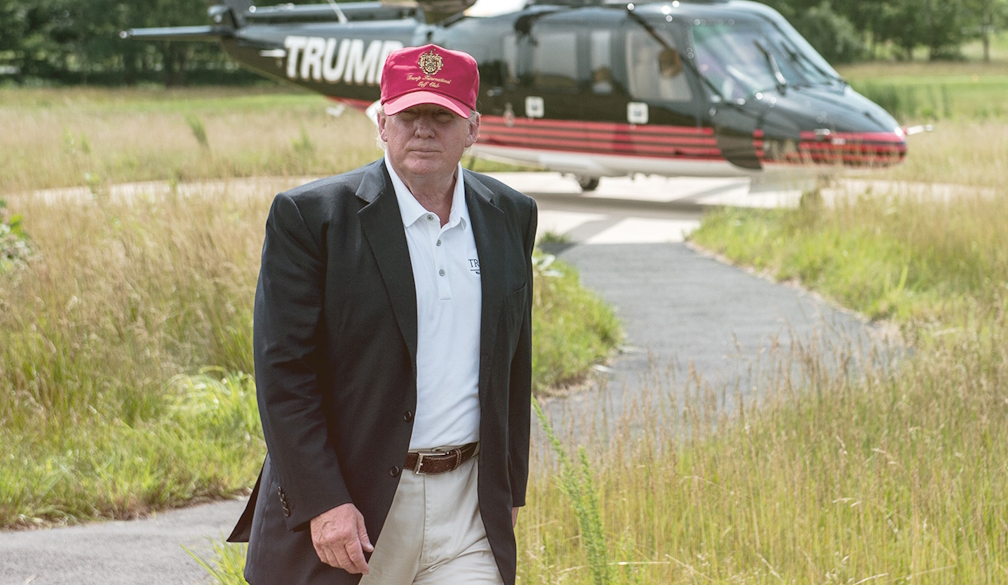
In February 2017, as Donald Trump took office, The Washington Post adopted[1] the first slogan in its 140-year history: Democracy Dies in Darkness.
How ironic, then, that it should now be helping to extinguish the flame of American democracy by refusing to endorse a candidate for the forthcoming presidential election.
This decision, and a similar one by the second of America’s big three newspapers, the Los Angeles Times, disgraces journalism, disgraces the papers’ own heritage and represents an abandonment of civic responsibility at a moment when United States faces its most consequential presidential election since the Civil War.
At stake is whether the United States remains a functioning democracy or descends into a corrupt plutocracy led by a convicted criminal who has already incited violence to overturn a presidential election and has shown contempt for the conventions on which democracy rests.
Why did they do it?
Why would two of the Western world’s finest newspapers take such a recklessly irresponsible decision?
It cannot be on the basis of any rational assessment of the respective fitness for office of Donald Trump and Kamala Harris.
It also cannot be on the basis of their own reporting and analysis of the candidates, where the lies and threats issued by Trump have been fearlessly recorded. In this context, the decision to not endorse a candidate is a betrayal of their own editorial staff. The Post’s editor-at-large, Robert Kagan, resigned[2] in protest at the paper’s decision not to endorse Harris.
This leaves, in my view, a combination of cowardice and greed as the only feasible explanation. Both newspapers are owned by billionaire American businessmen: The Post by Jeff Bezos, who owns Amazon, and the LA Times by Patrick Soon-Shiong, who made his billions through biotechnology.
Bezos bought the Post in 2013 through his private investment company Nash Holdings, and Soon-Shiong bought the Times in 2018 through his investment firm Nant Capital. Both run the personal risk of suffering financially should a Trump presidency turn out to be hostile towards them.
During the election campaign, Trump has made many threats of retaliation against those in the media who oppose him. He has indicated[3] that if he regains the White House, he will exact vengeance on news outlets that anger him, toss reporters in jail and strip major television networks of their broadcast licenses as retribution for coverage he doesn’t like.
Logic would suggest that in the face of these threats, the media would do all in their power to oppose a Trump presidency, if not out of respect for democracy and free speech then at least in the interests of self-preservation. But fear and greed are among the most powerful of human impulses.
The purchase of these two giants of the American press by wealthy businessmen is a consequence of the financial pressures exerted on the professional mass media by the internet and social media.
Bezos was welcomed with open arms by the Graham family, which had owned the Post for four generations. But the paper faced unsustainable financial losses arising from the loss of advertising to the internet.
At first he was seen not just by the Grahams but by the executive editor, Marty Baron, as a saviour. He injected large sums of money into the paper, enabling it to regain much of the prestige and journalistic capacity it had lost.
Baron, in his book Collision of Power: Trump, Bezos and The Washington Post, was full of praise for Bezos’s financial commitment to the paper, and for his courage in the face of Trumpian hostility. During Trump’s presidency, the paper kept a log of his lies, tallying them up[4] at 30,573 over the four years.
Against this history, the paper’s abdication of its responsibilities now is explicable only by reference to a loss of heart by Bezos.
At the LA Times, the ownership of the Otis-Chandler families also spanned four generations, but the impact of the internet took a savage toll there as well. Between 2000 and 2018 its ownership passed through three hands, ending up with Soon-Shiong.
Both newspapers reached the zenith of their journalistic accomplishments during the last three decades of the 20th century, winning Pulitzer Prices and, in the case of the Post, becoming globally famous for its coverage of the Watergate scandal[5].
This, in the days when American democracy was functioning according to convention, led to the resignation of Richard Nixon as president.
The two reporters responsible for this coverage, Bob Woodward and Carl Bernstein, issued a statement about the decision to not endorse a candidate:
Marty Baron, who was a ferociously tough editor, posted[6] on X: “This is cowardice, with democracy as its casualty.”
Now, of the big three, only The New York Times is prepared to endorse a candidate for next month’s election. It has endorsed Harris[7], saying of Trump: “It is hard to imagine a candidate more unworthy to serve as president of the United States.”
Why does it matter?
It matters because in democracies the media are the means by which voters learn not just about facts but about the informed opinion of those who, by virtue of access and close acquaintance, are well placed to make assessments of candidates between whom those voters are to choose. It is a core function of the media in democratic societies.
Their failure is symptomatic of the malaise into which American democracy has sunk.
In 2018, two professors of government at Harvard, Steven Levitsky and Daniel Ziblatt, published a book, How Democracies Die. It was both reflective and prophetic. Noting that the United States was now more polarised than at any time since the Civil War, they wrote:
America is no longer a democratic model. A country whose president attacks the press, threatens to lock up his rival, and declares he might not accept the election results cannot credibly defend democracy. Both potential and existing autocrats are likely to be emboldened with Trump in the White House.
Symbolically, that The Washington Post and the Los Angeles Times should have gone dark at this moment is reminiscent of the remark made in 1914 by Britain’s foreign secretary, Sir Edward Grey:
The lamps are going out all over Europe. We shall not see them lit again in our lifetime.
References
- ^ adopted (en.wikipedia.org)
- ^ resigned (www.mediaite.com)
- ^ indicated (www.npr.org)
- ^ tallying them up (www.washingtonpost.com)
- ^ Watergate scandal (theconversation.com)
- ^ posted (thehill.com)
- ^ endorsed Harris (www.nytimes.com)