Gender is playing a crucial role in this US election
- Written by: Carol Johnson, Emerita Professor, Department of Politics and International Relations, University of Adelaide
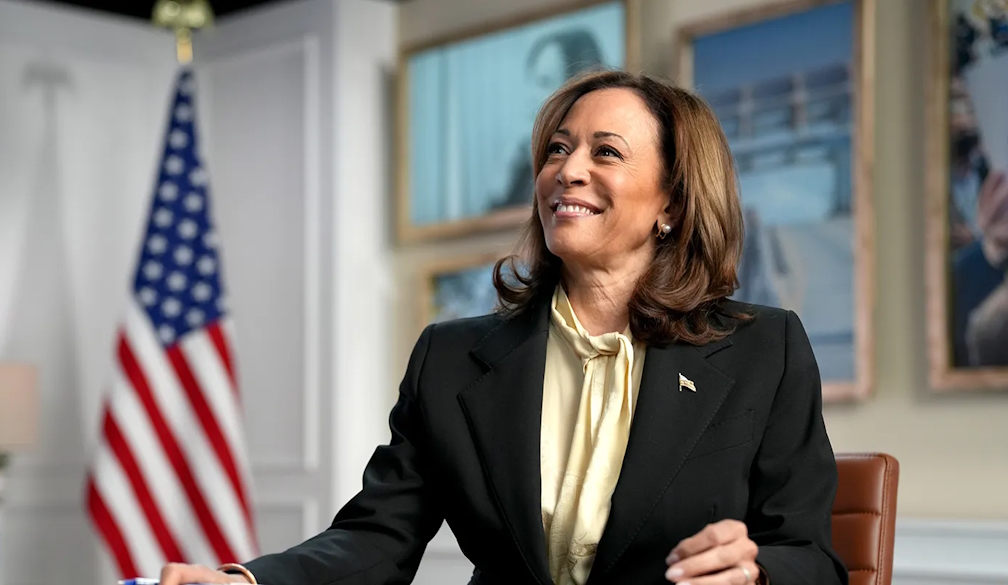
Having a female presidential candidate has made gender obvious in this US presidential election, even to many who normally neglect its role. The specific contest between Kamala Harris and Donald Trump, along with the prominence of issues such as abortion, has resulted in a particularly large gender voting gap[1]. Far more women have consistently indicated support for Harris and far more men for Trump.
However, gender has always been crucial in US presidential elections, not just because of gender voting patterns but because competing performances of masculinity[2] have always played a major role.
Role of masculinity in 2020 election
The last presidential election saw Joe Biden’s form of kind and caring protective masculinity being explicitly contrasted[3] with Trump’s divisive, hyper-masculine one.
Furthermore, strong male leaders are meant to protect the people from physical, social and economic harm. I have argued that one factor that contributed to Trump’s 2020 electoral defeat was a protective masculinity failure[4], especially in regard to COVID.
For example, former President Barack Obama argued[5] that, unlike Biden, Trump could not be counted on to protect Americans:
Eight months into this pandemic, new cases are breaking records. Donald Trump isn’t going to suddenly protect all of us. He can’t even take the basic steps to protect himself […]. Joe understands […] that the first job of a president is to keep us safe from all threats: domestic, foreign, and microscopic.
Trump’s re-energised protective masculinity
However, since his 2020 electoral defeat, Trump has resurrected himself as a strong masculine protector. He claims[6] that “our enemies” are trying to use legal charges to take away his freedom and silence him because he “will always stand” in the way of their attempt to silence the American people and take away their freedom.
He will also be a vengeful protector, declaring[7]:
I am your warrior. I am your justice. And for those who have been wronged and betrayed: I am your retribution. I will totally obliterate the deep state.
Trump has long appealed to men who feel that traditional masculinity, and its related entitlements, are under threat[8].
He is currently courting white males, the youth manosphere, “techno bros”, “crypto bros”, conservative male unionists threatened by globalisation and offshoring, and conservative black and Latino men.
He has been explicitly mobilising misogyny, including by making lewd references[9] to Harris. JD Vance[10] has assisted Trump’s efforts.
Nonetheless, Trump claims that he will be a strong male protector[11] of women, protecting them from illegal immigrants, crime, foreign threats and other anxieties:
You will be protected and I will be your protector. Women will be happy, healthy, confident and free.
Trump has even promised that, as a result, women “will no longer be thinking about abortion.” This is all despite his own alleged history[12] of sexual assault.
Harris, gender and the women’s vote
By 2024, Biden’s apparent physical and cognitive decline meant that he was no longer a convincing masculine protector (or viable ongoing presidential candidate).
The choice of Harris as his replacement candidate had advantages, but it was also a gamble given the combined roles of gender and race. After all, despite the long history of US racism, it still proved easier to elect a black man (Obama) to the presidency than a white woman (Hillary Clinton).
However, the women’s vote is particularly important this election. As well as Harris’ appeal to younger[13] and black women, Democrats have emphasised the importance of her appeal to white women[14], including some who previously voted Republican. Anti-Trump Republicans such as Liz Cheney[15] are assisting Harris in appealing to the latter.
Issues such as abortion are crucial. The overturning of Roe v Wade[16] abortion rights, enabled by Trump stacking the Supreme Court, also puts IVF at risk by not clarifying when life begins (with implications for frozen embryos). Senate Republicans have twice blocked a vote on a Democrat-led bill designed to protect IVF. Harris has pledged to sign a law protecting abortion rights (if Congress passes it).
Trump claims[17] he supports IVF, won’t bring in a national ban on abortion and believes in abortion “exceptions for rape, incest, and life of the mother”.
However, Trump Republicans are courting, and influenced by, the American religious right[18] on abortion. There aren’t such exceptions in several Republican states, as Harris’s heartrending accounts[19] of the impact on women and their health reveals. Furthermore, Missouri, Kansas and Idaho are also trying to drastically reduce legal access to the abortion drug mifepristone.
Harris also emphasises other issues[20] of particular significance for women, such as affordable childcare and better pay for care workers.
Harris and “tonic” masculinity
Given the role of competing masculinities in US presidential elections, Harris’ campaign has intentionally appealed to a very different form of protective masculinity from Trump’s.
Vice presidential candidate, Tim Walz’s, “America’s dad” image (of being a warm, caring but sports loving coach, national guard serving, gun owning, hunter) is used to contrast his “tonic masculinity[21]” with Trump’s “toxic” masculinity. Harris’s husband, Doug Emhoff, is depicted as[22] a supportive “wife-guy” who has “reshaped the perception of masculinity” (while strongly denying allegations[23] he once slapped a woman).
Despite conservative claims of men being economically left behind, the Biden/Harris administration argues it has revitalised[24] manufacturing and male jobs along with it and Harris will continue to do so. Meanwhile, Obama has urged[25] black men to get behind Harris and the Harris campaign has highlighted its policies benefiting[26] black men.
Can Harris mobilise protective femininity?
Given the major role of gender in US presidential elections, a key issue is whether Harris can successfully evoke a caring, motherly, protective femininity[27] that promises security and economic benefits to voters and helps to counter Trump’s protective masculinity.
Other women politicians have been able to[28] (for example, Germany’s Angela Merkel). Women leaders particularly mobilised protective femininity during the COVID health crisis (for example, New Zealand’s Jacinda Ardern). However, it always seemed likely masculinist leadership stereotypes would re-emerge [29] once the economy needed rebuilding after the pandemic.
Harris has pledged [30] she will “create an opportunity economy” and “protect our fundamental rights and freedoms, including the right of a woman to make decisions about her own body and not have her government tell her what to do”. She promises to be the kind of president “who cares about you and is not putting themselves first”. Whether such electoral pitches are successful remains to be seen.
Why the outcome of this election is crucial for gender equality.
A woman US president is long overdue after 46 male ones. A Trump victory would have major implications for abortion, IVF and women’s rights generally, including progress on the Biden/Harris National Strategy on Gender Equity and Equality[31]. Immigrant and black women will be particularly vulnerable. A Trump victory would also have major implications for which models of masculinity are publicly endorsed.
A Trump victory would embolden conservative so-called anti-gender ideology[32] campaigns. The Trump campaign has recently spent US $21 million[33] (A$31.9 million) on ads associating Harris with LGBTIQ+ equality, especially transgender rights.
The Trump campaign asserts[34] that “Kamala’s for they/them. President Trump is for you.” While Trump has also pledged[35] that “we will get critical race theory and transgender insanity the hell out of our schools.”
A Trump victory will influence the future US economy, including risking increasing gender inequality[36] in an Elon Musk-style[37] unregulated technopoly.
Finally, academic commentators have drawn attention[38] to the way in which socially conservative views on gender have been mobilised to support new forms of authoritarian regimes in Europe and elsewhere.
In short, this presidential election is a crucial one for the American people generally, but for the female half of the population in particular.
References
- ^ gender voting gap (www.theguardian.com)
- ^ performances of masculinity (books.google.com.au)
- ^ contrasted (www.rev.com)
- ^ protective masculinity failure (doi.org)
- ^ argued (www.rev.com)
- ^ claims (www.rev.com)
- ^ declaring (www.rev.com)
- ^ under threat (doi.org)
- ^ lewd references (www.theguardian.com)
- ^ JD Vance (www.msnbc.com)
- ^ protector (www.rev.com)
- ^ alleged history (www.thecut.com)
- ^ younger (theconversation.com)
- ^ white women (www.politico.com)
- ^ Liz Cheney (slate.com)
- ^ Roe v Wade (reproductiverights.org)
- ^ claims (www.rev.com)
- ^ religious right (www.npr.org)
- ^ heartrending accounts (www.rev.com)
- ^ other issues (kamalaharris.com)
- ^ tonic masculinity (www.usatoday.com)
- ^ depicted as (www.foxnews.com)
- ^ allegations (nypost.com)
- ^ revitalised (www.whitehouse.gov)
- ^ urged (www.news.com.au)
- ^ benefiting (abcnews.go.com)
- ^ protective femininity (doi.org)
- ^ have been able to (doi.org)
- ^ re-emerge (doi.org)
- ^ pledged (www.rev.com)
- ^ National Strategy on Gender Equity and Equality (view.officeapps.live.com)
- ^ anti-gender ideology (edition.cnn.com)
- ^ $21 million (edition.cnn.com)
- ^ asserts (nypost.com)
- ^ pledged (www.rev.com)
- ^ gender inequality (www.womentech.net)
- ^ Elon Musk-style (www.reuters.com)
- ^ drawn attention (doi.org)