Will Donald Trump renegotiate the AUKUS treaty or walk away? That’s the $368 billion question
- Written by: David Andrews, Senior Policy Advisor, Australian National University
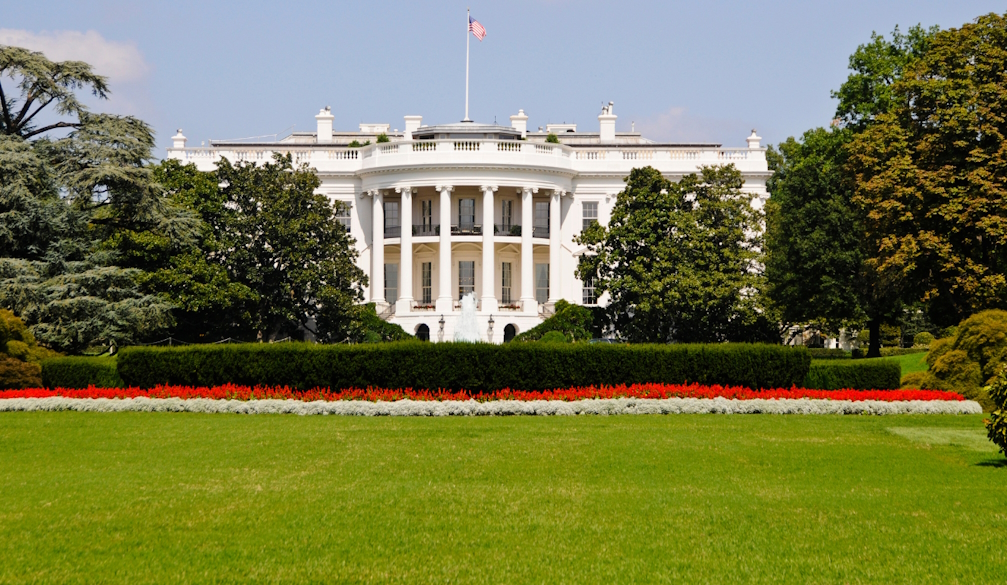
Given the United States is Australia’s most consequential military ally, it is natural to consider what Donald Trump’s return to the White House will mean for the future of Australian defence policy – especially the AUKUS agreement.
Judging by the initial comments by one of the most senior members of Australia’s government, there certainly appears to be concern that Trump may look to modify – or even scrap – AUKUS.
Foreign Minister Penny Wong noted[1] in the immediate aftermath of Trump’s victory:
We look forward to particularly prioritising AUKUS in our engagement [with the Trump Administration], which is the thing that we have been most focused on in the lead-up to this election.
This is a remarkable statement. In just over three years, AUKUS has now become the most important topic for discussion with the incoming US government. It has received higher billing than any other joint defence project and activity[2], as well as the global economic threat posed by potential US tariffs on Chinese imports[3].
This illustrates the enduring Australian government support for AUKUS and its centrality to our defence planning, as well as the significant concern this enthusiasm is not shared by Trump or his team.
Trump could seek a renegotiation
It is an extremely risky to try to predict what Trump will do. That said, the Australian government’s apprehension seems to be well-founded.
A consistent theme of Trump’s foreign policy has been his lambasting of allies he believes are taking advantage of the US and not paying their way. This has included South Korea[4], Japan[5] and the members of NATO[6].
In each of these cases, Trump has wanted to renegotiate the terms of agreements. He’s tried to compel South Korea and Japan to contribute a greater share of the financial cost for basing US troops on foreign soil. And with NATO, he has threatened to withhold US assistance unless certain financial thresholds are met.
As a result, some commentators have posited that Australia may be asked to contribute more to the overall cost[7] of AUKUS. This could be beyond the £2.4 billion (A$4.6 billion)[8] and US$3 billion (A$4.6 billion)[9] that Australia has already committed to invest in the UK and US defence industrial bases, respectively.
As the agreement currently stands, there is little to prevent Trump from making such a demand – or, indeed, any of the parties (Australia included) from walking away from the deal.
The most formal articulation of the deal so far is a draft trilateral treaty[10] that was tabled in the Australian parliament in August. This treaty is designed to provide the legal framework for the parties to cooperate on the provision of US and UK naval nuclear propulsion information and technology to Australia.
As well as making its way through the Australian parliament, the treaty was presented to the UK parliament[11] in September and transmitted to the US Congress[12] in August.
Once approved by the three legislatures, it would enter into force until December 31 2075 (unless terminated or amended beforehand).
However, as with other US security treaties, if Trump decides he is unwilling to abide by the terms in the treaty, there’s ultimately little the Australian government can do about it. As is commonplace in these kinds of agreements, the members only need to give 12 months’ notice to withdraw.
So, this is an important formal step between the partners, but as with any such agreement, the longevity of AUKUS is fundamentally a question of political will.
AUKUS has sizeable US support
Even so, there is strong support for Australia in Congress, as well as broad support for AUKUS[13], specifically.
If Trump sought to formally renege on the agreement, or modify its terms, this would likely need congressional approval. This is by no means a guarantee.
Pat Conroy[14], the Australian minister for defence industry and capability development, and Matt Keogh[15], minister for defence personnel, have both stressed the same point in recent interviews – that there is support for AUKUS “across Democrats, Republicans, [and] Trump Republicans”.
As Conroy said in a recent interview, this includes “an 80% yes vote in an evenly divided Senate and a 75% yes vote in a Republican-dominated House of Representatives” on three key pieces of AUKUS legislation in December 2023.
Additionally, with the nomination of noted China hawks[16] Marco Rubio as secretary of state and Mike Waltz as national security advisor, Trump’s foreign policy team is beginning to take on a certain Indo-Pacific emphasis.
This would undoubtedly see a crucial role for Australia, along with other US treaty allies in the region. Whether this is a role that is ultimately in Australia’s interests is another matter altogether.
So, while concerns about the future of AUKUS are perfectly reasonable (and sensible), initial signs do not point to a risk of US disengagement from the region. If anything, it’s the opposite. Alliance entrapment in a future conflict seems a more pressing concern than alliance abandonment.
What will the future bring?
Whether the current AUKUS partnership remains the same in five, ten or 20 years, though, is an open question. The debate over Trump’s intentions has only focused on Pillar 1[17] of the AUKUS agreement – the submarine component – and not the array of advanced capabilities being developed under Pillar 2[18].
This is truly a revolutionary agreement that is expected to last at least half a century. In that time, change and evolution are far more likely than not.
The question then is how you manage potential changes, and how much further Australia is willing to bend before any associated costs become too prohibitive. That question will certainly outlast Trump.
References
- ^ noted (www.abc.net.au)
- ^ any other joint defence project and activity (www.defence.gov.au)
- ^ US tariffs on Chinese imports (www.theguardian.com)
- ^ South Korea (www.voanews.com)
- ^ Japan (foreignpolicy.com)
- ^ NATO (apnews.com)
- ^ contribute more to the overall cost (www.washingtonpost.com)
- ^ £2.4 billion (A$4.6 billion) (www.theguardian.com)
- ^ US$3 billion (A$4.6 billion) (www.defenseone.com)
- ^ draft trilateral treaty (www.aph.gov.au)
- ^ presented to the UK parliament (www.gov.uk)
- ^ transmitted to the US Congress (www.whitehouse.gov)
- ^ support for AUKUS (www.abc.net.au)
- ^ Pat Conroy (www.minister.defence.gov.au)
- ^ Matt Keogh (www.minister.defence.gov.au)
- ^ noted China hawks (apnews.com)
- ^ Pillar 1 (www.aspistrategist.org.au)
- ^ Pillar 2 (www.aspi.org.au)