Why does family violence increase during the festive season? Here are 3 contributing factors
- Written by: Elizabeth Summerell, Lecturer, School of Psychology, Faculty of Health and Medical Sciences, University of Adelaide
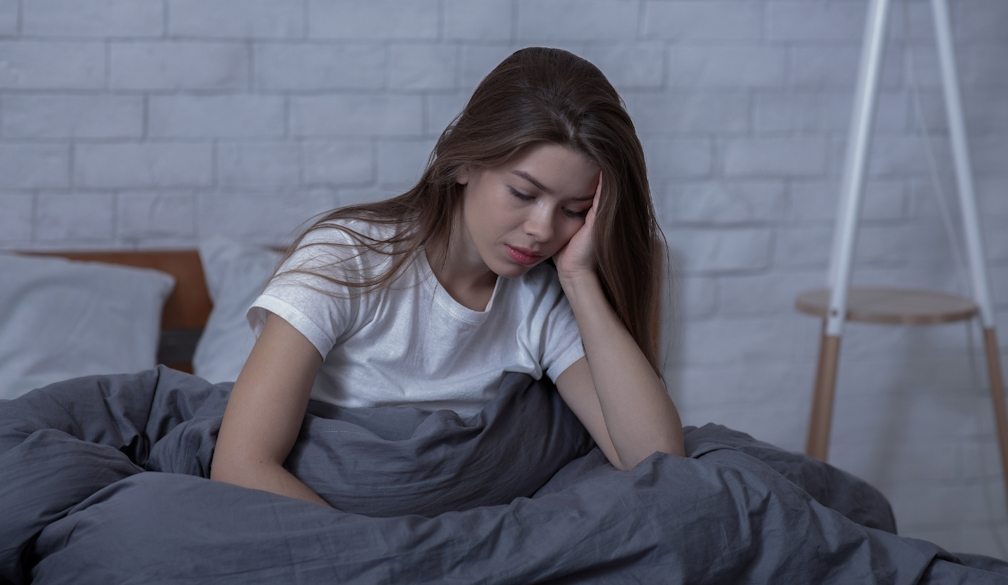
While the holiday season is supposed to be a happy time, evidence suggests it’s one of the worst times of year for domestic and family violence.
Victorian crime data[1] show family incidents tend to be more frequent in December and January compared with most other months. WA Police also report[2] increased family violence incidents over the Christmas to New Year period, with the average daily number of reports increasing by 24.2%.
Already increased rates of violence over the festive season may be getting worse. Last year, Queensland Police[3] saw a 32% increase in family and domestic violence-related calls over the Christmas to New Year period compared with the previous year.
In Victoria[4], the average number of recorded family violence incidents rose by 33% on Christmas Day alone.
These statistics are in line with research[5] finding rates of violent crimes are related to major holidays.
But what is it about the holidays that makes violence more likely?
Below, we outline three factors that make the holidays an at-risk period for violent behaviour.
It’s important to note there is no single cause of violent behaviour. Rather, many complex factors interact[6] to make it more likely that certain people will be violent in certain situations.
So even if you’re not concerned about violence in your life, it’s helpful to understand what may drive some people to act in a certain way. Then we can all have a safer, happier festive season.
Money, heat and alcohol
The holidays come with increased financial pressures associated with gift-giving and social events.
A recent report[7] found more than 50% of Australians struggle to afford gifts for special occasions such as Christmas.
Alongside the current cost-of-living crisis[8], many people are in financial distress, which research shows[9] is associated with intimate partner violence perpetration.
Holiday celebrations often involve alcohol consumption, which is also related to aggressive behaviour[10].
According to the New South Wales Bureau of Crime Statistics and Research[11] around a quarter of domestic violence-related assaults from July 2023 to June 2024 were alcohol-related.

Not everyone who drinks alcohol will become violent. However, alcohol changes the way the brain functions[13] by reducing our ability to control our impulses, which can increase the likelihood of becoming violent when provoked.
The holiday season in Australia also coincides with rising summer temperatures. Higher temperatures are associated with increases in violence[14].
Researchers suspect[15] this association may be due to increased discomfort and frustration and more frequent social events where conflict may arise.
While these situational factors on their own don’t cause aggression, they can lower our ability to “keep our cool”. For example, if someone is already feeling hot and bothered, stressed about the cost of Christmas, and has had too much to drink, they might be more likely to react to even small triggers.
What can be done?
1. Drink responsibly
Research shows[16] reducing harmful alcohol consumption can reduce violence.
Australian guidelines[17] recommend consuming no more than four standard drinks on any one day.
If you do choose to drink, experts recommend[18] considering low- or no-alcohol alternatives, pacing yourself, and making sure you’ve got a plan to get you and your loved ones home safely[19].
2. Stay cool
Early forecasts[20] predict most capital cities will enjoy warm weather in the high 20s or low 30s on Christmas day.
To beat the heat[21], try to avoid being outside during the hottest parts of the day. Stick to the shade and stay hydrated.
3. Use emotion-regulation strategies
There are various ways you can manage negative emotions that may lead to violence.
One way is to adjust the situations you are in[22]. While declining invitations to events that may upset you would be one way to use this strategy, family dynamics aren’t always that simple.
Modifying the situation may be more realistic. If there’s a family member with whom you’d rather not engage, focus your attention on interacting with others, or ask a trusted person to keep an eye out.
Research suggests these kinds of situation-based strategies may be particularly useful for people who find it difficult to control their emotions[23] in the heat of the moment.
 Seeing conflict from a different perspective can make for happier Christmas gatherings. Shutterstock[24]
If conflict does arise, try to step away or redirect your focus. You could partake in backyard cricket or talk to someone else – anything that distracts you from how you’re feeling. Research[25] suggests distraction can help “turn down the volume” of intense negative emotions.
Another way you can reduce negative emotions is by trying to see a stressful situation from a different perspective.
This strategy, called cognitive reappraisal, has been linked to lower levels of intimate partner violence[26].
Stressed about balancing a busy Christmas Day schedule? Try to remind yourself it’s a chance to show your loved ones you care. Tempers rising over the same old family arguments? Try to focus on the opportunity to be together.
These evidence-based strategies can help stop conflict from escalating and contribute to a safe and happy holiday season.
The National Sexual Assault, Family and Domestic Violence Counselling Line – 1800 RESPECT (1800 737 732) – is available 24 hours a day, seven days a week for any Australian who has experienced, or is at risk of, family and domestic violence and/or sexual assault.
References
- ^ Victorian crime data (www.crimestatistics.vic.gov.au)
- ^ WA Police also report (simonemcgurk.com.au)
- ^ Queensland Police (mypolice.qld.gov.au)
- ^ In Victoria (www.police.vic.gov.au)
- ^ research (doi.org)
- ^ many complex factors interact (doi.org)
- ^ A recent report (www.realinsurance.com.au)
- ^ current cost-of-living crisis (www.abs.gov.au)
- ^ research shows (pmc.ncbi.nlm.nih.gov)
- ^ related to aggressive behaviour (psycnet.apa.org)
- ^ New South Wales Bureau of Crime Statistics and Research (bocsar.nsw.gov.au)
- ^ Shutterstock (www.shutterstock.com)
- ^ changes the way the brain functions (www.nature.com)
- ^ associated with increases in violence (www.nature.com)
- ^ Researchers suspect (www.thelancet.com)
- ^ Research shows (iris.who.int)
- ^ Australian guidelines (www.health.gov.au)
- ^ experts recommend (drinkwise.org.au)
- ^ plan to get you and your loved ones home safely (alcoholthinkagain.com.au)
- ^ Early forecasts (www.abc.net.au)
- ^ beat the heat (www.health.nsw.gov.au)
- ^ adjust the situations you are in (www.sciencedirect.com)
- ^ control their emotions (eprints.whiterose.ac.uk)
- ^ Shutterstock (www.shutterstock.com)
- ^ Research (link.springer.com)
- ^ linked to lower levels of intimate partner violence (pmc.ncbi.nlm.nih.gov)