Donald Trump has gatecrashed the federal election. It’s creating huge challenges for Australia’s next government
- Written by: Rebecca Strating, Director, La Trobe Asia, and Professor of International Relations, La Trobe University
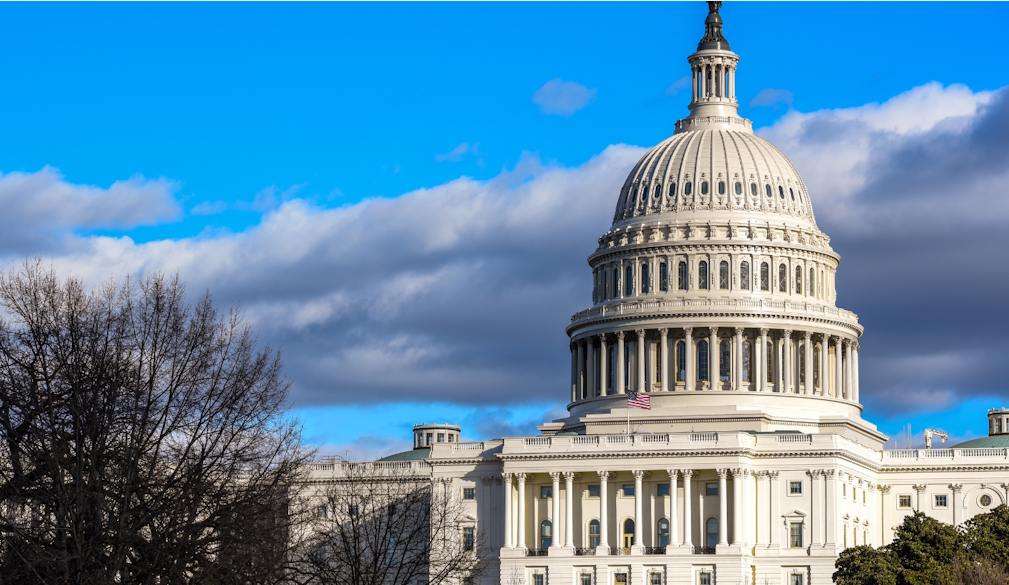
Much of the world is finding out it’s a very difficult time to be a friend and ally of the United States.
That includes the major parties vying for power at the May 3 federal election. While voters may be preoccupied with the cost of living[1], it’s impossible to ignore the global tumult caused by the second Trump administration.
Who would have thought six months ago that the US would vote alongside Russia and North Korea on UN resolutions[2] on Ukraine, while China abstained? Or that it would propose transforming Gaza into a Mediterranean resort?
Given the uncertainty reverberating across the globe, do we need to rethink our major foreign relations? Will the ANZUS alliance survive the second Trump presidency unscathed?
Whoever forms Australia’s next government must diversify its approach to foreign policy to include more engagement with partners in Asia and the Pacific. It does not mean abandoning the US alliance, but it does mean avoiding over-reliance.
Friends like these
US President Donald Trump’s widespread imposition of tariffs[3] is unravelling the global economic order.
Australia was not specifically singled out for punishment. Nevertheless, the 10% slug on Australian imports prompted Prime Minister Anthony Albanese to condemn[4] the tariffs as illogical:
they go against the basis of our two nations’ partnership. This is not the act of a friend.
Opposition Leader Peter Dutton was equally frank when he complained about Australia’s poor treatment:
We have a special relationship with the United States and it hasn’t been treated with respect by the administration or the president.
We have been let off relatively lightly compared with many other economies[5]. But there may be an unforeseen strategic impact on Australia. For example, will other countries in our region decide that China is a more trustworthy partner than the US? What would that do for regional stability?
Dutton has questioned[6] whether Albanese has the right character as leader to deal effectively with Trump.
It is unlikely any Australian prime minister could have done much to avoid the tariffs. We should consider the possibility that Trump doesn’t think much about Australia, which will shape the bilateral relationship for the foreseeable future.
US vs China
Trump himself remains the wild card. His administration has prioritised ending the war in Ukraine, alienating European allies[7] along the way.
The question for partners in Asia, including Australia, is whether the US is clearing the decks in Europe so it can focus on its main competitor: China. There are plenty of Beijing hawks in the administration, and China has been slapped with the steepest tariffs[8], which total 54%.

In Australia, we often worry about being dragged into a great power conflict in the region. And we do appear to be entering a world of even more rapid militarisation, with all the security risks that would entail.
The signing of the AUKUS submarine agreement in 2021 was one of the clearest signals to date that Australia was siding[10] unequivocally with Washington. In the same year, Dutton declared it “inconceivable[11]” Australia would not join the US in defending Taiwan if it was attacked by China.
But now, there is an entirely different issue Australia needs to consider. The US rapprochement[12] with Russia might be interpreted as a portent of future deal-making with other authoritarian leaders, including Xi Jinping.
We can’t rule out Trump and Xi cutting a highly transactional deal on Chinese annexation[13] of Taiwan. While this is unlikely, the security calculus now needs to incorporate a diverse range of plausible futures that previously seemed off the table.
A Taiwan bargain would make regional partners, including Australia, extremely nervous. If the US is willing to abandon Taiwan, it might be willing to abandon other allies as well.
Higher defence spending
The recent transit through Australian waters by Chinese naval vessels[14] focused attention on whether Australian defence capabilities are sufficient to protect[15] our coastline – and whether the Albanese government’s response was too tepid[16].
Yet, it is the opposition that has tempered its rhetoric on China, notwithstanding its policy commitment to end the 99-year lease of the Port of Darwin to Chinese firm Landbridge.
Peter Dutton has declared[17] himself to be “pro-China”:
the relationship with China will be much stronger than it is under the Albanese government
This reflects lessons learned from the last election when a stronger tone on China hurt[18] the Coalition among Mandarin-speaking voters.
Rather than talking up the China threat, the narrative is instead around the need to increase defence spending[19].
The Trump administration wants Australia to share more of the burden by lifting defence spending above 3% of GDP[21]. Such a ramp-up[22] may not be feasible in financial terms.
While Australia does need to boost military capabilities, increased spending should be determined by independent, evidence-based assessments of Australia’s defence needs.
Alliance will endure
Neither major party is questioning the alliance, which will survive the second coming of Trump. Nor will there be any debate over the AUKUS submarines, for which there is bipartisan support.
Any difference between Labor and the Coalition is likely to be on the periphery. However, one important difference will be how the respective parties think about our region. As Dutton recently demonstrated, the Coalition is less focused[23] than Labor on relations with Asia.
While Trump is sucking up much of the oxygen in Australia’s foreign relations, we simply cannot afford to forget about our partners throughout the Asia-Pacific.
This is the second article in our special series, Australia’s Policy Challenges. You can read the first piece in the series here[24].
References
- ^ cost of living (www.abc.net.au)
- ^ UN resolutions (www.bbc.com)
- ^ tariffs (theconversation.com)
- ^ condemn (theconversation.com)
- ^ other economies (www.smh.com.au)
- ^ questioned (www.lowyinstitute.org)
- ^ alienating European allies (foreignpolicy.com)
- ^ steepest tariffs (www.reuters.com)
- ^ Dmitri Lovetsky/AAP Images (photos.aap.com.au)
- ^ siding (carnegieendowment.org)
- ^ inconceivable (www.reuters.com)
- ^ US rapprochement (www.washingtonpost.com)
- ^ annexation (www.brookings.edu)
- ^ Chinese naval vessels (www.aspistrategist.org.au)
- ^ protect (soundcloud.com)
- ^ too tepid (www.theguardian.com)
- ^ declared (www.abc.net.au)
- ^ hurt (www.abc.net.au)
- ^ increase defence spending (www.lowyinstitute.org)
- ^ Joel Carrett/AAP Images (photos.aap.com.au)
- ^ 3% of GDP (www.afr.com)
- ^ ramp-up (www.aspistrategist.org.au)
- ^ less focused (www.youtube.com)
- ^ here (theconversation.com)