Australia is buying more. Who will make it?
- Written by: The Times
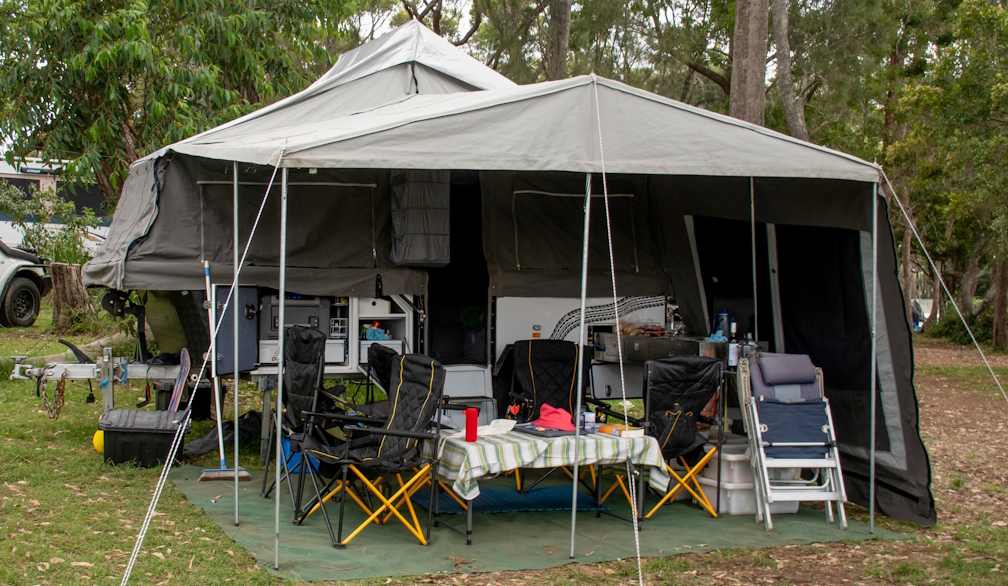
The liquidation of a local camping-equipment manufacturer raises a larger question: how does Australia expand its population and consumption while sustaining the businesses that make things here?
A camping kitchen or a set of vehicle drawers might seem a small part of the Australian economy.
For the business designing and building it, the workers making it and the suppliers providing materials, it is an industry.
That is why the insolvency of Drifta Camping Kitchens Pty Ltd deserves attention beyond the camping community.
Published insolvency records identify the company as entering voluntary administration in August 2026 and creditors’ voluntary liquidation in September. Its own historical account described manufacturing camping and camper-trailer kitchens and four-wheel-drive drawer systems at Gloucester in regional New South Wales.
Those records establish the company’s insolvency. They do not establish that Chinese competition caused its failure, or that every operation using the Drifta brand has ceased.
Nevertheless, the case provides a starting point for a broader question.
Australia needs homes, transport, household fittings and recreational equipment. How much of that demand will support Australian production, and how much will be supplied from overseas?
An order carries more than a purchase price
When a buyer chooses an imported product over a viable Australian-made alternative, the local manufacturer loses an opportunity.
Behind that opportunity may be wages, an apprentice’s training, purchases from nearby suppliers and money available for new equipment.
A workshop’s order book is also the foundation on which it makes decisions. A business needs confidence in future work before it hires, expands or borrows to improve production.
If orders weaken, the first consequence may be reduced overtime. Then recruitment stops. Investment is postponed. Eventually, a business may no longer have enough work to cover its fixed costs.
The effects can reach businesses that never competed directly with an overseas supplier.
An Australian fabricator, cabinetmaker, transport operator or component supplier may lose work because its manufacturing customer has lost the final sale.
That is how the loss of production can spread through a local economy.
Imports do not displace local work in every case
It would be too sweeping to say that every import replaces an Australian order.
Some products have no locally available equivalent. Some imported components enable Australian businesses to manufacture competitively. Lower prices can also make purchases possible that would otherwise never occur.
Importing, distributing, installing and servicing products creates Australian employment too.
But those qualifications do not remove the central issue.
Where a capable Australian producer could have supplied the product, choosing an overseas-made alternative can shift production work abroad.
The policy question is whether that choice delivers sufficient overall benefit—and whether Australian producers face costs or barriers that policy could reasonably address.
A cheaper purchase can be good value for the buyer while carrying a wider cost for the community.
Both can be true.
Caravanning shows why demand alone is insufficient
Australians have not lost their enthusiasm for camping and caravan travel.
The Caravan Industry Association of Australia reports 17.7 million overnight caravan and camping trips and $13.1 billion in visitor spending in the year ending March 2026.
Its published statistics also report that imports of caravan trailers and related components increased by 16 per cent in 2025, reaching 23,244 units.
Strong tourism activity, however, does not guarantee a healthy order book for every Australian equipment manufacturer.
Travellers can keep touring in existing vehicles. New buyers can choose imported products. Spending can flow to accommodation, fuel and experiences rather than newly manufactured equipment.
An industry can look busy to its customers while parts of its production base struggle.
China presents a competitive challenge
The industry association’s 2025 report identified China as the dominant source of Australia’s caravan-trailer imports, recording 19,498 units in 2024.
The question extends beyond caravans.
For complete kitchens, modular homes, trains and buses, the useful test is how much work a purchasing decision retains in Australia: design, fabrication, assembly, installation, maintenance and component production.
These activities are not interchangeable. Nor should valuable local assembly or servicing be dismissed simply because some components come from overseas.
Clear information about Australian content would help buyers and taxpayers understand what their money supports.
Competition should encourage Australian businesses to improve quality, productivity and delivery. But a government that wants local manufacturing also needs to examine the conditions under which those businesses compete.
Energy, industrial premises, financing, skills and approval processes all belong in that examination.
Population growth needs a production strategy
Population growth increases the need for housing, transport and services.
It also brings workers, business owners and skills. Migration can help manufacturers fill difficult vacancies and expand production.
The concern is therefore how population policy connects with industrial capacity.
If Australia plans for more residents, it should also plan for the productive businesses, infrastructure and training needed to support them.
Importing more finished goods may meet immediate demand. It does not, by itself, build the local capacity to meet the next round of demand.
Governments should be able to explain how their housing, migration, procurement and manufacturing policies fit together.
Growing the number of consumers is easier to measure than strengthening the businesses that supply them. A sound economic strategy needs both.
What a rethink should involve
A useful rethink would begin with viable production opportunities.
Public procurement should assess lifetime value, including reliability, maintenance, spare parts and delivery risk. Where lawful and appropriate, it should also recognise local skills, supply chains and resilience.
Manufacturers need enough visibility of future public orders to consider investing in capacity. A succession of isolated contracts can be harder to build a business around than a credible purchasing pipeline.
Support for productivity should be accessible to smaller firms. Equipment, automation, technical advice and workforce training can matter as much to a regional workshop as to a large factory.
Regulatory requirements should be enforced consistently across local and imported products. Competing on price should still require meeting applicable safety and performance standards.
And assistance should have a clear purpose: building a competitive business with measurable outcomes. Public support cannot make every failed commercial model sustainable.
Understanding individual failures matters too. Debt, management, product demand and cash flow need examination alongside import competition. Otherwise, policy risks treating the wrong cause.
The Times View
Australia benefits from international trade. It also benefits from retaining the ability to design, manufacture, repair and improve essential products.
The task is deciding where local production offers lasting value and making it commercially possible.
A factory’s closure can disperse workers, weaken suppliers and end opportunities to train the next generation. Rebuilding that capability may be much harder than replacing the product on a showroom floor.
As Australia adds people, homes and infrastructure, governments should pay closer attention to where the resulting orders go.
A country can keep buying what it needs after its factories close. What it cannot purchase as easily is the capability it allowed to disappear.