One Nation’s rise: a rebellion against both sides of politics
- Written by: The Times
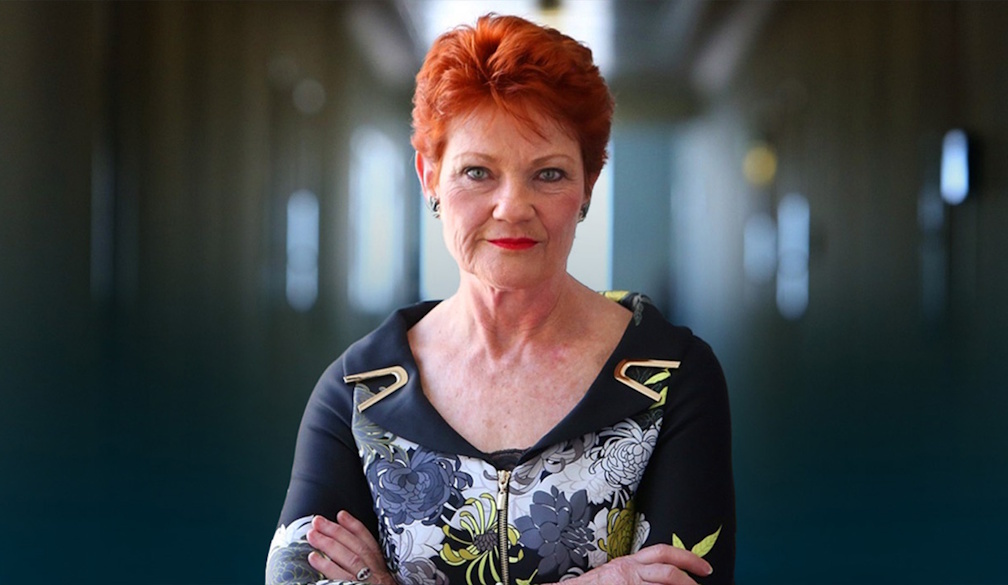
Pauline Hanson’s party is challenging more than Labor. Its advance raises a deeper question about whether Australians still believe the established opposition offers a meaningful alternative.
One Nation is becoming too substantial a political force to dismiss as a passing burst of discontent.
Its rise challenges the familiar assumption that voters disappointed with Labor will eventually return to the Liberal–National Coalition. Increasingly, the contest includes people willing to reject both.
That is the significance of the present moment. A government can respond to criticism by defending its record. An opposition can respond by promising better management. But when voters doubt both the record and the promised alternative, the political argument changes.
The question becomes whether the established parties still represent the people whose confidence they need.
A substantial shift, with important limits
Recent polling makes the scale of One Nation’s challenge difficult to ignore.
Roy Morgan’s survey conducted from September 14 to 27 put Labor on 26 per cent of the federal primary vote, One Nation on 25.5 per cent and the Coalition on 22.5 per cent. Its preference-based estimate nevertheless placed Labor ahead of One Nation, 53.5 to 46.5.
A separate Capital Brief/DemosAU survey, conducted from September 10 to 14, recorded Labor on 28 per cent, One Nation on 26 per cent and the Coalition on 20 per cent.
These are polling estimates, not election results. Their significance lies in the repeated appearance of One Nation as a competitor to the established parties, rather than merely a smaller party whose preferences they hope to collect.
The state picture requires care. Federal voting intentions among Queensland residents are not the same thing as their intentions at a Queensland election.
In a DemosAU/PremierNational state survey conducted from August 22 to September 2, the LNP remained ahead on a 34 per cent primary vote, followed by Labor on 26 per cent and One Nation on 21 per cent. One Nation’s support had fallen three percentage points from the previous survey.
It would therefore be premature to describe One Nation as dominating every state contest. Its influence is substantial, but uneven, and polling momentum does not automatically become seats or governing power.
The rebellion includes the alternative leaders
The Coalition faces a particularly uncomfortable problem.
An opposition normally benefits when voters lose confidence in a government. One Nation’s advance suggests that this transfer of support can no longer be assumed.
One plausible interpretation is that some voters see the major parties as sharing responsibility for a national direction they dislike. Governments change, but pressures around housing, living costs, services and economic security remain.
From that perspective, changing the management team may no longer seem sufficient.
This does not establish that every One Nation supporter has the same grievance, or that every grievance is justified. It helps explain why a party campaigning against the political establishment can threaten the established opposition as well as the government.
The Liberals and Nationals cannot solve that problem solely by pointing to Labor’s failures. They have to explain why their own return would produce a meaningfully different outcome.
Is this an anti-socialist movement?
There is an anti-left element to One Nation’s politics: opposition to progressive social agendas, criticism of regulation and resistance to policies it associates with government overreach.
But “anti-socialist” is an incomplete description of its economic position.
The party’s published policies seek stronger restrictions on foreign ownership of essential services and agricultural land. They also support a government-backed rural lending fund. Those are forms of intervention intended to protect national interests, rather than a general retreat of the state from economic life.
The combination is better understood as nationalist and protective: less government interference in some areas, more government protection in others.
A voter can favour lower taxes and fewer restrictions while also wanting the government to safeguard local industry, prevent particular foreign acquisitions or support farmers.
That mixture does not fit neatly into a textbook division between socialism and free markets. It asks a different question: whose interests should the state protect?
A rightward shift, but not a single ideology
One Nation’s advance is evidence of stronger support for a party commonly situated on the populist right. It is not proof that all Australians are moving together towards one coherent right-wing philosophy.
The distinction matters. A voter attracted by immigration restrictions may have different economic preferences from someone principally concerned about regional jobs. Someone protesting against the major parties may not endorse every One Nation policy.
Its published platform brings together immigration restrictions, opposition to net-zero policies, free-speech campaigning and support for Australian production. That provides several points of entry for dissatisfied voters.
The immediate political strength may lie in the coalition of concerns. The eventual governing difficulty would be reconciling them with budgets, institutions and competing interests.
Agreement about what should stop is easier to achieve than agreement about what should replace it.
Globalisation and the desire for control
One Nation’s restrictions on foreign ownership and emphasis on national sovereignty place resistance to aspects of globalisation within its political appeal.
For Australia, this raises a serious tension.
Trade, overseas investment and international relationships support opportunities and livelihoods. Yet national gains can coexist with local losses, and an expanding economy does not guarantee that every community or household feels more secure.
An explanation based on aggregate benefits will have limited persuasive power for someone who believes their own prospects have deteriorated.
The political demand can therefore become one for greater control: over ownership, migration settings, industrial capacity and the decisions shaping daily life.
Recognising that demand does not mean accepting every proposed remedy. Restricting investment, reducing migration or protecting an industry can bring costs as well as benefits. Those consequences deserve examination rather than slogans from either side.
When politics becomes tribal
Tribalism offers another useful lens, provided it is not treated as a diagnosis of every supporter.
When political loyalty becomes bound up with identity, criticism of a party can feel like criticism of the people who support it. Opposition from established figures may then strengthen the appeal of a movement that presents itself as their challenger.
This dynamic is not unique to One Nation. It can operate wherever belonging becomes more important than assessing particular proposals.
The democratic risk is that evidence loses its ability to change minds. A policy becomes acceptable because it comes from one’s own side, or unacceptable because it comes from another.
The response requires scrutiny without contempt: examine the claims, challenge the proposals and avoid assuming that millions of voters can be explained by a single insulting label.
One Nation must also pass the test
Taking One Nation seriously means applying the same standards expected of any party seeking substantial power.
Its policies require credible costings. Its candidates require scrutiny. Its promises must be tested against constitutional powers, state and federal responsibilities, and the practical limits of implementation.
Nationalist proposals also need careful examination of their effects on trade, investment, employment and individual rights.
Being outside the major-party establishment does not itself demonstrate administrative competence. Nor does a compelling account of what has gone wrong establish that the proposed solution will work.
As One Nation grows, it becomes more responsible for answering the questions it asks of others.
The Times View
One Nation’s rise deserves to be understood as a serious challenge to established political loyalties. Its duration and scale make dismissal as a passing fad increasingly unconvincing, although its eventual electoral reach remains uncertain.
The major parties need to respond to the substance of dissatisfaction: the relationship between national policy and the lived experience of households and communities. One Nation, in turn, must demonstrate that its promises can survive the responsibilities of governing.
The deepest warning for Australian politics is that voters may no longer be choosing between the leaders in office and the leaders waiting to replace them. They may be questioning whether either side intends to change the direction at all.