


The price of passage: Iran accused of turning Hormuz into a toll gate
- Written by: The Times
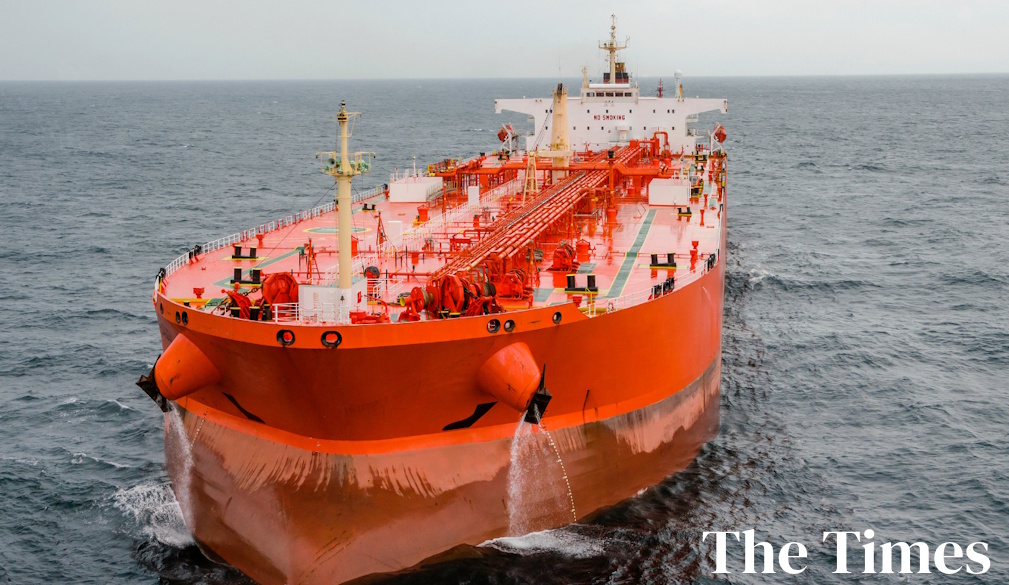
A new American sanctions action suggests Iran is not merely disrupting shipping through the Strait of Hormuz. It is allegedly collecting payments from vessels seeking safe passage—turning control of a strategic waterway into a source of revenue.
Iran has been accused of establishing what amounts to an unofficial toll system for ships travelling through the Strait of Hormuz, adding a new financial dimension to the conflict surrounding one of the world’s most important energy corridors.
The United States Treasury has imposed sanctions on BitBank, an Iranian cryptocurrency exchange it says processed payments made by shipping interests seeking safe passage through the strait.
According to the US allegations, BitBank transferred money paid to a newly established body called the Hormuz Safe Marine Services Authority. The Treasury also alleges the exchange routed hundreds of millions of dollars to Iran’s Islamic Revolutionary Guard Corps.
If accurate, the allegations reveal something more organised than sporadic attacks, threats or interference with individual vessels.
They suggest Iran has developed a mechanism through which its ability to endanger shipping can also be converted into revenue.
The Strait of Hormuz is no longer being used solely as an instrument of military pressure. It is allegedly becoming a commercial checkpoint through which some vessels may be able to purchase protection—or, more accurately, purchase relief from the danger surrounding them.
For Australia, this matters because any additional cost imposed on global shipping can eventually appear in the price of fuel, freight, insurance and imported goods.
What has the United States alleged?
The US Treasury says BitBank is controlled by sanctioned Iranian financier Babak Zanjani and forms part of Iran’s digital sanctions-evasion infrastructure.
Zanjani has previously been accused of helping Iran move money outside the conventional international financial system. He was sentenced to death by Iranian authorities in 2016 for embezzlement, but the sentence was commuted in 2024. He subsequently re-emerged as a supporter of Iranian government economic projects.
The latest American action also targets the company responsible for developing BitBank’s software and several people associated with Zanjani.
The sanctions form part of an American campaign known as Operation Economic Outcast, which is intended to restrict Iran’s access to financial, commercial and logistical networks.
The central allegation, however, is the most consequential: that money associated with the safe transit of ships through Hormuz has been processed through a cryptocurrency exchange linked to the Iranian state and the Revolutionary Guard.
Iran’s account of the arrangements—and the extent to which individual shipping companies have participated—will require further examination. The claims should therefore be treated as allegations made by the United States, not yet as independently established facts.
Nevertheless, the action identifies a financial system that Washington apparently considers sufficiently developed and important to target directly.
From blockade to business model
A conventional blockade attempts to prevent ships from entering or leaving an area.
The system described by the US Treasury would operate differently. Passage may remain possible, but it becomes conditional, uncertain and potentially expensive.
That distinction is important.
Iran would not need to close the Strait of Hormuz completely to exercise effective control over it. It would need only to create enough danger that shipowners, charterers and cargo interests considered some form of arrangement necessary.
This is the logic of a protection system: the authority capable of creating or reducing the risk becomes capable of charging for safety.
The payment may represent only one part of the cost. A vessel travelling through a contested strait may also face:
- higher marine insurance premiums;
- additional war-risk cover;
- security and compliance expenses;
- delays while routes and permissions are assessed;
- difficulty obtaining crews or commercial services;
- increased financing costs; and
- possible exposure to international sanctions.
The charge for passage therefore does not have to be large to have a wider economic effect. It becomes another cost added to a journey already carrying exceptional risk.
Why use cryptocurrency?
Conventional payments move through banks that maintain customer records, screen transactions and respond to international sanctions.
Cryptocurrency can make the process harder to police, particularly when funds are moved through multiple wallets, exchanges, intermediaries or jurisdictions.
Blockchain transactions are not necessarily invisible. In many cases, they can be traced. The difficulty lies in determining who controls a wallet, why a payment was made and where the money ultimately went after passing through several accounts or being converted into another asset.
For a shipping company, this creates a serious dilemma.
A payment may secure the immediate safety of a valuable ship, its cargo and crew. But making that payment could expose the company, its insurer, its bank or its commercial partners to sanctions and legal scrutiny.
The vessel may therefore confront two different hazards: the physical danger of the strait and the financial danger of the payment system offered as a way through it.
The American sanctions are intended to make the second danger greater. Washington wants financial institutions and shipping companies to conclude that dealing with the alleged Iranian system is too risky.
That may weaken Iran’s ability to collect money. It may also leave some shipowners with fewer practical means of protecting their vessels.
Why Australia is exposed
Australia does not have to purchase fuel directly from Iran to be affected by events in Hormuz.
Oil is traded through an interconnected international market. A disruption affecting major Middle Eastern exporters changes the availability and price of crude oil elsewhere, even when the original cargo was destined for another country.
The Australian connection is also indirect through Asia.
Australia imports much of its petrol, diesel and aviation fuel in refined form. Asian refineries supplying this region purchase crude from international markets, including Middle Eastern producers. When the cost of crude, shipping, insurance or refining increases, those expenses can be reflected in the price of fuel delivered to Australia.
This means an unofficial charge imposed on a tanker carrying Middle Eastern crude may travel through the supply chain:
- The tanker pays more to complete its voyage.
- The shipowner and insurer price the additional risk into future contracts.
- The refinery pays more for crude or transport.
- Fuel traders pass higher costs into regional prices.
- Australian wholesalers and retailers purchase from that more expensive market.
The final price displayed at an Australian service station will not contain a line marked “Hormuz passage fee”. The cost is absorbed into the international price against which Australian fuel is bought and sold.
The same principle applies to freight more broadly. Higher marine insurance and shipping costs can affect imported machinery, building materials, manufactured goods and agricultural inputs.
A threat to freedom of navigation
There is also a larger principle at stake.
International shipping depends on the understanding that strategic waterways are not private revenue sources belonging to whichever state or armed force can dominate them.
The Strait of Hormuz is geographically narrow, but its economic role is global. Using the threat of force to collect payment for passage would challenge the principle of freedom of navigation and create a precedent extending far beyond the Middle East.
Other contested waterways could be subjected to similar practices. A military force would not need to declare a formal blockade or seize every vessel. It could generate enough uncertainty to make payment appear commercially rational.
This is why the allegation is more significant than an ordinary sanctions announcement. It describes a possible model for monetising control of international trade.
A mine, missile or patrol vessel can deny access to an area. A payment system can convert that denial capability into continuing income.
Sanctions may not end the system
The US action is intended to disrupt the network, but sanctions do not automatically eliminate demand.
Ships still need to move. Oil-exporting states still need to sell. Refiners still require crude, and importing countries still require energy.
If BitBank becomes unusable, payments may move to another exchange, a different cryptocurrency, an intermediary company or a less transparent settlement arrangement.
The contest therefore becomes financial as well as military.
Iran needs mechanisms through which it can receive value despite sanctions. The United States needs banks, exchanges, insurers and shipping companies to refuse participation. The shipping industry, caught between them, must decide which risk it can bear.
That tension can continue even if the volume of oil moving through the strait remains relatively stable.
A tanker does not have to be attacked for the conflict to impose a cost. Fear, insurance, compliance and payment arrangements can increase the price of the voyage before any weapon is fired.
What Australia should watch next
The immediate question is whether further evidence emerges showing how extensively the alleged system has been used.
Important indicators will include:
- additional sanctions against cryptocurrency exchanges or shipping intermediaries;
- evidence that individual vessels or operators made payments;
- changes in marine and war-risk insurance premiums;
- delays or reductions in tanker movements;
- retaliation by Iran against ships that refuse to participate;
- attempts to move the payment system outside cryptocurrency; and
- movements in Asian refined-fuel prices.
Australia should also watch whether enforcement causes more disruption than the payment system itself.
If shipping companies decide the sanctions risk is greater than the danger of attempting an unapproved transit, fewer vessels may enter the strait. If they continue paying, Iran may retain an important revenue stream. Either outcome can sustain pressure on energy markets.
The Times View
The latest development suggests the struggle over the Strait of Hormuz has moved beyond the question of whether Iran can close it.
The more revealing question is whether Iran can control passage without closing it.
A completely blocked strait would provoke an enormous international response and prevent Iran and its neighbours from exporting their own energy. A selectively managed strait is more useful. It allows trade to continue while making safety conditional, collecting revenue and demonstrating power.
That is why the alleged cryptocurrency payment system matters.
It would transform geographical advantage into a financial instrument. The threat creates the demand; the safe-passage arrangement supplies the apparent solution; and the cost is dispersed through the global economy.
Australia may be far from the Strait of Hormuz, but it is not outside the system of prices that the strait helps determine.
The toll may be collected in cryptocurrency in the Middle East. Part of it could eventually be paid in Australian dollars at the fuel pump.










