Voters are rebelling against the political establishment — but Australia has a problem
- Written by: The Times
Nigel Farage is back in Britain's House of Commons.
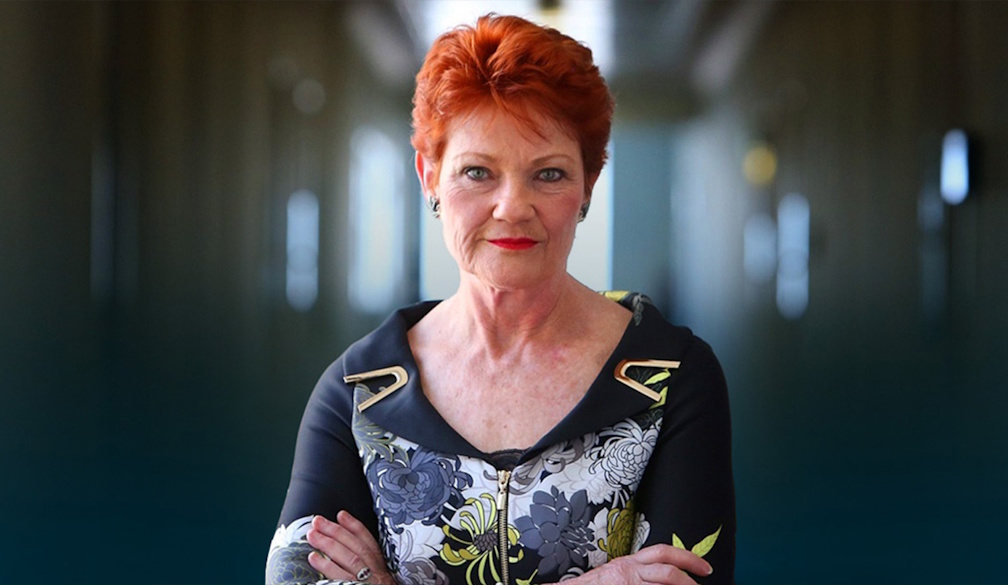
Pauline Hanson's One Nation is polling at levels that would once have seemed extraordinary in Australian federal politics.
Across Europe, established political parties are confronting increasingly powerful challengers.
It would be tempting to describe all of this as a worldwide swing to the political right.
The evidence suggests something more complicated — and potentially much more important.
Voters appear increasingly willing to abandon the political establishment itself.
And Australia provides an extraordinary example because dissatisfaction with Labor has not produced the result conventional politics would normally predict.
The Coalition isn't necessarily winning either.
Farage returns
Nigel Farage's return to Britain's Parliament is symbolically important.
Farage has spent much of his political career attacking the assumptions of Britain's established political parties on immigration, European integration, national sovereignty and climate policy.
His Reform UK movement has sought to position itself as an alternative not merely to Labour, but also to the Conservatives.
That distinction matters.
A voter abandoning Britain's Labour Party does not necessarily move to the Conservatives.
A dissatisfied Conservative voter does not necessarily move to Labour.
Increasingly, voters are prepared to look elsewhere.
It is a phenomenon Australia should watch carefully.
Pauline Hanson is no longer politically peripheral
For decades, Pauline Hanson and One Nation occupied a distinctive but relatively small position in Australian federal politics.
That has changed.
Recent polling has put One Nation within striking distance of — and in some surveys ahead of — the Coalition on primary voting intention.
That is an extraordinary development.
One Nation's appeal encompasses immigration, energy, climate policy, cost of living, housing and opposition to elements of contemporary progressive social policy.
Not every One Nation voter necessarily agrees with every element of that platform.
The important development is that increasing numbers of Australians are prepared to consider a party outside the traditional Labor-Coalition contest.
Is the world turning against progressive politics?
There is clearly resistance in several democracies to policies associated with progressive politics.
Immigration has become an increasingly powerful electoral issue.
Climate and energy policies are being challenged when voters believe they increase household or business costs.
Debates over gender, identity, speech and institutional culture have become politically potent.
Governments that appear distant from everyday concerns about mortgages, rent, groceries, electricity and fuel can quickly find themselves vulnerable.
But describing the phenomenon simply as a rejection of "woke" politics would miss something important.
Voters do not vote on one issue.
Cost of living matters.
Housing matters.
Immigration matters.
Energy matters.
Employment matters.
Taxes matter.
Public services matter.
And increasingly, trust matters.
The common denominator may therefore be less ideological than institutional.
Large numbers of voters appear dissatisfied with governments, political parties and institutions that they believe no longer adequately represent them.
Australia produces the paradox
This is where Australian politics becomes particularly interesting.
If voters were simply rejecting Labor and moving politically right, the Coalition should be prospering.
It isn't.
Recent polling has instead shown Labor, the Coalition and One Nation competing for increasingly significant portions of the primary vote.
That creates an uncomfortable question for both major parties.
What happens if Australians aren't changing sides?
What happens if they are changing the game?
For generations, Australian federal politics has largely operated around a straightforward proposition.
Labor governs until enough voters become dissatisfied and elect the Coalition.
Eventually the reverse happens.
The pendulum swings.
But a pendulum only works while voters remain attached to its two ends.
The Coalition's problem
The Coalition therefore faces an unusual challenge.
An unpopular Labor government should ordinarily be an enormous political opportunity.
But dissatisfaction with Labor does not automatically translate into enthusiasm for the Liberal and National parties.
Some voters evidently believe the Coalition itself is part of the political establishment they are rejecting.
That is potentially more serious for the Coalition than any single poor opinion poll.
Opposition parties traditionally need to convince voters that the government deserves to be removed.
The Coalition may now have to accomplish something more difficult.
It must convince Australians that it represents genuine change.
Labor cannot dismiss the message either
Labor would be equally unwise to interpret fragmentation of the conservative vote as protection.
A government can survive while its opponents divide themselves.
But losing primary support remains politically dangerous.
If voters believe governments are concentrating on ideological or institutional priorities while households struggle with housing, food, electricity, insurance and transport costs, resentment can accumulate rapidly.
The challenge for Labor is therefore not simply defeating the Coalition.
It is maintaining the confidence of Australians who might otherwise abandon mainstream politics altogether.
Climate policy illustrates the complexity
Australia's climate debate demonstrates why simplistic descriptions of the political shift are inadequate.
Australians continue to support environmental protection and action on climate change.
At the same time, substantial numbers worry about the economic consequences of particular policies.
Those positions are not necessarily contradictory.
A voter can want lower emissions while opposing an electricity policy they believe will increase their bill.
A voter can support renewable energy while questioning the cost of transmission infrastructure.
A voter can care about the environment while believing Australia's contribution to global emissions needs to be considered alongside China, India, the United States and other major emitters.
Political parties that reduce these questions to slogans risk misunderstanding their own electorate.
Immigration and housing have become connected
The same applies to immigration.
Australia has benefited enormously from migration.
Migrants have built businesses, supplied skills, staffed hospitals, created jobs and contributed to Australia's economic and cultural development.
But population growth also requires infrastructure.
People need homes.
They need roads, trains, hospitals, schools, electricity and water.
When population growth substantially exceeds the capacity to provide those things, immigration inevitably becomes connected to debates about housing affordability and public services.
Voters asking whether migration levels are sustainable are therefore not necessarily rejecting migration itself.
They may simply be asking whether government planning has kept pace.
That distinction matters.
The rise of the politically homeless voter
Perhaps the most important political constituency emerging in Australia is not left-wing, right-wing or centrist.
It is the politically homeless voter.
These Australians may once have reliably voted Labor or Coalition.
Now they are prepared to consider One Nation, the Greens, independents, minor parties or whoever most convincingly addresses the issue that matters to them.
Preferential voting means Australia remains structurally different from Britain and many European democracies.
But preferences cannot completely disguise a long-term collapse in primary support.
If fewer Australians identify naturally with either major political grouping, Australia's political system will eventually reflect that change.
This is bigger than Pauline Hanson
One Nation's current strength could retreat.
Political movements rise and fall.
Nigel Farage's fortunes have changed repeatedly during his long political career.
Individual opinion polls move substantially.
That is why the important story isn't ultimately Hanson or Farage.
They are indicators.
The deeper story is the electorate that makes their success possible.
Something is persuading substantial numbers of voters across several democracies that conventional political parties no longer speak adequately for them.
Australia is experiencing its own version of that phenomenon.
And the great irony is that dissatisfaction with Labor does not necessarily mean Australians want the Coalition instead.
The Times View
Australian politics may be undergoing something more profound than another movement of the electoral pendulum.
Cost of living, housing, immigration, energy, climate policy and contentious social issues are contributing to dissatisfaction with established political institutions.
Pauline Hanson's growing support is evidence of that dissatisfaction, but it should not automatically be interpreted as proof that Australia has shifted decisively to the right.
The Coalition's difficulties demonstrate why.
If this were simply a conventional anti-Labor swing, the Coalition should be the obvious beneficiary.
It isn't.
That suggests the question confronting Australia's political establishment is no longer merely which major party will voters choose?
Increasingly, it may be:
Why should voters choose either of them?