Petrol prices too high? Here’s how quickly an EV could save you money
- Written by: Hussein Dia, Professor of Transport Technology and Sustainability, Swinburne University of Technology
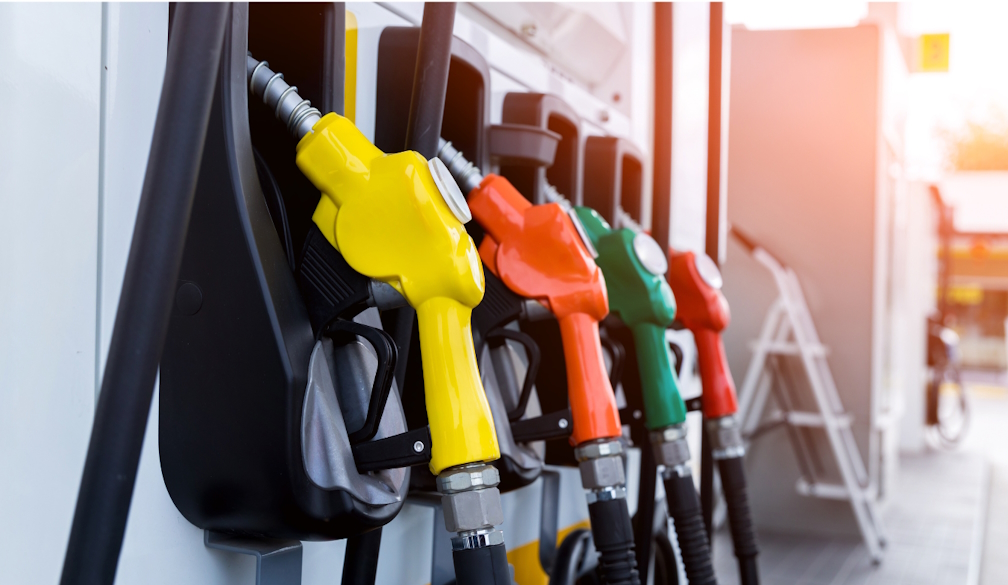
Petrol prices began rising[1] even before the conflict in Iran drove oil prices higher. Australia imports around 80%[2] of its fuel, which means prices can spike when geopolitical shocks[3] ripple through supply chains.
As motorists face long queues[4] in Australian cities, some will wonder[5] whether it’s time to join the increasing numbers[6] going electric to prevent hip-pocket pain.
Avoiding the weekly petrol fill-up is appealing. But the sticking point for many motorists has long been the higher upfront cost of an EV. As competition has increased, EV prices have fallen[7]. Even so, most EVs still cost several thousand dollars more than a comparable conventional car.
Over time, cheaper running costs and less maintenance mean EV owners should recoup some of this money. But how long does it take? To answer this, I helped develop a public EV payback calculator[8], comparing five popular EVs with closely matched hybrid cars in the Australian market. Here, you can estimate how long it will take to pay back the price difference between EV and a conventional car.
It turns out the biggest factor is how you charge your EV. For drivers who rely on pricier public fast chargers, payback will take much longer. But drivers who charge mostly at home can see payback in a few years.
What makes EVs cheaper to run?
Battery electric vehicles are generally cheaper[9] to run[10] for three main reasons.
-
Electricity is typically cheaper than petrol or diesel per kilometre driven – especially when charging at home using off-peak grid power or rooftop solar. EVs convert energy to motion far more efficiently than internal combustion engines, so less energy is wasted as heat.
-
Maintenance costs are usually lower. EVs have far fewer moving parts, no oil changes, and less wear on brake pads, given regenerative braking[11] does more work to slow the car – and recharges the battery. Over time, this translates into lower servicing bills. Early fears about battery degradation are vanishing, as batteries generally last longer[12] than the lifespan of the car and last longer in the real world than during testing[13].
-
Running costs are more predictable. Petrol prices change daily, while electricity prices usually change more slowly. EV drivers able to charge at home usually choose to charge cheaply at off-peak times or off home solar.
These advantages are real. But they don’t mean EVs are cheaper for everyone in every situation.
How does the calculator work?
At present, the MG4 Excite electric hatch retails at roughly A$42,000 drive-away, while a Toyota Corolla hybrid costs about $40,000.
The question is how fast the EV’s lower running costs recover this gap (in this case, $1,900).
My EV payback calculator[14] models three annual distances: 10,000km (light use), 15,000km (average) and 20,000km (heavy). It also tests three patterns of charging: mostly home charging, a mix of home and public charging, and mostly public fast charging.
The calculator models five vehicle pairs, reflecting the choice many Australians are weighing up: battery EV or hybrid combustion engine vehicle in the same size class and price bracket. This is a conservative choice, because hybrids tend to have lower running costs[15] than traditional cars.
For each pair, the calculator takes the price difference and annual running costs, and then calculates how long it would take for the lower energy and servicing costs of the battery EV to recover the higher purchase price.
These are not predictions or financial advice. They are indicative comparisons using conservative, transparent assumptions.
What does this look like?
The payback time shows how long it takes an EV to recover its higher upfront price under different driving and charging patterns.
Shorter payback times mean savings accumulate quickly, while longer periods indicate the extra upfront cost lasts a long time or is never recovered.
Payback time is useful, but it helps to see what it means in annual savings. Here, the big takeaway is charging behaviour matters[16] as much as the car itself. Charging mostly at home delivers consistent savings, while relying heavily on public fast charging shrinks or even erases the advantage.
Home charging at off-peak times might cost 20 cents a kilowatt-hour, while the same charge at an ultrafast public charger might cost 60c/kWH. For a car with a 60kWH battery, that means a charge could cost A$12 at home or $36 at the public charger.
This means EV affordability is partly a question of charging access and electricity prices, not just sticker price. The economics are shaped less by the badge on the bonnet than by the charging pattern.
Payback time isn’t the only consideration. Many buyers also consider safety features, performance, convenience and likely resale value. But this shows whether an EV is cheaper to run and whether it repays its premium quickly are not the same question.
Home charging makes the biggest difference
When charged mostly at home, all five EVs save money on running costs when driven the typical 15,000km a year. In some cases, savings are large enough that payback arrives well within the typical ownership period of around ten years.
The clearest EV examples are the MG4 Excite and BYD Atto 3. These two battery EVs have moderate upfront premiums, and energy costs are meaningfully lower than hybrid equivalents. Under baseline assumptions, the MG4 can pay back in 3–5 years and the Atto 3 in 5–8 years. Payback is faster for higher-mileage drivers. This shows a lower upfront premium matters as much as efficiency.
Reliance on fast chargers can wipe out savings
Once charging shifts towards more expensive public fast chargers, the running-cost advantage narrows and payback takes longer. This is particularly visible when EVs are compared against efficient hybrids, which already have lower fuel costs.
That does not mean EVs are “bad”. It means more expensive public charging can eat up much of the running-cost advantage, especially when petrol prices are low. For prospective EV drivers without access to home charging, it’s worth checking the cost of nearby public chargers.
What does this mean for you?
My calculator shows EVs save most money and recoup their premium fastest when charging happens mostly at home, especially for people who drive more. But when motorists rely heavily on public fast charging, payback is less certain.
As Australian drivers consider going electric to save money – and end reliance on imported fuels – the key is not to focus only on the sticker price. It’s more useful to think through where you will charge your EV most of the time and estimate the costs and savings from doing so.
References
- ^ began rising (www.smh.com.au)
- ^ around 80% (acapmag.com.au)
- ^ geopolitical shocks (theconversation.com)
- ^ long queues (www.abc.net.au)
- ^ will wonder (www.news.com.au)
- ^ increasing numbers (electricvehiclecouncil.com.au)
- ^ have fallen (www.racv.com.au)
- ^ EV payback calculator (hdia.github.io)
- ^ cheaper (electricvehiclecouncil.com.au)
- ^ run (www.racv.com.au)
- ^ regenerative braking (www.youtube.com)
- ^ last longer (www.npr.org)
- ^ during testing (theconversation.com)
- ^ payback calculator (hdia.github.io)
- ^ lower running costs (www.qbe.com)
- ^ charging behaviour matters (theconversation.com)