


The Liberals dropped net zero. Will it make any difference to Australia’s climate response?
- Written by: Anna Malos, Climateworks Centre Country Lead, Australia, Monash University
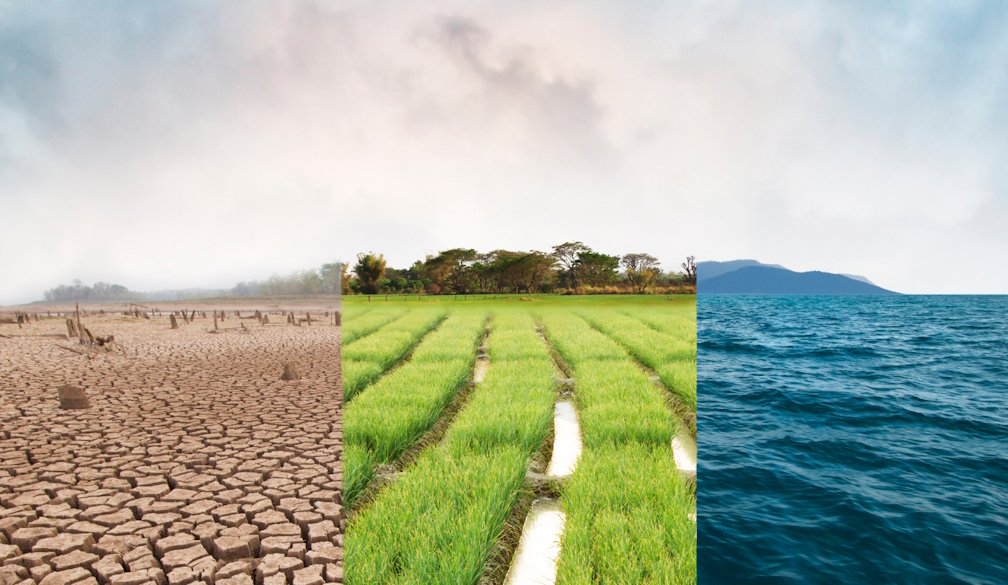
On Thursday, the Liberals reversed their commitment to net zero by 2050. While it’s impossible to predict precisely what this decision means for climate action in Australia, the policies and laws already in place suggest momentum will continue.
There’s no question the climate policies of opposition parties matter – especially for investor and business confidence. But understanding the policies and laws already in place helps understand where progress will happen regardless.
Just this year, Australia published a Net Zero Plan[1], set its 2035 target[2] and published six sector plans[3] that include electricity and energy, transport and agriculture. These set out the frameworks and investments already locked in that are guiding progress towards Australia’s targets.
Existing targets
Australia has already legislated federal emissions-reduction targets[5], with the states and territories also having their own commitments to net zero alongside interim targets. The federal opposition reversing support for achieving the net zero goal won’t change what is already in place. In addition, most other countries are still working towards the goal of net zero by 2050.
In both the House of Representatives and the Senate, those who support climate action are in the majority – Labor, the Greens and climate-progressive independents, including the “Teals”. In the lower house they form a strong majority.
Yes, new policies and laws will be required to achieve Australia’s climate targets. However, given the current Labor government has the numbers to pass legislation through the lower house and the Senate, with the backing of the Greens, the Coalition alone won’t be able to play a blocking role.
Transition gathering steam
The economic transition from fossil fuel power generation to clean technologies is already well underway. Yes, there have been headwinds in recent years, including in the United States, but the momentum is still there. And the main Australian industry groups – the Business Council of Australia[6], the Australian Industry Group[7] and the Australian Chamber of Commerce and Industry[8] – are all still calling for net zero by 2050.
Industry wants consistency and clarity to help finesse their investment and business strategies. This also provides the clarity needed for long-term decisions. It’s worth noting the Department of Treasury, under successive governments, has found that action to reduce emissions and manage climate risks is more attractive to international investment and expected to lower the cost of finance.

This was set out in the Treasury modelling that underpins the decision to set the 2035 target – Australia’s Net Zero Transformation: Treasury Modelling and Analysis[10]. That is why interim targets and a clear timeline really matter.
Renewable energy is becoming much cheaper in Australia and globally, and is expected to become the majority of electricity generation within Australia as early as next year. It has already reached nearly an 80% share for short periods[11].
And it’s the detail of the transition that industry and investors are focused on. They want to know: is it cheaper to build renewable energy as coal-fired generators age and have to be shut down? What’s the cheapest way to provide energy in the years ahead? What about technology costs? What policies will drive investment?
There’s no question that industry and communities respond well when the major parties act together - across the different levels of government. But a multitude of factors affect investment far more than opposition policy.
Diplomatic shifts
Under the Paris Agreement[12], countries are expected to set interim emissions targets every five years. If countries backtrack or drop out, that can bring diplomatic and economic impacts, including with some of Australia’s key trade partners and neighbouring countries in the Pacific and South East Asia.
As an influential middle power, Australia can punch above its weight. Australia is also in the top 20 global emitters, and even moves much higher up the list if you add the emissions impacts of fossil fuel exports. So, what Australia does and says is important. At the moment the government is clear it wants to be seen as a good partner in supporting emissions reductions in the region, and that has been well received.
If Australia wins its bid to host COP31, it will need to demonstrate that a high-emitting economy is genuinely embarked on a transition. That the electricity sector is already above 40% share of renewables, at least in the connected grids, is a clear sign. The next step will be showing how Australia can make the most of its clean energy and mineral resources in a future economy that’s focused on net zero, rather than the economy of the past.
What now?
The clean energy transition isn’t only about having cheaper electricity or paying less for fuel. It’s about our health more generally. If you live in a well-insulated house that you can heat and cool at a reasonable cost, your health and welfare benefits.
For instance, our research[13] shows that with climate-aligned home energy upgrades and appliance electrification, Australian households could save up to $2,000 a year, equating to average energy bills savings of as much as 50% per home.
The latest figures from the United Nations show how far the world has come[14]. Without the Paris Agreement, the world was on track to reach about 4°C of warming above pre-industrial levels by 2100. To date, the commitments through the Paris agreement have reduced that to projections of limiting warming to 2.3–2.8°C[15]. This is still above safe levels, but every fraction of a degree matters, for climate damage, for our health and our wellbeing.
It’s up to everyone who thinks climate action matters to ensure the public understands the economic, short- and long-term personal benefits a planned transition will bring.
References
- ^ Net Zero Plan (www.dcceew.gov.au)
- ^ 2035 target (theconversation.com)
- ^ sector plans (www.dcceew.gov.au)
- ^ Lukas Coch/AAP (photos.aap.com.au)
- ^ emissions-reduction targets (www.dcceew.gov.au)
- ^ Business Council of Australia (www.bca.com.au)
- ^ Australian Industry Group (www.aigroup.com.au)
- ^ Australian Chamber of Commerce and Industry (acci.com.au)
- ^ Lukas Coch/AAP (photos.aap.com.au)
- ^ Australia’s Net Zero Transformation: Treasury Modelling and Analysis (treasury.gov.au)
- ^ 80% share for short periods (www.aemo.com.au)
- ^ Paris Agreement (unfccc.int)
- ^ our research (www.climateworkscentre.org)
- ^ how far the world has come (www.abc.net.au)
- ^ projections of limiting warming to 2.3–2.8°C (www.unep.org)










