Trump is not like other presidents – but can he beat the ‘second term curse’ that haunts the White House?
- Written by: Garritt C. Van Dyk, Senior Lecturer in History, University of Waikato
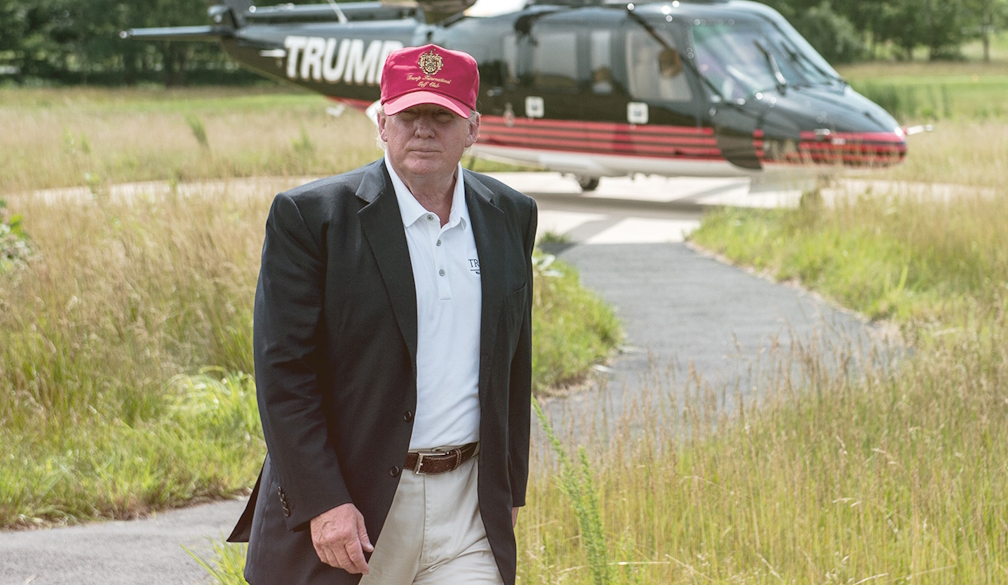
While he likes to provoke opponents with the possibility of serving a third term[1], Donald Trump faces a more immediate historical burden that has plagued so many presidents: the “second term curse”.
Twenty-one US presidents have served second terms, but none has reached the same level of success they achieved in their first.
Second term performances have ranged from the lacklustre and uninspiring to the disastrous and deadly. Voter dissatisfaction and frustration, presidential fatigue and a lack of sustainable vision for the future are all explanations.
But Trump doesn’t quite fit the mould. Only one other president, Grover Cleveland in the late 19th century, has served a second nonconsecutive term, making Trump 2.0 difficult to measure against other second-term leaders.
Trump will certainly be hoping history doesn’t repeat Cleveland’s second-term curse. Shortly after taking office he imposed 50% tariffs, triggering global market volatility that culminated in the “Panic of 1893[2]”.
At the time, this was the worst depression in US history: 19% unemployment, a run on gold from the US Treasury, a stock market crash and widespread poverty.
More than a century on, Trump’s “move fast and break things[3]” approach in a nonconsecutive second term might appeal to voters demanding action above all else. But he risks being drawn into areas he campaigned against.
So far, he has gone from fighting a trade war and a culture war to contemplating a shooting war in the Middle East. His “big beautiful bill[4]” will add trillions to the national debt and potentially force poorer voters – including many Republicans – off Medicaid.
Whether his radical approach will defy or conform to the second term curse seems very much an open question.
No kings
The two-term limit was enacted by the 22nd Amendment to the Constitution[5] in 1951. Without a maximum term, it was feared, an authoritarian could try to take control for life – like a king (hence the recent “No Kings[6]” protests in the US).
George Washington, James Madison and Thomas Jefferson all declined to serve a third term. Jefferson was suspicious of any president[7] who would try to be re-elected a third time, writing:
should a President consent to be a candidate for a 3d. election, I trust he would be rejected on this demonstration of ambitious views.
There is a myth that after Franklin Delano Roosevelt broke the de facto limit of two terms set by the early presidents, the ghost of George Washington placed a curse on anyone serving more than four years.
At best, second-term presidencies have been tepid compared to the achievements in the previous four years. After the second world war, some two-term presidents (Eisenhower, Reagan and Obama) started out strong but faltered after reelection.
Eisenhower extricated the US from the Korean War in his first term, but faced domestic backlash and race riots in his second. He had to send 500 paratroopers to escort nine Black high school students[8] in Little Rock, Arkansas, to enforce a federal desegregation order.
Reagan made significant tax and spending cuts, and saw the Soviet Union crumble in term one. But the Iran-Contra scandal[9] and watered down tax reform defined term two.
Obama started strongly, introducing health care reform and uniting the Democratic voter base. After reelection, however, the Democrats lost the House, the Senate, a Supreme Court nomination, and faced scandals over the Snowden security leaks[10] and Internal Revenue Service targeting of conservative groups[11].
Truly disastrous examples of second term presidencies include Abraham Lincoln (assassination), Woodrow Wilson (first world war, failure of the League of Nations, a stroke), Richard Nixon (Watergate, impeachment and resignation), and Bill Clinton (Lewinsky scandal and impeachment).
Monumental honours
It may be too early to predict how Trump will feature in this pantheon of less-than-greatness. But his approval ratings recently hit an all-time low as Americans reacted to the bombing of Iran and deployment of troops in Los Angeles.
A recent YouGov poll[13] showed voters giving negative approval ratings for his handling of inflation, jobs, immigration, national security and foreign policy. While there has been plenty of action, it may be the levels of uncertainty, drastic change and market volatility are more extreme than some bargained for.
An uncooperative Congress or opposition from the judiciary can be obstacles to successful second terms. But Trump has used executive orders, on the grounds of confronting “national emergencies”, to bypass normal checks and balances.
As well, favourable rulings by the Supreme Court[14] have edged closer to expanding the boundaries of executive power. But they have not yet supported Trump’s claim from his first term[15] that “I have an Article 2, where I have the right to do whatever I want as President”.
Some supporters say Trump deserves a Nobel Peace Prize[16]. And he was only half joking when he asked if there is room for one more face[17] on Mount Rushmore. But such monumental honours may only amount to speculation unless Trump’s radical approach and redefinition of executive power defy the second-term curse.
References
- ^ possibility of serving a third term (www.nbcnews.com)
- ^ Panic of 1893 (academic.oup.com)
- ^ move fast and break things (www.snopes.com)
- ^ big beautiful bill (www.bbc.com)
- ^ 22nd Amendment to the Constitution (www.archives.gov)
- ^ No Kings (www.nokings.org)
- ^ suspicious of any president (avalon.law.yale.edu)
- ^ send 500 paratroopers to escort nine Black high school students (www.thecrimson.com)
- ^ Iran-Contra scandal (www.pbs.org)
- ^ Snowden security leaks (www.bbc.com)
- ^ Internal Revenue Service targeting of conservative groups (www.npr.org)
- ^ Shutterstock (www.shutterstock.com)
- ^ YouGov poll (www.economist.com)
- ^ favourable rulings by the Supreme Court (www.bbc.com)
- ^ claim from his first term (www.washingtonpost.com)
- ^ deserves a Nobel Peace Prize (www.theguardian.com)
- ^ asked if there is room for one more face (www.nytimes.com)