Trump may try to strike a deal with AUKUS review, but here’s why he won’t sink it
- Written by: John Blaxland, Professor, Strategic and Defence Studies Centre, Australian National University
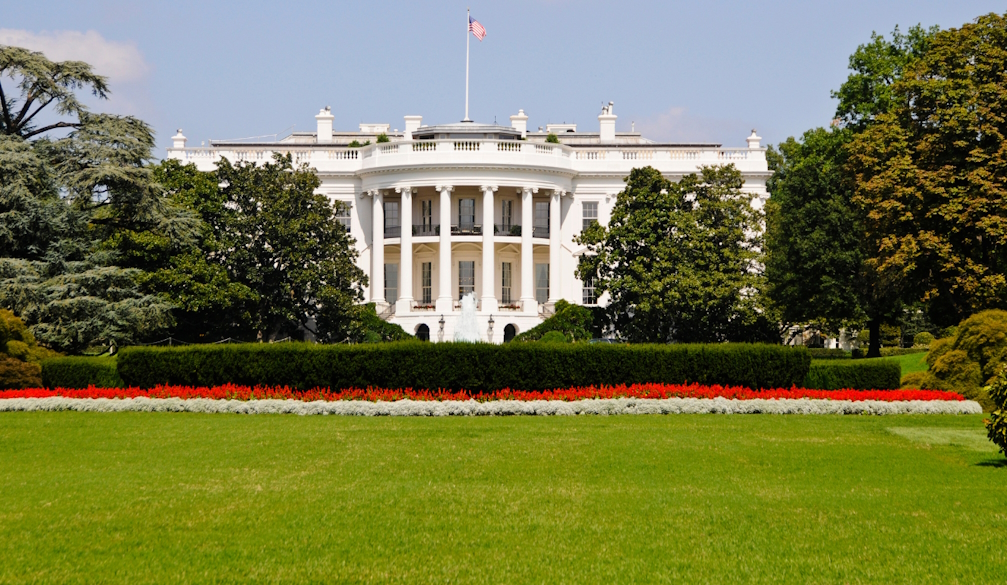
The Pentagon has announced it will review[1] the massive AUKUS agreement between the United States, United Kingdom and Australia to ensure it’s aligned with US President Donald Trump’s “America first” agenda.
The US undersecretary of defence for policy, Elbridge Colby, is reportedly[2] going to oversee the review.
The announcement has raised concern in Australia, but every government is entitled to review policies that their predecessors have made to consider whether or not there’s a particular purpose.
The UK has launched a parliamentary inquiry[3] into AUKUS too, so it’s not actually unreasonable for the US to do the same.
There’s a degree of nervousness in Australia as to what the implications are because Australia understandably has the biggest stake in this.
But we need to consider what Colby has articulated in the past. In his book[4], The Strategy of Denial: American Defence in the Nature of Great Power Conflict, he made the case the US could “prepare to win a war with China it cannot afford to lose – in order to deter it from happening”.
So, with a deterrent mindset, he sees the need for the US to muscle up militarily.
He’s spoken about the alliance with Australia in very positive terms on a couple of occasions. And he has called himself an “AUKUS agnostic[5]”, though he has expressed deep concern about the ability of the submarine industrial base in the US to manufacture the ships quickly enough.
And that leads to the fear the US Navy would not have enough submarines for itself if Washington is also sending them to Australia.
As part of the deal, Australia would eventually be able to contribute to accelerating the production line. That involves Australian companies contributing to the manufacture of certain widgets and components that are needed to build the subs.
Australia has already made a nearly A$800 million[6] (US$500 million) down payment on expanding the US industrial capacity as part of the deal to ensure we get some subs in a reasonable time frame.
There’s also been significant legislative and industrial reforms in the US, Australia and UK to help facilitate Australian defence-related industries unplug the bottleneck of submarine production.
There’s no question there’s a need to speed up production. But we are already seeing significant signs of an uptick in the production rate, thanks in part to the Australian down payment. And it’s anticipated the rate will significantly increase in the next 12–18 months.
Even still, projects like this often slide in terms of timelines.
Why the US won’t spike the deal
I’m reasonably optimistic that, on balance, the Trump administration will come down on the side of proceeding with the deal.
There are a few key reasons for this:
1) We’re several years down the track already.
2) We have more than 100 Australian sailors[7] already operating in the US system.
3) Industrially, we’re on the cusp of making a significant additional contribution to the US submarine production line.
And finally, most people don’t fully appreciate that the submarine base just outside Perth is an incredibly consequential piece of real estate for US security calculations.
Colby has made very clear the US needs to muscle up to push back and deter China’s potential aggression in the region. In that equation, submarines are crucial, as is a substantial submarine base in the Indian Ocean.
China is acutely mindful of what we call the “Malacca dilemma[8]”. Overwhelmingly, China’s trade of goods and fossil fuels comes through the Malacca Strait between Malaysia and Indonesia’s island of Sumatra. The Chinese know this supply line could be disrupted in a war. And the submarines operating out of Perth contribute to this fear.
This is a crucial deterrent effect the US and its allies have been seeking to maintain. And it has largely endured.
Given nobody can predict the future, we all want to prevent a war over Taiwan and we all want to maintain the status quo.
As such, the considered view has been that Australia will continue to support the US to bolster its deterrent effect to prevent such a scenario.
Could Trump be angling for a deal?
As part of the US review of the deal, we could see talk of a potential slowdown in the delivery rate of the submarines. The Trump administration could also put additional pressure on Australia to deliver more for the US.
This includes the amount Australia spends on defence, a subject of considerable debate[9] in Canberra. Taking Australia’s overall interests into account, the Albanese government may well decide increasing defence spending is an appropriate thing to do.
There’s a delicate dance to be had here between the Trump administration, the Australian government, and in particular, their respective defence departments, about how to achieve the most effective outcome.
It’s highly likely whatever decision the US government makes will be portrayed as the Trump administration “doing a deal”. In the grand scheme of things, that’s not a bad thing. This is what countries do.
We talk a lot about the Trump administration’s transactional approach to international relations. But it’s actually not that different to previous US administrations with which Canberra has had to deal.
So I’m reasonably sanguine about the AUKUS review and any possible negotiations over it. I believe the Trump administration will come to the conclusion it does not want to spike the Australia relationship.
Australia has been on the US side since federation. Given this, the US government will likely make sure this deal goes ahead. The Trump administration may try to squeeze more concessions out of Australia as part of “the art of the deal”, but it won’t sink the pact.
However, many people will undoubtedly say this is the moment Australia should break with AUKUS. But then what? What would Australia do instead to ensure its security in this world of heightened great power competition in which Australia’s interests are increasingly challenged?
Walking away now would leave Australia more vulnerable than ever. I think that would be a great mistake.
References
- ^ review (www.theguardian.com)
- ^ reportedly (www.afr.com)
- ^ has launched a parliamentary inquiry (www.abc.net.au)
- ^ book (www.booktopia.com.au)
- ^ AUKUS agnostic (www.smh.com.au)
- ^ nearly A$800 million (www.abc.net.au)
- ^ 100 Australian sailors (www.asa.gov.au)
- ^ Malacca dilemma (diplomatist.com)
- ^ considerable debate (theconversation.com)