The blow-up between Elon Musk and Donald Trump has been entertaining, but how did things go so bad, so fast?
- Written by: Henry Maher, Lecturer in Politics, Department of Government and International Relations, University of Sydney
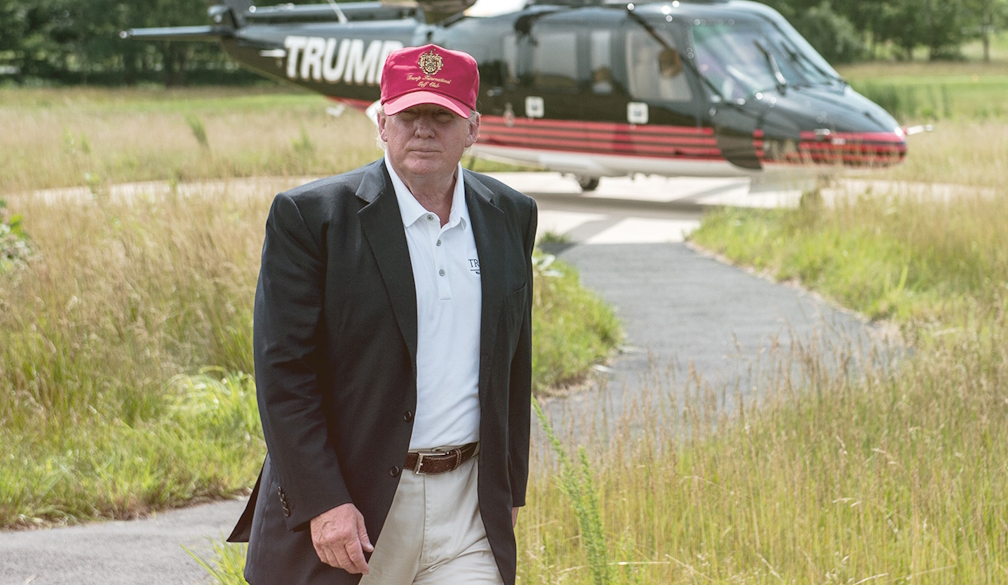
A no-holds-barred and very public blow-up between the world’s richest man and the president of the United States has had social media agog in recent days, with each making serious accusations against the other.
And while tech billionaire Elon Musk appears to have cooled the spat somewhat – deleting some of his more incendiary social media posts about Donald Trump – the president still appears to be in no mood to make up, warning Musk of “very serious consequences” if he backs Democrats at the mid-term elections in 2026.
Tensions erupted over Trump’s “One Big Beautiful Bill[1]” (OBBB). The OBBB proposes extensive tax cuts which could add roughly US$3 trillion (A$4.62 trillion) to the US national debt.
After stepping down from his role as advisor to Trump, Musk criticised the OBBB as “disgusting abomination” that would “burden America [sic] citizens with crushing unsustainable debt”. Trump returned fire, suggesting “Elon was ‘wearing thin’, I asked him to leave […] and he just went CRAZY!”.
In a dramatic escalation, Musk responded by calling for Trump’s impeachment. Musk also tweeted allegations that Trump was implicated in the Epstein files related to child sex offender Jeffrey Epstein. He has since deleted[2] those tweets.
Why has the much-hyped “bromance” between Musk and Trump suddenly ended? And what was the basis of their alliance in the first place?
Musk in politics
Like many billionaires, Musk had previously been hesitant to get involved in frontline politics. He says he voted for Hillary Clinton in 2016 and Joe Biden in 2020, but claimed in 2021 “I would prefer to stay out of politics[3]”.
In early 2024, Musk was still claiming to be politically non-aligned, suggesting he would not donate to either presidential campaign.
This apparent neutrality ended following the attempted assassination of Trump at a July 2024 campaign rally, with Musk immediately endorsing Trump.
In reality, Musk’s conversion to the MAGA movement long predated the assassination attempt. Musk’s hyperactive Twitter/X account shows a steady radicalisation[4].
Across 2020-2024, Musk engaged with accounts sharing MAGA and far-right conspiracy theories. These include the antisemitic Great Replacement Theory[5], and the related South African white genocide[6] conspiracy. Musk’s posts also show the obsession with opposing diversity, equity and inclusion (DEI) policies characteristic of the MAGA movement.
After endorsing Trump, Musk spent US$288 million[7] (A$444 million) supporting Trump’s election and appeared at campaign events around the country.
Musk’s support for Trump was both ideological and pragmatic.
From tax cuts to immigration restrictions to opposing DEI, there were clearly many ideological commonalities between Musk and Trump.
There were also clear practical benefits for both men. Trump gained the financial backing of the world’s wealthiest man. Musk gained not only unparalleled access to the US president, but also a role leading the new Department of Government Efficiency (DOGE).
DOGE: success and failure
Early reporting on the second Trump presidency noted the omnipresence of Musk, who at one point moved into Trump’s Mar-a-Lago resort to be close to the president.
However, observers[8] were sceptical about the potential effectiveness of DOGE, and Musk’s claim it would save the government US$2 trillion (A$3.02 trillion).
In the early months of the Trump administration, Musk cut government programs and employees at a remarkable rate. The USAID program[9] was particularly hard hit, as were the Department of Education and the Consumer Financial Protection Bureau.
As the spending cuts picked up pace, Musk began to attract more controversy. Critics questioned the apparent power wielded by the unelected billionaire. Musk’s ties to the far right were also in the spotlight after he appeared to perform two “Roman salutes[10]”, which many observers believed to be a Nazi salute.
Trump clips Musk’s wings
Musk’s apparent rampage through government did not last long. As Trump’s executive appointees assumed control of their departments, Musk and DOGE experienced increasing resistance. After a series of fractious cabinet meetings, Trump reportedly[11] reduced the power of DOGE in March.
Political attention was also clearly affecting Musk’s businesses. The negative publicity has significantly damaged the Tesla brand, leading to declining sales[12] around the world and repeated falls in Telsa’s share price.
On May 1, Musk announced he would be leaving DOGE, claiming the department had saved the government US$180 billion (A$277 billion) in spending. This number is likely an exaggeration[13], but still falls well short of his original target.
Musk has learned a harsh lesson in politics – that the complexities of government resist simple reform and cannot be easily rolled back in the way a CEO might slim down a company.
For Trump, his manoeuvring of Musk appears to be another smart political move. As the public face of DOGE, Musk bore the negative wrap for early government cuts and chaos. Having used his money and reputation, Trump dispensed with Musk as he has with so many advisers and appointees before.
The falling out
Musk departed his role in a muted White House ceremony, where Trump thanked him for his service and presented him with a ceremonial “golden key” to the White House.
However, behind the public show of civility, tension was brewing over Trump’s One Big Beautiful Bill.
Trump and Musk had originally claimed[14] that the US$2 trillion (A$3.02 trillion) in DOGE savings could be used to fund a substantial tax cut. With the efficiency savings not eventuating, Musk worried the OBBB would significantly increase US public debt.
Unable to convince Trump or other Republican legislators, Musk took to X, launching a “Kill the Bill” campaign that ultimately led to his incendiary showdown with Trump.
For his part, Trump has belittled Musk, suggesting Musk only opposed the OBBB because it cut subsidies for electric vehicles.
Though the subsidy cuts will affect Tesla, Musk has previously supported[15] eliminating subsidies. Musk’s anger at the OBBB is more likely driven by the realisation he has been played by Trump.
What now?
Trump has used and discarded many other powerful figures in his chaotic political career. Musk has more power than most, and might be able to strike back at Trump.
Yet, with his public reputation and brands already tarnished, Musk would be ill-advised to pick further fights with Trump and his adoring MAGA movement.
Accordingly, Musk has indicated[16] over the weekend he is open to a détente. Tesla investors will no doubt be relieved if Musk makes good on his pledge to step back from politics and return to his businesses.
More concerning are the prospects for democracy. With wealth and power continuing to concentrate in a handful of billionaires, voters appear reduced to the role of viewers forced to watch the reality TV drama unfold.
Though Trump appears to have won this round of billionaire battle royale, whatever happens next, democracy is the real loser.
References
- ^ One Big Beautiful Bill (www.abc.net.au)
- ^ since deleted (www.theage.com.au)
- ^ I would prefer to stay out of politics (x.com)
- ^ shows a steady radicalisation (theconversation.com)
- ^ antisemitic Great Replacement Theory (www.tandfonline.com)
- ^ South African white genocide (www.nbcnews.com)
- ^ spent US$288 million (www.washingtonpost.com)
- ^ observers (sites.lsa.umich.edu)
- ^ USAID program (www.npr.org)
- ^ Roman salutes (theconversation.com)
- ^ reportedly (www.nytimes.com)
- ^ declining sales (www.theguardian.com)
- ^ likely an exaggeration (www.bbc.com)
- ^ originally claimed (www.pbs.org)
- ^ previously supported (x.com)
- ^ indicated (thehill.com)