


Out of danger because the UN said so? Hardly – the Barrier Reef is still in hot water
- Written by Ove Hoegh-Guldberg, Professor, The University of Queensland
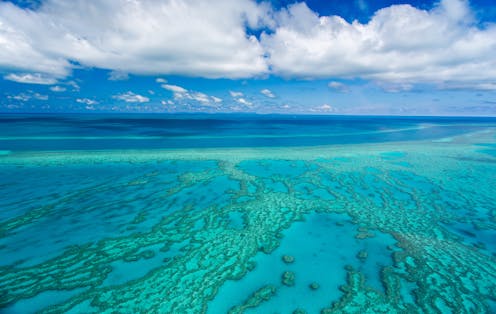
Today is a good day to be Environment Minister Tanya Plibersek. UNESCO, the United Nations body expected to vote on whether to list the Great Barrier Reef as “in danger”, instead deferred the decision[1] for another year. This, an insider told French newspaper Le Monde, was largely due to the change in approach between the former Coalition government and Labor.
“It’s a bit like night and day,” the insider said – which was promptly included in Plibersek’s media release[2].
So, it’s a good day for the government. But is it a good day for the reef? No. The longstanding threats to the world’s largest coral ecosystem are still there, from agricultural runoff, to shipping pollution, to fisheries, although we have seen improvement in areas such as water quality[3].
But any incremental improvement will be for naught if we don’t respond to the big one – climate change – with the necessary urgency. This year has seen record-breaking heat[4] and extreme weather, with intense heating[5] of the oceans during the northern summer. These intense marine heatwaves have devastated efforts to regrow or protect[6] coral in places like Florida. And our own summer is just around the corner.
Read more: Seriously ugly: here's how Australia will look if the world heats by 3°C this century[7]
It is not hyperbole to say the next two years are likely to be very bad for the Great Barrier Reef. It’s already enduring[8] a winter marine heatwave. Background warming primes the reef for mass coral bleaching and death. We’ve already experienced this in 2016-17, which brought back-to-back[9] global mass coral bleaching and mortality events including on the Great Barrier Reef. We can expect more as global temperatures continue to soar.
While the government may congratulate itself on not being the previous one, it’s nowhere near enough. We’re facing D-Day for the reef, as for many other ecosystems. Incrementalism and politics as usual are simply not going to be enough.
What has the government done for the reef to date?
To its credit, Labor has made some marginal improvements to the Great Barrier Reef’s prospects. The list[10] includes: legislating net zero greenhouse emissions, with a 43% cut within seven years; improving water quality with revegetation projects and work to reduce soil erosion; and ending gillnet use[11] in the Great Barrier Reef Marine Park by 2027.
Read more: Warm is the new norm for the Great Barrier Reef – and a likely El Niño raises red flags[12]
For at least a century, cattle, sugarcane and other farmers have relied on rivers to take animal waste and fertiliser runoff away from their properties. In much of Queensland, that means the runoff heads for the Great Barrier Reef instead. We did see some improvement under the Coalition government, which put A$443 million into trying to solve the issue[13]. Labor has put in a further $150 million[14]. But the water quality problem is still not solved[15].
Ending gillnet use in the marine park is also welcome, given these nets can and do catch and kill sharks, dugongs and turtles. But challenging though these issues are, they pale in comparison to climate change.
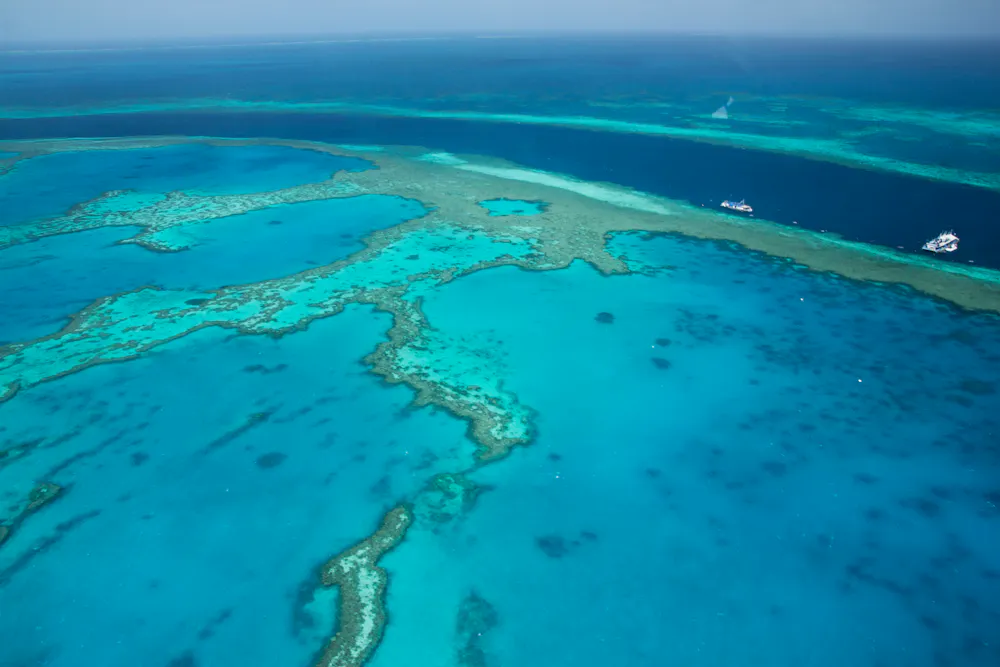
Tinkering while the reef burns
When coral is exposed to warmer water than it has evolved to tolerate, it turns white (bleaches) – expelling its symbiotic algae. If the water stays too hot for too long, the corals simply die en masse.
You might have seen the positive reports[16] on coral regrowth during the three recent cooler La Niña years and wonder what the issue is. Isn’t the reef resilient?
Yes – to a point. But after that point, the coral communities collapse. The world is having its hottest days on record[17]. Coupled with a likely El Niño[18], the reef will likely face the hottest waters yet.
 More than 90% of corals surveyed in 2022 on the Barrier Reef were bleached. It was the fourth mass bleaching in seven years.
AAP
More than 90% of corals surveyed in 2022 on the Barrier Reef were bleached. It was the fourth mass bleaching in seven years.
AAP
That’s because we still haven’t tackled the root cause. Greenhouse gas emissions are still going up[19]. Year on year, we’re trapping more heat, of which 90% goes into the oceans[20]. Antarctic sea ice is not reforming[21] as it should after last summer. Coral restoration efforts in the United States had to literally pull[22] their baby corals out of the sea to try to keep them alive, as the water was too hot to live in.
Read more: Two trillion tonnes of greenhouse gases, 25 billion nukes of heat: are we pushing Earth out of the Goldilocks zone?[23]
The North Atlantic Ocean is far warmer[24] than it should be, amid a record-breaking northern summer. After the equinox next month, it will be our turn to face the summer sun once more.
Is the Great Barrier Reef in danger? Of course it is. We should not pretend things are normal and can be handled routinely. This year, we’re beginning to see the full force of what the climate crisis will bring. We have clearly underestimated the climate’s sensitivity to rising carbon dioxide levels, and the gloomy predictions[25] I made more than 20 years ago are looking positively optimistic.
And still we fail to face up to the fact that the Great Barrier Reef is dying. We thought we might have had decades but it may be just years. Before 1980, no mass bleaching had ever been recorded[26]. Since then it has only become more common.
Incremental efforts to save the reef, such as looking for heat-tolerant “supercorals”[27], or replanting baby coral, now look unlikely to work. We don’t have decades or the capacity to find and cultivate resilient corals at scale. And we certainly do not have the massive funding required[28] to replant even a small coral reef.
For people like us who work in the field, it is a devastating time. I now know the feeling of having a broken heart. The pace and intensity of climate change risks rendering all our efforts over the years null and void. It’s almost impossible to look directly at what this will mean for this immense living assemblage, which first began growing more than 600,000 years ago along the Australian east coast.
Giving the government more time to show the reef is improving seems like a fool’s errand. Time is precisely what we don’t have.
Read more: Corals are starting to bleach as global ocean temperatures hit record highs[29]
References
- ^ deferred the decision (whc.unesco.org)
- ^ media release (minister.dcceew.gov.au)
- ^ water quality (reportcard.reefplan.qld.gov.au)
- ^ record-breaking heat (www.theguardian.com)
- ^ intense heating (www.bbc.com)
- ^ regrow or protect (www.local10.com)
- ^ Seriously ugly: here's how Australia will look if the world heats by 3°C this century (theconversation.com)
- ^ already enduring (www.theguardian.com)
- ^ back-to-back (link.springer.com)
- ^ list (minister.dcceew.gov.au)
- ^ ending gillnet use (www.theguardian.com)
- ^ Warm is the new norm for the Great Barrier Reef – and a likely El Niño raises red flags (theconversation.com)
- ^ solve the issue (www.abc.net.au)
- ^ further $150 million (minister.dcceew.gov.au)
- ^ not solved (www.reefplan.qld.gov.au)
- ^ positive reports (www.whoi.edu)
- ^ hottest days on record (www.nytimes.com)
- ^ likely El Niño (theconversation.com)
- ^ still going up (www.theguardian.com)
- ^ into the oceans (theconversation.com)
- ^ not reforming (www.sciencealert.com)
- ^ literally pull (www.nytimes.com)
- ^ Two trillion tonnes of greenhouse gases, 25 billion nukes of heat: are we pushing Earth out of the Goldilocks zone? (theconversation.com)
- ^ far warmer (www.washingtonpost.com)
- ^ gloomy predictions (www.publish.csiro.au)
- ^ ever been recorded (www.publish.csiro.au)
- ^ heat-tolerant “supercorals” (www.smithsonianmag.com)
- ^ massive funding required (esajournals.onlinelibrary.wiley.com)
- ^ Corals are starting to bleach as global ocean temperatures hit record highs (theconversation.com)