


Travelling overseas? Here's what the embassy will – and won't – do to help if you get in trouble
- Written by: Ian Kemish, Adjunct Professor, School of Historical and Philosophical Inquiry, The University of Queensland
Australians are jetting back out into the world again. The numbers are still below pre-pandemic levels, but almost 1.1 million Australians left the country[1] in December last year – compared to 1.3 million in December 2019. According to information provided by the Department of Foreign Affairs and Trade, passport applications smashed records in 2022, averaging more than 250,000 each month in the second half of the year.
International travel is a safe, positive experience for most people, but unfortunately things do go wrong for some travellers. Trouble, when it comes, can involve anything from lost passports and small-scale theft to serious welfare problems, hospitalisation and arrests.
In these cases, DFAT’s consular service will be expected to do what it can to assist. But where does personal responsibility begin and end when we leave our shores? What should we expect from our government, and what can we do ourselves to minimise the risks?
Travellers behaving badly
As a former head of the consular service in the early 2000s, I know the caseload involving overseas Australians is not limited to major, news-grabbing situations, like the recent kidnapping[2] of an Australia-based academic by a criminal gang in Papua New Guinea, or the impact of the devastating earthquake[3] in Turkey and Syria on Australians and their families.
These were serious situations requiring intensive work from our diplomats, but there is much more to the job than that.
From June 2021-22[4], an average of four Australians died overseas every day, while an average of two Australians were arrested every day - on matters ranging from immigration breaches to drugs crime, theft and fraud.
In total, nearly 16,000 Australians turned to their local Australian overseas mission that year for help in “crisis cases” – more than triple the number in 2018-19 before the pandemic. COVID-related repatriations arranged by DFAT were counted separately – there were more than 62,000 of these in the past three years.
Carrying an Australian passport means we can rely on a consular service to provide support in these situations[5]. But expectations have grown among travellers in recent decades, partly because of the speed of our communications and the instant public feedback we receive via social media.
While most Australians are self-reliant travellers, there are still many not living up to their side of the bargain. Most importantly, there are still too many not taking out appropriate travel insurance. Others disregard official travel warnings and then turn to the government for help when things go wrong.
Then there are those whose expectations are just inappropriate – asking officials to arrange opera tickets or look after their pets, for example.
More seriously, expectations can be very hard to manage in arrest cases overseas. Some Australians are shocked their citizenship doesn’t come with a “get out of jail free card”. But we are all subject to local laws and authority, no matter what notions we might have about the standards of justice that apply in some countries.
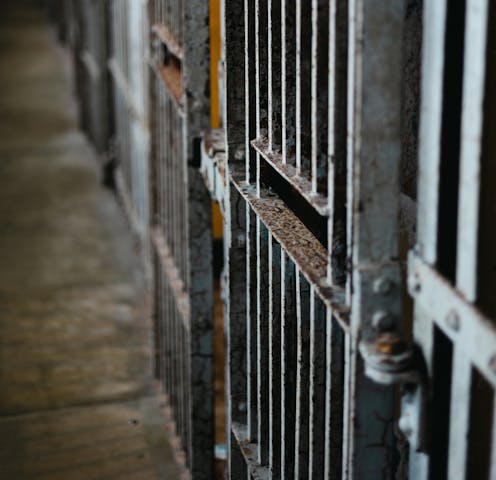
At any given time, there are between 300 and 400 Australians imprisoned[6] overseas. Under the Vienna Convention on Consular Relations, there are real limits to what the Australian consular service can do[7] in these cases.
The service will check periodically on the welfare of prisoners overseas, guide them towards local legal representation and monitor their trials. But that’s about it. This applies to foreigners imprisoned in Australia, too.
To be sure, there is occasionally a case that is clearly so arbitrary or unjust, our government calls for the release of the individual. This was the case for Sean Turnell, who was imprisoned in Myanmar[8] for political reasons until being released last year. But unlike Turnell, most Australian prisoners overseas probably have a case to answer.
Three ways to stay safe
1) Be informed about where you are going
Australians have a responsibility to know what’s happening at their planned destinations. The conflicts in Ukraine and elsewhere have impacted many travellers, as have major weather events and natural disasters.
With international flights returning to normality over the last year, DFAT’s COVID repatriation program has largely wound up. Travellers once again need to look to their own resources – or their travel insurance policies – to ensure they get home.
The government’s Smartraveller[9] website is a reliable source of up-to-date information on everything from emerging health risks to cultural and legal issues in specific countries to the local security situation. They have recently launched a fresh advertising campaign[10] in an effort to highlight the importance of avoiding trouble in the first place.
2) Stay in touch with family back home
The consular service deals with hundreds of “whereabouts” inquiries each year. And if disaster strikes when you are travelling somewhere, your family and friends will be worried.
In each of the major consular disaster responses I was involved in, including the September 11 attacks and the 2002 Bali bombings, there were people who caused their loved ones untold grief by not letting them know they were safe.
In my recent book, The Consul[11], I recount the story of one Australian who worked on an upper floor of the World Trade Center in New York, but took ten days to let his family know he had actually been in London when the attacks took place.
References
- ^ 1.1 million Australians left the country (www.abs.gov.au)
- ^ kidnapping (www.theguardian.com)
- ^ devastating earthquake (www.theguardian.com)
- ^ From June 2021-22 (www.smartraveller.gov.au)
- ^ provide support in these situations (www.abc.net.au)
- ^ 300 and 400 Australians imprisoned (www.smartraveller.gov.au)
- ^ limits to what the Australian consular service can do (www.smartraveller.gov.au)
- ^ who was imprisoned in Myanmar (theconversation.com)
- ^ Smartraveller (www.smartraveller.gov.au)
- ^ fresh advertising campaign (www.smartraveller.gov.au)
- ^ The Consul (www.amazon.com.au)
- ^ FAL (artlibre.org)
- ^ Travel industry surveys (insurancecouncil.com.au)
- ^ Relief as Australian Sean Turnell to be released from prison in Myanmar, but more needs to be done (theconversation.com)










