ShoPaapaa, a film about COVID lockdowns, is long and excruciatingly dull – but weren't lockdowns, too?
- Written by: Ari Mattes, Lecturer in Communications and Media, University of Notre Dame Australia
Review: ShoPaapaa, written and directed by Molly Reynolds and Shekhar Bassi
The COVID-19 pandemic threw the world into disarray, forcing many to reinvent processes, reimagine what it means to live in modernity.
Artists, actors, filmmakers and musicians had to adapt to cancellations of exhibitions, productions and gigs, and had to quickly (try to) transition to working in a digital space.
Despite the valiant efforts to make Zoom theatre productions interesting, for example, there was always a sense of desperation and making-do about these events.
ShoPaapaa, written and directed by Molly Reynolds and star of the film Shekhar Bassi, screening at this year’s Sydney Film Festival, responds to the lockdown in kind: how do you make a stultifying boring situation interesting?
The film follows the day-to-day life of “ShoPaapaa”, a fictional (or is the film documentary?) character played by Bassi during the 2020 lockdown in the UK.
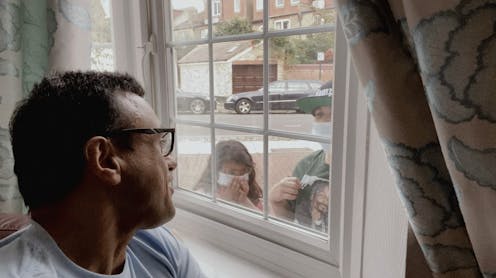
ShoPaapaa is in a “high risk” category and – unlike his niece, nephew and brother who visit him during the film and stay outside – he does not feel safe leaving the house at all, even for permitted exercise or shopping.
Revelling in the uninteresting
We watch him as he completes mundane tasks like boiling a kettle, making a cup of coffee, cleaning a table. Some tasks – like changing his bed – take longer than they would for the able-bodied, the film suggesting this character already lived in a world at times difficult to navigate. Everyone’s mobility was affected by COVID-19; ShoPaapaa’s mobility is always affected.
Read more: Our minds may be wandering more during the pandemic — and this can be a good thing[1]
We hear his view on a variety of aspects of his life through straight to camera interviews and voice overs. Being disabled and Indian in the UK is the main topic, and the racism and bullying he has faced because of these facts.
His observations are delivered in a monotonous voice over an excruciating 95 minutes, indicating the depression of the character being stuck in this situation. The actual content of his discourse is thoroughly uninteresting, and nothing about the narrative or style (though its hints at a Zoom-esque aesthetic through split screen are worth noting) moves it beyond the banal.
The film seems to revel in this, and one assumes this was a strategy on the part of Reynolds and Bassi – it seems to be a monologue into the void delivered with the energy of the void.
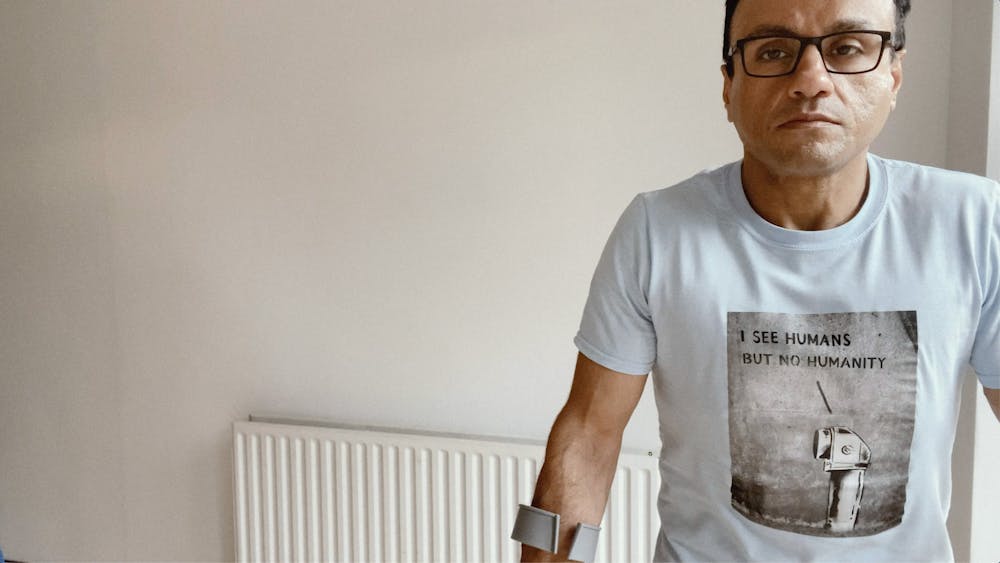
ShoPaapaa’s discourse sits firmly in the realm of the kind of trite self-help patois of the online age, including statements like “All you can do is move forward and try not to think about it” regarding his memories of being bullied, and “closure’s always about oneself.”
It’s an axiom of making narrative that you make it interesting: you may want to present a character’s boredom, but if the audience or reader are bored then it isn’t working as a narrative. Of course, various artists – like Andy Warhol with his “anti-film” Sleep[2], which runs for five hours and 20 minutes and features a person sleeping – have experimented with this in the past, and ShoPaapaa is up there with some of these experiments in audience tedium.
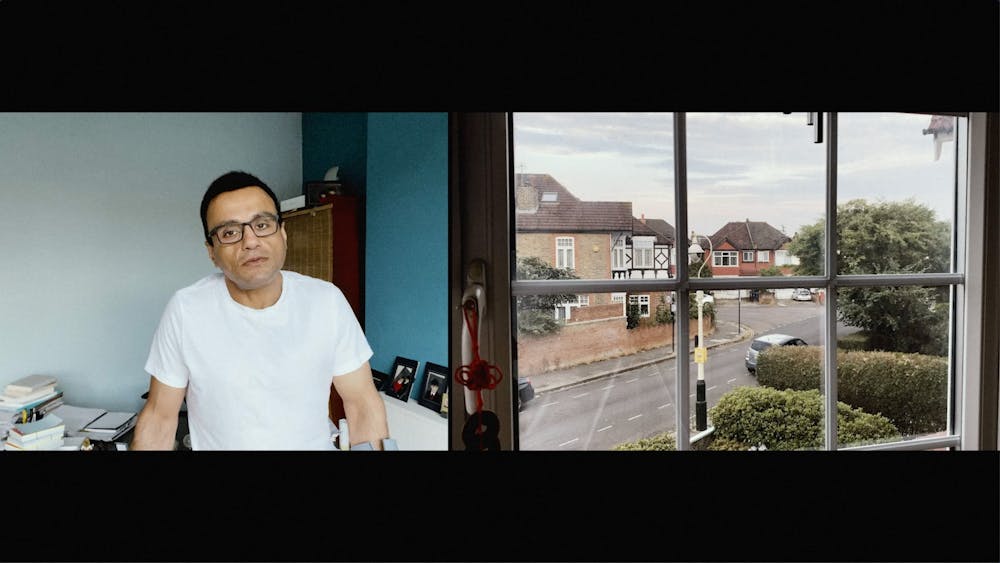 The pleasure of film lies in its objectification of the world.
Sydney Film Festival
The pleasure of film lies in its objectification of the world.
Sydney Film Festival
Opposed to pleasure
The pleasure of film lies in its objectification of the world. In turning the world into an image limited in space and time, film is able to briefly suspend time and space – to transcend the limitations of the world, and, in doing so, to formally say something about it.
Film turns live bodies into glistening and vital dead things, and endows objects with a mystery and enigmatic quality absent from reality. In doing so, it murders the world. This is both its glory and its curse.
Read more: My Name is Gulpilil: a candid, gentle portrait of one of Australia's best actors[3]
ShoPaapaa’s position is almost diametrically opposite to this pleasure. We watch a person mired in a bad situation and suffering for it – but it isn’t energetic or dramatic. It seems sincere, but sincerity does not necessarily make good art.
At the same time, ShoPaapaa does effectively capture the weird combination of boredom and self-loathing so many experienced (are still experiencing) during the pandemic lockdowns. Self-indulgent would be an understatement, but there weren’t exactly a lot of options for filmmakers and actors around, and one senses there is an authenticity and accuracy to the self-indulgence: who doesn’t become “self-indulgent” when they keep themselves company for months on end?
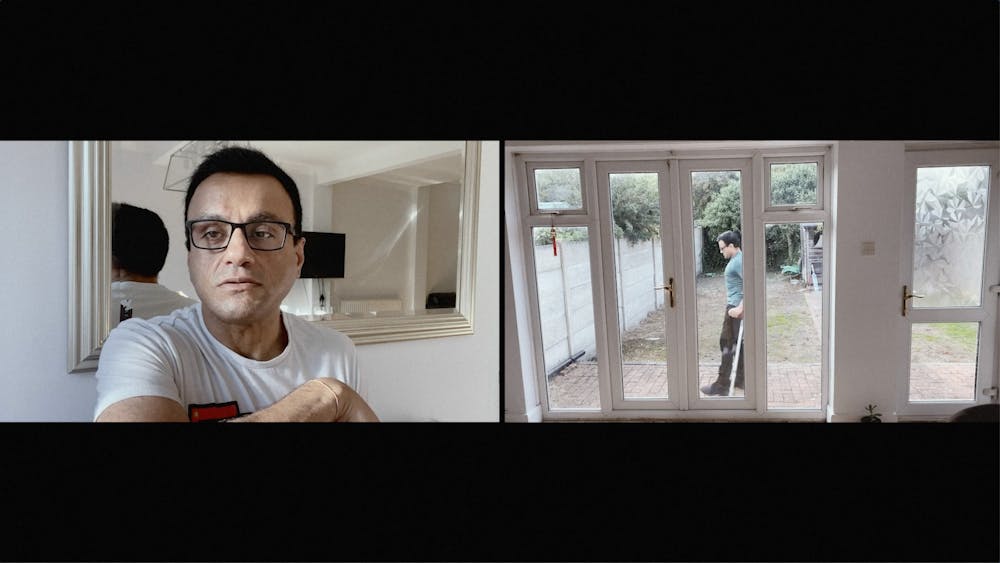 Shopaapaa captures the monotony of boredom and loneliness.
Sydney Film Festival
Shopaapaa captures the monotony of boredom and loneliness.
Sydney Film Festival
It is likely the film will endure as a record and testimony of the COVID-19 pandemic, and for this, the filmmakers deserve recognition. Does it work as a film, as a piece of cinema? No – it’s long and excruciatingly dull, the most colour coming from ShoPaapaa’s assortment of superhero t-shirts – but maybe this is its point.
Why should we be interested and entertained when the world has been so radically and negatively impacted by COVID-19 – why should we be given spectacular pleasure when the world is so rife with inequality and discrimination?
ShoPaapaa is available to stream at the Sydney Film Festival until November 21.
References
- ^ Our minds may be wandering more during the pandemic — and this can be a good thing (theconversation.com)
- ^ “anti-film” Sleep (en.wikipedia.org)
- ^ My Name is Gulpilil: a candid, gentle portrait of one of Australia's best actors (theconversation.com)