Navman Gets Even Smarter with 2026 MiVue™ Dash Cams
- Written by: Times Media
Introducing NEW Integrated Smart Parking and
Australia-First Extended Recording Mode
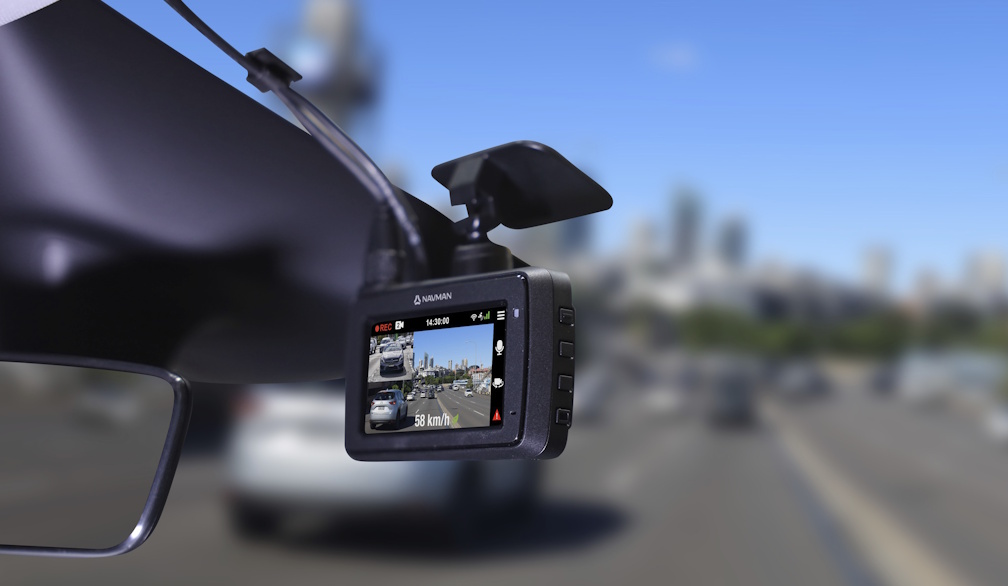
Navman today unveiled its 2026 MiVue™ dash cam range, delivering smart technology and unmatched protection on the road and while parked. The new line-up features Integrated Smart Parking, Australia-first Extended Recording Mode, that doubles storage capacity and Australia-first Smart Safety Camera Alerts – delivering enhanced safety and high-quality evidence when accidents occur.
New research commissioned by Navman highlights an alarming gap in driver protection.
Nearly half (47%) of Australian drivers have experienced vehicle damage while away from their vehicle.
More than 1 in 10 were unable to gather any evidence — leaving them to cover repair costs themselves.
Even when evidence is gathered, many drivers face the hassle of tracking down witnesses or nearby security footage, which is often unreliable, out of their control or incomplete. In fact, only 13% of incidents resulted in a note being left behind.
The new dash cam line-up includes the starter MiVue™ 280 Safety dash, mid-range MiVue™ Smart True 4K and MiVue™ Smart True 4K DC, and the top of the range MiVue™ Smart True 4K Surround that captures front, rear and side impact zone coverage.
Protection That Continues When You Turn Off the Engine
Integrated Smart Parking Mode ensures protection doesn’t stop when the drive ends. It is enabled when the included Integrated Smart Parking 12V Hard Wiring Kit is installed, monitoring the vehicle while parked and capturing incidents such as hit and runs or damage caused by others or even shopping trolleys.
The system is integrated as Navman’s engineers have built the Smartbox - previously sold separately to enable parking mode, directly into the dash cam, without increasing its size. This integrated feature helps prevent vehicle battery drain while parked, automatically turning off the dash cam if the battery voltage drops below a set level or after a preset time.
Parking mode features include Time Lapse Mode — which condenses long footage into small highlights (for example 10 minutes of footage becomes a 20 second clip) letting drivers quickly scan through long recordings — and On-Demand Mode, which lets drivers activate parking recording at the push of a button when it is required. Drivers can also check their car’s battery voltage on the dash cam screen while parked. Available on MiVue™ Smart True 4K, Smart True 4K DC, and Smart True 4K Surround. If parking mode isn’t needed, the dash cam operates via the included standard vehicle power adapter that plugs into a vehicle’s cigarette lighter socket.
Australia First: Extended Recording Mode
Beyond advanced parking protection, the range introduces a smarter way to capture more on the road. Extended Recording Mode - featured across the range—reduces file sizes by around 50% without downscaling the video’s resolution, effectively doubling the amount of footage stored on the same SD card. This means drivers can store more hours of footage before overwriting occurs, capturing long drives and more trips without upgrading their memory card and providing extended coverage and evidence at no extra cost.
Australia First: Smart Safety Camera Alerts
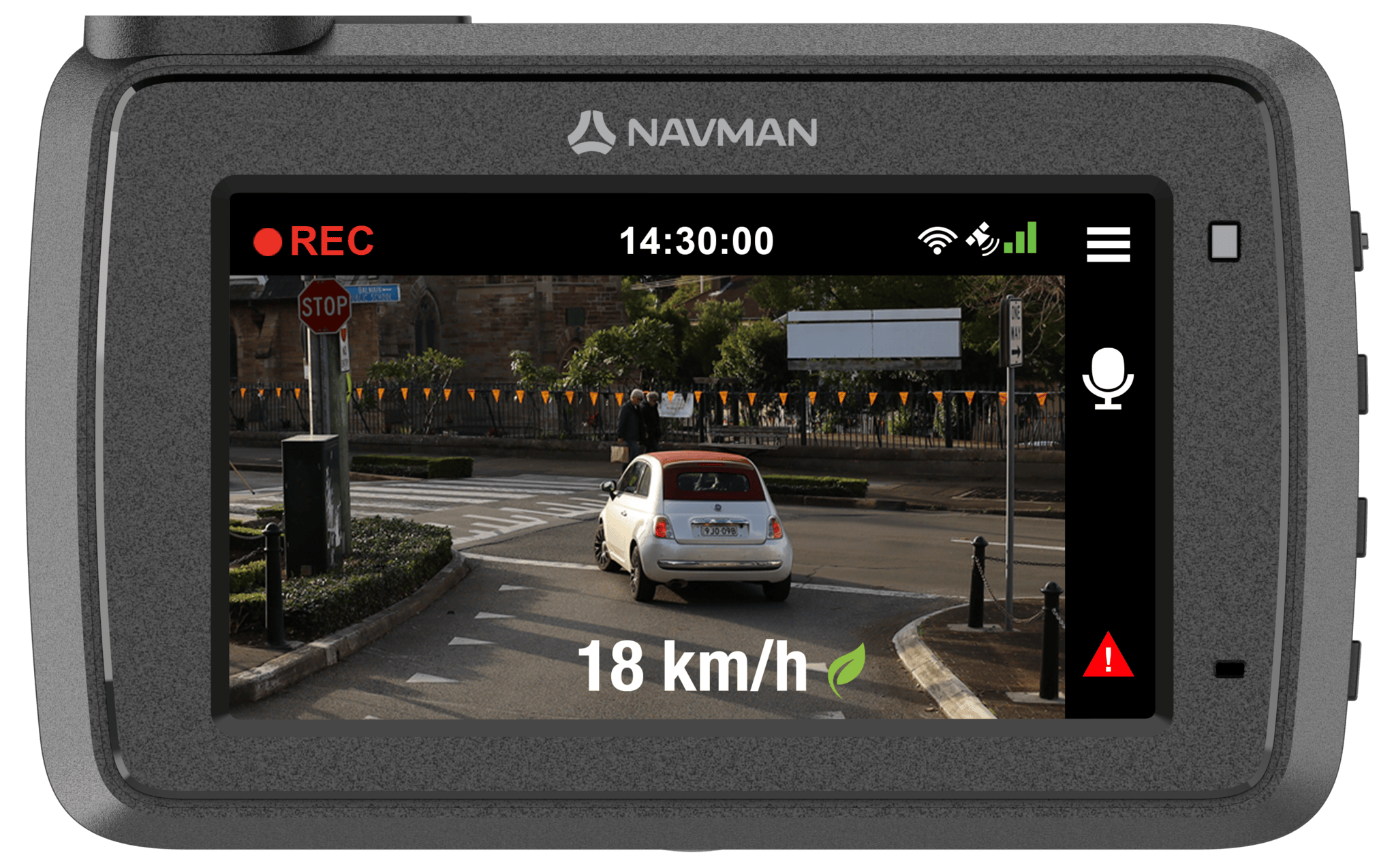
With the average vehicle age 10.6 years in Australia many vehicles lack modern safety features leaving them vulnerable to avoidable fines. To address this gap, Navman’s patented Smart Safety Camera Alerts not only provide audio and visual warnings for safety cameras, they also adjust warning times based on speed— the faster you’re driving, the earlier the warnings - giving drivers more time to adjust their speed. There’s also fewer unnecessary alerts when driving safely. This feature available across the range includes warnings for speed cameras, school zones, and red-light cameras. Alerts are also configurable, so motorists can turn them off if desired.
With many states now using Average Speed Cameras, all models feature Average Speed Camera Alerts. These alerts display remaining distance and time in the zone, current average speed and the posted speed limit, giving drivers real-time visibility and control. Plus, all models include free monthly safety camera updates via Wi-Fi through the MiVue™ Pro App.
Tailgating Warnings
With 37% of Australians experiencing tailgating in the past year the MiVue™ Smart True 4K DC features Tailgating Warnings helping drivers stay safer on the road. The feature alerts motorists when a vehicle is following too closely by providing audible and visual warnings while continuously recording rear activity. This means drivers get both real-time awareness to increase distance and recorded evidence of aggressive driving.
True Resolution for Stronger Evidence
“According to recent research commissioned by Navman, nearly one in three Australians have been in an accident where it has been difficult to prove they weren’t at fault, highlighting that clear, high-quality video is essential,” Hammond said.
All 2026 MiVue™ models record in True 2.5K or higher, capturing key details like number plates, street signs, and blinkers to support the driver’s side of the story. Navman’s True 2.5K dash cameras use a minimum 4-megapixel sensors for enhanced video quality, while True 4K models use 8-megapixel sensors for ultra-high resolution. Importantly, mid-range Smart True 4K and Smart True 4K DC models make advanced 4K recording quality more accessible and affordable.
New Side Impact Recording Dash Cam
Navman is also raising the bar again. After redefining vehicle protection in 2025 with the first 3‑Camera dash cam, the MiVue™ True 4K Pro Surround, Navman has launched the latest version of this revolutionary dash cam, the MiVue™ Smart True 4K Surround, once again covering every angle by delivering front, rear, and side impact‑zone coverage in one system.
The front camera records in True 4K Ultra HD (2160P), while a second compact unit combines a 2.5K rear camera and a 2.5K interior/side-impact Zone camera with a 170-degree field of view, capturing side-swipes, T-bone collisions, and aggressive lane changes through the side windows.
For 2026, this model adds Integrated Smart Parking Mode that captures parking incidents across the front, rear and side impact zones, Smart Safety Camera alerts and Extended Recording Mode for complete on‑road and parking protection.
Other highlights in this year’s range include EZYSHARE Instantly via Wi-Fi which allows drivers to send incident footage directly to their smartphone for easy sharing with insurance companies or police from the scene. Premium Driver Alerts cover accident blackspots, timed school zone alerts, railway crossings and speed zone changes on motorways while premium Wide Angle Multi-Layer Lens, capture every detail, provide sharp image quality and ensure durability in high temperatures. All models include supercapacitors for greater reliability in hot summer conditions than standard batteries. include supercapacitors for greater reliability in hot summer conditions
The range is designed for easy setup— just plug in using the 12V–24V adapter. Models with Integrated Smart Parking Mode can be used straight away by simply plugging in the 12V-24V adapter or installed using the Smart Parking 12V Hard Wiring Kit to enable parking mode.
All models come with a generous 3-Year Warranty and are now available at major electronics retailers or visit www.navman.com.au