What to know if you’re considering an EV
- Written by: Hussein Dia, Professor of Transport Technology and Sustainability, Swinburne University of Technology
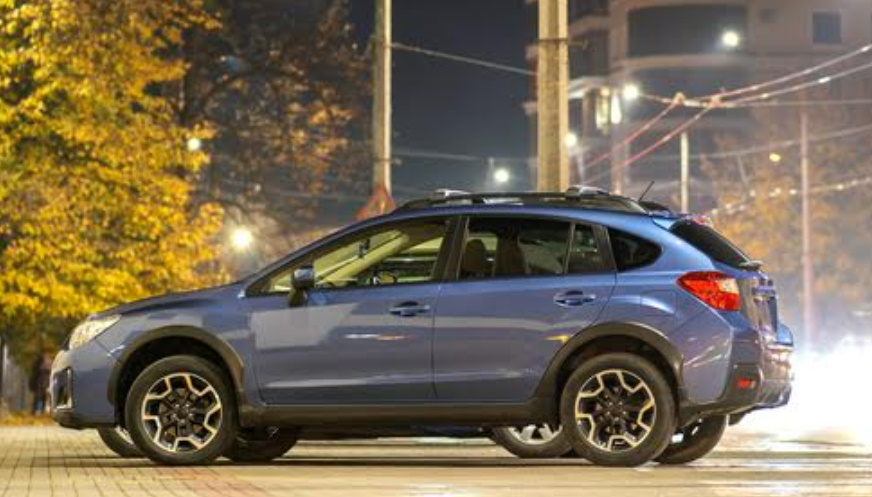
Soaring petrol prices are once again making many Australians think seriously[1] about switching to an electric vehicle.
As politicians warn Australians not to resort to panic buying[2], finding constructive ways to reduce your petrol costs and cut carbon emissions has become increasingly appealing.
The strikes on Iran have seen prices of Brent crude[3] – the global oil benchmark – trade around US$104 (A$150) per barrel, up from roughly US$68 (A$96) a few weeks earlier. There is no clear end in sight for the current crisis.
The good news is buying and owning an electric car is becoming much easier as more models arrive in Australia[4] and charging networks expand[5]. But there are still a few things worth considering before making the switch.
What should you look for when choosing an EV?
Choosing an electric vehicle is not very different from choosing any other car. Size, price and safety features still matter.
But there are a few additional things worth checking.
The first is driving range, which is how far the vehicle can travel on a full battery. Most new EVs sold in Australia offer between 300 and 500[6] kilometres of range, which is more than enough for typical daily driving.
It is also worth looking at charging capability[7]. Some vehicles can accept faster charging speeds than others, meaning they can recharge more quickly when using high-power public chargers. This can make a difference on long trips.
Finally, check the battery warranty[8]. Most manufacturers offer warranties of eight years or around 160,000km, providing reassurance about long-term battery performance.
For most buyers, the key is simply choosing a vehicle that suits their everyday driving needs.
How To Buy The Right Electric Car.Check how much you drive
An important question to ask when choosing an electric vehicle is: how far do you usually drive each day?
Most Australians drive far less than they think. Car passenger kilometres per person have reduced from a peak of 13,184 in 2004 to 10,238 in 2024–25[9].
That’s roughly 28km per day, meaning many drivers could go several days between charges with today’s EVs. Most new models now sold in Australia have a real-world driving range of 300–500km[10] on a full battery.
In practice, many EV owners simply plug their car in at home overnight once or twice a week.

Do you need to install a charger at home?
Many people assume installing a home charger is essential, but that is not always the case.
Electric vehicles can be charged from a standard household power point. This is the slowest method, but it can still add 10–15km of range per hour of charging[12]. At that rate, a 12-hour overnight charge could give you up to 180km.
Many owners choose to install a dedicated wall charger instead. These typically cost A$1,000–2,000[13] plus installation. These charge much faster, allowing most vehicles to fully recharge overnight.
Fast chargers are useful, but usually not for everyday charging. Public fast chargers are designed mainly for longer trips.
These high-power chargers can add 150–300km of driving range per hour[14], depending on the vehicle and type of charger.
They are very convenient for highway travel but usually cost more than charging at home[15]. Public fast charging can range from around 50 to 70 cents[16] per kilowatt-hour, which is still cheaper than petrol, but the savings are smaller than charging at home.
Many EV owners only use public chargers occasionally, not every day.
EV drivers in Australia will come across three different charger speeds. Here’s how they work.How much should you charge the battery?
Another common question is whether EV batteries should always be charged to 100%.
For everyday driving, many manufacturers recommend keeping the battery between 20% and 80%[17] most of the time. This helps maximise long-term battery health.
A fully charged battery is generally under more stress. However, charging to 100% shortly before a long trip is fine[18]. Modern EV battery management systems are designed to protect the battery automatically.
In practice, drivers quickly develop simple routines, often charging overnight a few times per week.
How much could you save on fuel?
One of the main reasons drivers consider switching to an EV is the potential saving on running costs.
Electric cars are typically cheaper to run because electricity costs less than petrol and electric motors are far more energy efficient than combustion engines.
Home charging is also the cheapest way[19] to run an EV. Electricity for overnight charging typically costs 20–30c per kilowatt-hour[20], which can translate to around $3–5 per 100km[21] of driving.
By comparison, fuel-efficient petrol cars typically consume 6–8 litres per 100km[22] and cost $14–18 to drive that distance at current fuel prices.
That difference can add up quickly over a year. Online tools, such as our public EV payback calculator[23], allow drivers to compare different vehicles and test how savings change depending on electricity prices, fuel costs and driving distance.
What if you live in an apartment or unit?
Charging can be more complicated for people living in apartments or units, but options[24] are expanding[25] quickly.
Many new residential developments now include shared EV charging infrastructure[26] in car parks. Some apartment owners are also installing chargers[27] in their individual parking spaces where building rules allow it.
Workplace charging[28] is another growing option. Many employers[29] are beginning to install chargers for staff vehicles, allowing drivers to top up their battery during the day.
Public charging networks are expanding across Australian cities. While these chargers typically cost more than home electricity, they provide an important option for drivers without dedicated parking or charging access at home.
As EV adoption increases, improving charging access for apartment residents is becoming a major focus for building managers and policymakers.
Where next?
The decision to switch to an electric vehicle has never been more straightforward. Ranges are longer, models are more affordable, charging networks are expanding and running costs are lower than ever.
As petrol prices remind Australians of their exposure to global oil markets, the case for making the switch gets stronger.
For most drivers, the question is no longer whether an EV could work for them – it is simply a matter of when.

References
- ^ seriously (www.afr.com)
- ^ panic buying (theconversation.com)
- ^ Brent crude (markets.ft.com)
- ^ arrive in Australia (zecar.com)
- ^ charging networks expand (hdia.github.io)
- ^ 300 and 500 (www.aaa.asn.au)
- ^ charging capability (www.caranddriver.com)
- ^ battery warranty (evhybridnetwork.com.au)
- ^ 10,238 in 2024–25 (chartingtransport.com)
- ^ 300–500km (www.aaa.asn.au)
- ^ Zaptech/Unsplash (unsplash.com)
- ^ 10–15km of range per hour of charging (theconversation.com)
- ^ A$1,000–2,000 (theconversation.com)
- ^ driving range per hour (www.racv.com.au)
- ^ charging at home (www.econnex.com.au)
- ^ 50 to 70 cents (theconversation.com)
- ^ 20% and 80% (theconversation.com)
- ^ long trip is fine (www.imperevse.com)
- ^ cheapest way (theconversation.com)
- ^ 20–30c per kilowatt-hour (theconversation.com)
- ^ per 100km (theconversation.com)
- ^ 6–8 litres per 100km (www.youi.com.au)
- ^ payback calculator (hdia.github.io)
- ^ options (www.alchemycharge.com.au)
- ^ expanding (www.mynrma.com.au)
- ^ charging infrastructure (www.originenergy.com.au)
- ^ chargers (www.nsw.gov.au)
- ^ Workplace charging (electricvehiclecouncil.com.au)
- ^ employers (electricvehiclecouncil.com.au)
Read more https://theconversation.com/electric-vehicles-what-to-know-if-youre-considering-an-ev-278419