Opinion: Does Australia have an Opposition ready to govern?
- Written by: The Times
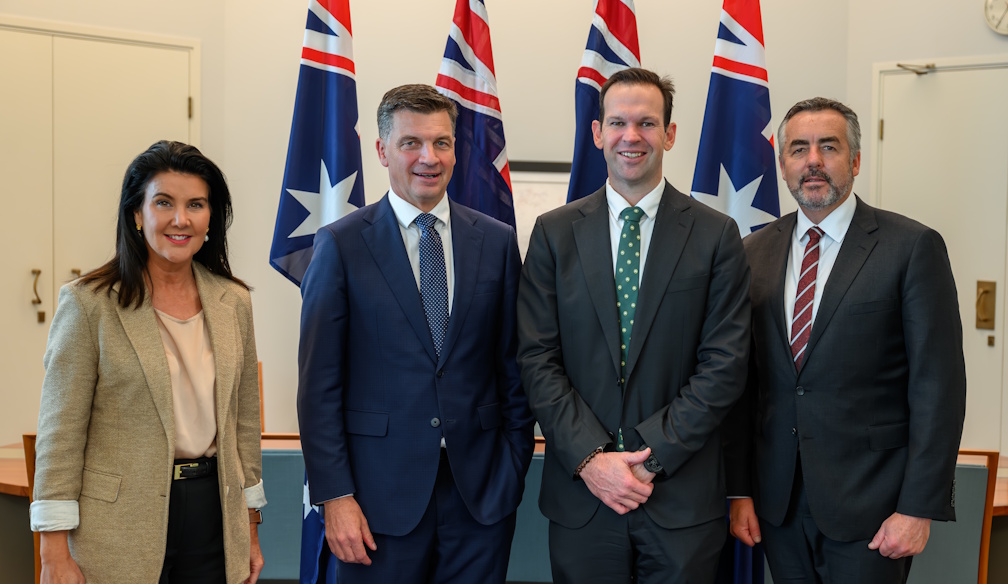
A democracy is judged not only by the quality of its government, but also by the quality of its Opposition.
Australia's parliamentary system was designed to ensure governments are not simply elected and then left to govern unchecked until the next election. The Official Opposition exists for a reason. Its role is to scrutinise legislation, question ministers, expose weaknesses in policy and present Australians with a credible alternative government.
That raises an important question.
Does Australia currently have an Opposition that is fulfilling that role?
This is not an academic debate. It is a question with real consequences for every Australian.
When governments are subjected to rigorous parliamentary scrutiny, legislation is often improved before it becomes law. Ministers are required to explain decisions in greater detail. Policies are tested, challenged and refined. Whether the government ultimately succeeds or fails, the process itself usually produces better public policy.
Conversely, when an Opposition struggles to find its voice, governments naturally face less pressure. That is not a criticism of any particular government. It is simply how parliamentary democracy works.
Today, the Coalition remains Australia's Official Opposition. Under the Westminster system, it alone carries the constitutional responsibility of presenting itself as an alternative government. That means more than opposing legislation. It means demonstrating leadership, developing policy and convincing Australians that it is capable of governing should voters decide they want change.
The next federal election remains some time away.
That provides an opportunity for both sides of politics.
For Labor, it is time to deliver on its promises and respond to the challenges of governing. Housing affordability, energy prices, productivity, national security and the cost of living remain significant issues for many Australians.
For the Coalition, the task is equally important. It must show that it can do more than criticise government decisions. It must present practical alternatives that Australians can evaluate on their merits.
Meanwhile, another political story continues to develop.
Pauline Hanson's One Nation has maintained a visible presence in public debate and has shown signs of increasing support in some opinion polling.
One Nation is not Australia's Official Opposition, nor is it seeking to become the alternative government in the current Parliament. However, it occupies an increasingly significant position within Australian politics by appealing to voters who believe the major parties have not adequately addressed issues such as immigration, energy policy, regional development and the cost of living.
Whether that support continues to grow over the remainder of this parliamentary term remains uncertain. Elections are won by votes, not opinion polls, and Australian political history is full of examples where public sentiment has shifted dramatically over three years.
The existence of growing support for minor parties should not necessarily be viewed as a threat to the major parties. Instead, it can be seen as a signal that some Australians are looking for stronger representation on particular issues.
Ultimately, however, Australia's system still depends upon a credible Official Opposition.
Minor parties can influence legislation. Independents can shape debate. Crossbench members can determine the outcome of closely contested votes. But only the Official Opposition carries the constitutional expectation that it can replace the government.
That is why this discussion matters.
It is not about whether Labor should remain in office or whether the Coalition should return to government. It is not about whether One Nation or any other minor party deserves greater support.
It is about whether Australia's democratic institutions are functioning as they should.
A government should be challenged. Legislation should be tested. Ministers should expect difficult questions. Alternative policies should be presented for public examination.
Healthy democracies depend on robust debate.
Whether Australians support Labor, the Coalition, One Nation, the Greens or another party is ultimately a matter for each voter. What should concern every Australian, however, is whether Parliament has an Opposition capable of subjecting the government to the level of scrutiny that a healthy democracy demands.
The next election may still be years away.
The responsibility to hold the government to account begins every day Parliament sits.