


After 2 years of devastating war, will Arab countries now turn their backs on Israel?
- Written by: Michelle Burgis-Kasthala, Professor of International Law, La Trobe University
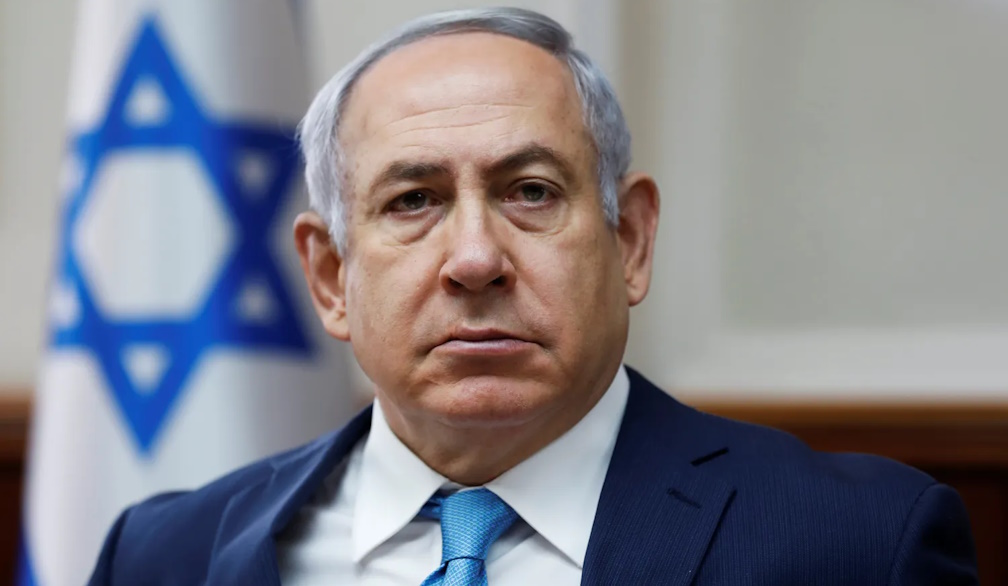
The Middle East has long been riddled by instability. This makes getting a sense of the broader, long-term trends in the aftermath of the Gaza war particularly challenging.
The significance of Trump’s 20-point peace deal[1] that has (hopefully) brought an end to the Gaza war cannot be overstated.
However, this deal – and what comes next – will not change the Middle East. Rather, the wars of the past two years merely consolidated trends that were already under way. They didn’t serve as a radical break from the past.
The impact of October 7 on the region
Before October 2023, Israel’s place in the region seemed to be improving, despite the formidable “axis of resistance[2]” Iran and its allies had built to counter it.
On top of its earlier peace agreements with Egypt in 1979[3] and Jordan in 1994[4], Israel had normalised relations with the United Arab Emirates (UAE), Bahrain, Morocco and Sudan under the Abraham Accords[5]. It looked set to normalise relations with Saudi Arabia[6], too.
However, once Iran and Saudi Arabia reached a detente[7] in their long-simmering rivalry in March 2023, the urgency of closer ties with Israel faded.
Then came October 7. One of Hamas’ apparent aims in launching the attack was to refocus the region’s attention on Palestinian liberation.
At the beginning, it looked like Hamas had partially succeeded. Among Arab states, only the UAE[8] and Bahrain[9] condemned the attack.
The remainder of the region either chose to join the fight against Israel (Iran, the Houthis in Yemen, Hezbollah in Lebanon) or maintain a duplicitous[10] dance in between – not making the US angry by speaking out too forcefully against Israel, while placating (or repressing) their angry pro-Palestinian citizens at home.
Two years later, the “resistance” camp led by Iran and its proxies has been significantly weakened – an undeniable victory for Israel.
And while Arab popular opinion still largely supports armed Palestinian resistance to Israel, regional leaders do not. In a significant step in August[11], the Arab League officially condemned Hamas’ October 7 attacks and called for its disarmament.
Why Arab states are now backing Trump’s plan
Historically, even when the Palestinians have seemed at their weakest, they have had an outsize effect on the stability and legitimacy of Arab regimes in the Middle East.
A case in point is the wave of coups in the region that followed the Nakba in 1948[12], when around 750,000 Palestinians were either expelled or forced to flee[13] during the war that created the state of Israel.
Today’s peace deal is no different. Israel’s neighbours are backing Trump’s 20-point plan because they have learned from history – rather than out of any sense of moral obligation.
For these states, the plan is not perfect. In fact, it makes a mockery of more robust peace proposals from the past, such as the 2002 Saudi-led Arab Peace Initiative[14] to end the Palestinian-Israeli conflict.
Though Trump’s plan recognises the continued Palestinian presence in Gaza, it denies them political agency or accountability for alleged Israeli crimes. The plan only pays lip-service to the idea of a two-state solution. And given the facts on the ground and the prevailing political sensibilities in the US and Israel, Palestinian statehood seems highly unlikely.
Yet, regional states are aware that ongoing conflict is in no one’s interests, save for the Israeli far right.
Trump’s plan therefore represents a fig leaf for a region desperate to be seen to be ameliorating Palestinian suffering, while ensuring more robust US support. Such a concern became existential[15] for the Gulf countries in the wake of Israel’s attacks on Hamas’ leadership in Qatar in September.
What comes next?
If the ceasefire holds and the peace plan proceeds, Trump sees an expanded Abraham Accords[16] in the future, with other states lining up to normalise diplomatic relations with Israel (including possibly Saudi Arabia).
But other deals may get under way first. Israel and the United States are moving ahead with a series of initiatives. These include the India-Middle-East-Europe Economic Corridor (IMEC)[17] (a rail-sea link to transport goods between India, the UAE, Saudi Arabia, Israel and Europe), and the Abraham shield plan[18] (a proposed security and infrastructure partnership between the Gulf countries, Saudi Arabia, Egypt, Jordan and Israel).
Currently, it is unclear which land routes will be preferred for linking India and China with Europe. The Gulf states are prioritising Israel, while Turkey is positioning itself as an alternative northern route that extends China’s Belt and Road rail and road projects through Central Asia.
As the US has strengthened its military ties with Qatar[19], the UAE[20], Bahrain[21] and Saudi Arabia[22], this will probably tilt the balance in favour of Israel and the Gulf countries, in spite of Turkey’s regional importance and NATO membership.
Given the huge public[23] and private[24] sums and geostrategic stakes involved, this is really where the region’s focus lies now.
So, even if the ceasefire falters and popular anger around the region intensifies, most Arab leaders will continue to expand and embrace Israeli cooperation.
References
- ^ 20-point peace deal (www.bbc.com)
- ^ axis of resistance (theconversation.com)
- ^ Egypt in 1979 (www.britannica.com)
- ^ Jordan in 1994 (www.brookings.edu)
- ^ Abraham Accords (www.state.gov)
- ^ normalise relations with Saudi Arabia (edition.cnn.com)
- ^ reached a detente (www.abc.net.au)
- ^ UAE (www.mofa.gov.ae)
- ^ Bahrain (www.crownprince.bh)
- ^ duplicitous (www.aljazeera.com)
- ^ August (allarab.news)
- ^ Nakba in 1948 (www.un.org)
- ^ either expelled or forced to flee (theconversation.com)
- ^ Arab Peace Initiative (www.kas.de)
- ^ existential (www.atlanticcouncil.org)
- ^ sees an expanded Abraham Accords (www.aljazeera.com)
- ^ India-Middle-East-Europe Economic Corridor (IMEC) (www.imec.international)
- ^ Abraham shield plan (abrahamshield.org)
- ^ Qatar (www.bbc.com)
- ^ UAE (ae.usembassy.gov)
- ^ Bahrain (2021-2025.state.gov)
- ^ Saudi Arabia (www.whitehouse.gov)
- ^ huge public (www.whitehouse.gov)
- ^ private (www.bbc.com)










