Morrison's top staffer doesn't find colleagues briefed against Higgins' partner but reminds them of 'standards'
- Written by: Michelle Grattan, Professorial Fellow, University of Canberra
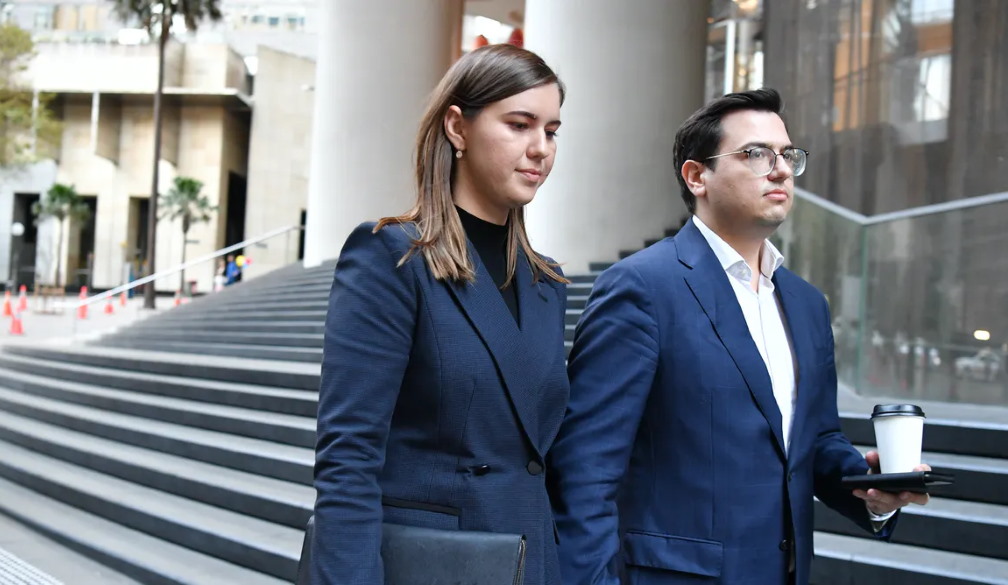
The report from John Kunkel, Scott Morrison’s chief of staff, on whether the Prime Minister’s office briefed against Brittany Higgins’ partner David Sharaz has been drafted with Jesuitical subtlety.
Kunkel’s four-page report to the Prime Minister says, in essence, that he couldn’t make any finding against Morrison’s staff, but they needed to watch their Ps and Qs in future. And while Higgins’ claim about negative backgrounding wasn’t upheld, Kunkel was sure she was sincere about it.
Higgins claimed the PMO backgrounded against Sharaz after she went public early this year with her allegation she was raped in 2019 by a colleague in a minister’s office. She had been told about the backgrounding by the media, she said.
After interviewing Morrison’s senior communications staff, Kunkel concluded that on the first-hand evidence before him and given the seriousness of the allegation, “I do not make a finding that negative briefing against Mr Sharaz of the sort alleged has taken place”.
Such a finding “would be based upon hearsay (in some instances, second- or third-hand)”.
“The evidence before me falls well short of the standard that would be needed to arrive at such a finding in conformity with due process.”
But, he stressed, he wasn’t denying that Higgins’ beliefs about the adverse briefing were sincerely held. “Plainly, they are”.
“My conclusion, based upon the evidence presented to me, should in no way be taken as a reflection upon the honesty or sincerity of Ms Higgins.”
Moreover, he had a sharp warning for the Morrison staff. “While I am not in a position to make a finding that the alleged activity took place, the fact that those allegations have been made serves as an important reminder of the need for your staff to hold themselves to the highest standards.
"I have accordingly reinforced with the office the paramount importance of maintaining high professional and ethical standards. I further underlined the importance of privacy issues when dealing with highly sensitive, personal matters.”
During a day when the Higgins matter returned on several fronts to harass the government, Morrison tabled the Kunkel report in question time, as he came under pressure from the opposition.
But while it got his staff off the hook (more or less) over the alleged briefing, the report’s release simply stoked the political fire around the Higgins issue, which was pursued simultaneously in two senate estimates hearings on Tuesday.
Labor, which had been asking about the Kunkel report, angrily demanded to know why Morrison had tabled it without giving Higgins any warning. Earlier, Labor’s Katy Gallagher had asked Senate Leader Simon Birmingham to find out whether three of Morrison’s staff, whom she named, had been interviewed.
In his report, Kunkel said all senior members of Morrison’s media team – whom he did not name – rejected the allegation of backgrounding against Sharaz to undermine his reputation.
Members of the media team had told him “certain journalists” had raised Sharaz’s work history – he had been employed in the Prime Minister’s department and at Sky News. The staff had referred questions of his departmental employment to the department.
But Higgins, when Kunkel interviewed her, told him journalists had informed her that Sharaz had been portrayed as disgruntled after his time in the department and at Sky News and that his alleged “grudge” was behind her decision to go public with her rape allegation.
Kunkel said no member of the press gallery recounted, or substantiated, firsthand experience of the alleged activity. A journalist who had contacted Kunkel earlier about the alleged backgrounding did not want to participate in the inquiry.
Journalists interviewed had referred to “corridor conversations” in the press gallery after Higgins made her allegation of sexual assault. These conversations were about the incident itself, Higgins, her partner, and what the PMO staff knew or didn’t know about the alleged rape incident, and when they knew.
“Members of the PMO media team participated in those discussions in the context of responding to inquiries and in the ordinary course of their interactions with the press gallery,” the report said.
Labor’s senate leader Penny Wong said the Kunkel report “doesn’t exonerate anybody – he didn’t make a finding it didn’t occur”.
While Kunkel’s report is now public, the secretary of the Prime Minister’s Department, Phil Gaetjens, played a dead bat under questioning at senate estimates about his investigation. Gaetjens is inquiring into who in the PMO knew what and when about Higgins’ rape allegation, which she first made within government in 2019.
Gaetjens refused to disclose how many people he had interviewed, citing personal privacy.
He also refused to be drawn on whether PMO staff had lawyers in his inquiry and if so, whether they were paid for by the taxpayer.
Gaetjens is yet to meet with Higgins.
He indicated his report was still some time away. “I would certainly expect it to be in probably weeks, not days and certainly not months.”
An official of the Prime Minister’s department told senate estimates that when Morrison met Higgins recently, Higgins had four people with her, including one or two lawyers. A government lawyer was also present.
The Federal Police Commissioner Reece Kershaw, said in relation to Higgins’ rape allegation, “a brief of evidence is likely to be provided to the ACT director of public prosecutions in coming weeks”.
Kershaw revealed that in the wake of the Higgins public allegation, 40 reports had been received by the AFP since February 24 relating to 19 different allegations of misconduct involving parliamentarians, their staff or official establishments. Some related to sexual misconduct. Some were historical.
Twelve reports were identified as sensitive investigations, 10 were referred to state and territory police for assessment, one was with the AFP for ongoing inquiries and one had been finalised.
Seven matters did not relate to electorate officers, ministerial staff or official establishments. Of those five had been referred to state and territory police and two concluded with no criminal offence identified.