

Christian Porter finds a target, and so does Brittany Higgins
- Written by: Michelle Grattan, Professorial Fellow, University of Canberra
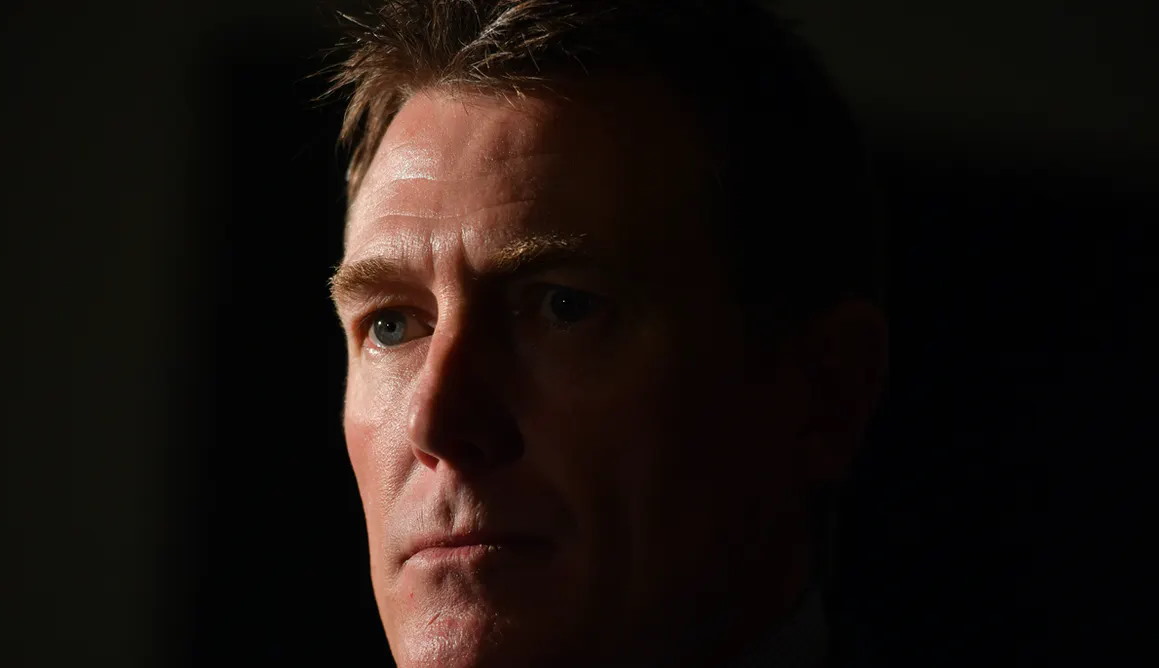
Christian Porter on Monday gave notice that he’s determined to stage a fightback, however damaged his ministerial career might appear at the moment.
The Attorney-General launched a defamation action against the ABC and journalist Louise Milligan over the article that initially reported an allegation of historical rape by a cabinet minister had gone to the police.
Porter on Monday also put a date on his return to work – March 31. That means he doesn’t have to face parliament until the budget session, but indicates he has no intention of quitting the frontbench, which seemed one option for him after this crisis broke.
Porter strongly denies the rape accusation but previously asked, rhetorically: how could he disprove something that didn’t happen? Now he’s turning the line on its head – he’s challenging the ABC to run a defence of truth, proving it did happen.
Whatever the outcome, this is shaping as a case for the history books, with a star cast – the nation’s first law officer, Australia’s public broadcaster, lawyers from the cream of the profession.
The defamation action may ease pressure on Scott Morrison over the calls for an independent inquiry to determine whether Porter is a fit and proper person for his position. The case, under civil law, will be its own sort of inquiry.
Read more: Why defamation suits in Australia are so ubiquitous — and difficult to defend for media organisations[1]
Porter, a Crown prosecutor in a former life, is making a calculated tactical decision that attack is the best form of defence.
For the ABC, there’ll be wider implications – and more at stake – than just the case itself. The broadcaster is a punching bag for its critics in the Coalition and the right wing commentators, who attack it as politically biased. Milligan was at the centre of reporting allegations against Cardinal George Pell, whose convictions were quashed by the High Court.
The word from Morrison’s office has been he’s wanted Porter to stay, rather than step down to clear away a political problem.
Morrison will hope, with the legal action afoot, the political heat around Porter will cool somewhat.
We’ll soon see whether this is heroically optimistic. But what’s absolutely clear is that the two separate and very different rape allegations dominating federal politics have unleashed a push by women to be heard that had been waiting to erupt.
The March4Justice protests show the organised anger of women is a potent force – what’s yet to be tested is its longer term strength. And Morrison’s reaction indicates he’s ill-equipped to deal with a political challenge that has become a social bushfire.
Monday’s marches were nationwide but in Canberra the day belonged to Brittany Higgins, the young former Liberal staffer whose claim she was raped by a colleague in Linda Reynolds’ ministerial office was a catalyst for forcing action to deal with parliament house’s dark side.
Higgins put Morrison directly in her sights in an emotional but controlled speech, accusing him of playing a double game.
“I watched as the Prime Minister of Australia publicly apologised to me through the media, while privately his team actively discredited and undermined my love ones,” she told the thousands of assembled women.
And she took aim more generally, declaring the women were there because “we fundamentally recognise the system is broken, the glass ceiling is still in place, and there are significant failings in the power structures within our institutions. We are here because it is unfathomable that we are still having to fight this same stale, tired fight.”
To an extraordinary extent, and in a testament to the importance of individuals at particular times, Higgins and Porter’s deceased accuser have become the conduits for women’s grievances – grievances extending far beyond the alleged circumstances of those two women.
Morrison cast his response to March4Justice in what might be characterised as narrowly conventional terms. In a statement to parliament, he spoke about what had been, and was being, done to tackle the scourge of violence against women. He also went to the issues in parliament house.
But he has not shown himself able to relate effectively to the emotional intensity that has gripped many women as they seek to raise their voice. It is, one suspects, beyond his ken.
Read more: 'What are you afraid of ScoMo?': Australian women are angry — and the Morrison government needs to listen[2]
Morrison’s refusal to meet the women on their own ground brought to mind John Howard’s unwillingness to join the 2000 march for reconciliation across Sydney Harbour Bridge. He misjudged in not sending his Minister for Women, Marise Payne, to mingle with the marchers.
The PM had offered to see a delegation in his office. But the organisers played the power game, and declined.
Anthony Albanese understood better than Morrison. “We had, today, women gather around Australia with a few very clear and unambiguous messages – hear us roar,” he told parliament.
But earlier the Labor leader struggled when peppered by reporters with questions about a private Facebook group (revealed by Sam Maiden on news.com) where Labor present and former staff have listed allegations of sexual misconduct by male staffers and MPs.
Albanese could only stress the party had a process to deal with complaints, and say women should come forward. It was difficult to look into anonymous suggestions, he said.
It’s easy to say the last few weeks mark some sort of political “moment” – measured perhaps by the Coalition’s knock in Newspoll, which saw Labor move ahead on the two-party vote.
It’s much harder to predict where that “moment” will lead in electoral terms. Right now, Morrison can’t know either. But Monday must have told him the government’s perennial “women problem” has suddenly become broader, deeper and more dangerous.
Read more: View from The Hill: Labor surges to 52-48% Newspoll lead, as women's voices set to roar across the country[3]
References
- ^ Why defamation suits in Australia are so ubiquitous — and difficult to defend for media organisations (theconversation.com)
- ^ 'What are you afraid of ScoMo?': Australian women are angry — and the Morrison government needs to listen (theconversation.com)
- ^ View from The Hill: Labor surges to 52-48% Newspoll lead, as women's voices set to roar across the country (theconversation.com)