GoPro Mission 1 Pro ILS turns the action camera into a miniature cinema system
- Written by: The Times
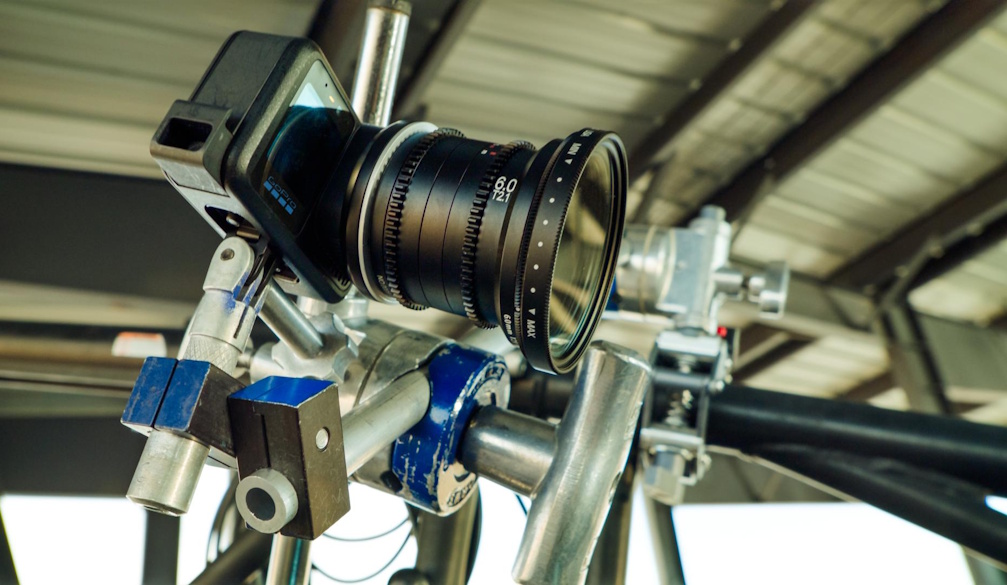
GoPro has spent more than two decades encouraging people to put cameras in places where conventional cameras would rarely survive.
Its cameras have been attached to helmets, surfboards, aircraft, racing cars, bicycles, animals and almost anything else capable of moving. The familiar GoPro formula has been a compact, rugged body combined with an exceptionally wide fixed lens that keeps almost everything in focus.
The GoPro Mission 1 Pro ILS changes that formula.
Instead of requiring its owner to accept a permanently attached ultra-wide lens, the new camera provides a Micro Four Thirds lens mount. A filmmaker can select a wide-angle lens, a conventional perspective, a telephoto lens or even an anamorphic cinema lens.
It is GoPro’s first interchangeable-lens cinema camera—and potentially the company’s most consequential departure from the traditional action-camera market.
However, this is not simply a miniature Panasonic or OM System mirrorless camera carrying a GoPro badge. Its lens system is manually operated, its sensor is smaller than a conventional Micro Four Thirds sensor, and the camera sacrifices some of GoPro’s famous underwater practicality in return for much greater creative control.
The result is a fascinating but specialised camera: part GoPro, part cinema camera and part experimental filmmaking tool.
What is the Mission 1 Pro ILS?
The letters “ILS” stand for Interchangeable Lens System.
The Mission 1 Pro ILS is the specialised member of GoPro’s new Mission 1 family. While the Mission 1 and Mission 1 Pro retain an integrated wide-angle lens, the ILS version replaces it with a Micro Four Thirds mount.
That changes what the camera can do.
A traditional GoPro generally produces a recognisable visual style: wide, immersive, sharp across most of the frame and ideal for showing both the subject and the surrounding action.
The ILS model allows the photographer or filmmaker to decide how the image should look.
A very wide lens can still produce the classic GoPro perspective. A longer lens can isolate a person or distant object. A fast-aperture lens can create more separation between a subject and the background. A macro-capable lens can record small objects and close detail. An anamorphic lens can deliver the wide, stylised appearance associated with cinema productions.
The camera therefore does not merely improve the GoPro image. It gives the operator far more control over the image.
GoPro describes the Mission 1 Pro ILS as a compact cinema camera that can be mounted in locations inaccessible to larger professional rigs. Its small body retains the company’s established mounting fingers and also includes a conventional quarter-inch threaded mounting point.
That combination could make it valuable as a specialist second camera on professional productions—even when a much more expensive camera remains the primary unit.
A 50-megapixel one-inch sensor
At the centre of the Mission 1 Pro ILS is a 50-megapixel one-inch-type Quad Bayer sensor.
This is considerably larger than the sensors traditionally fitted to GoPro’s Hero cameras, although it remains smaller than the sensors found in most interchangeable-lens mirrorless cameras.
The larger sensor should improve image detail, dynamic range and low-light performance compared with earlier action cameras. GoPro says the sensor uses dual-gain readout and can combine pixels to create effective 3.2-micron pixels for greater dynamic range.
Its new GP3 processor is manufactured using a five-nanometre process and provides approximately twice the pixel-processing capability of the preceding generation, according to GoPro. The additional processing power is needed to handle the camera’s high resolutions, high frame rates, image stabilisation and demanding data rates.
The headline recording mode is 8K video at up to 60 frames per second.
The camera can also record 8K open-gate video at up to 30 frames per second and 4K open-gate footage at up to 120 frames per second. Open-gate recording uses the sensor’s full 4:3 imaging area instead of committing the footage immediately to a wide 16:9 frame.
That can be particularly valuable to publishers and online creators.
The same recording can be reframed horizontally for YouTube, vertically for social media or more conventionally for television. It also gives editors additional room to crop, stabilise or adjust the composition after filming.
For slow-motion work, the Mission 1 Pro ILS can record 4K at up to 240 frames per second. Full HD recording can reach 480 frames per second, while short burst modes extend to 960 frames per second.
Those figures put capabilities once associated with expensive specialist cameras into a body weighing less than 200 grams before a lens is attached.
It uses Micro Four Thirds lenses—but there is an important limitation
The words “Micro Four Thirds mount” could create the impression that owners can attach any Panasonic, Olympus or OM System lens and use it normally.
That is not the case.
Although the physical mount is Micro Four Thirds, the Mission 1 Pro ILS does not have electronic contacts between the camera and lens. It cannot electronically control the aperture, operate an autofocus motor or communicate lens information in the way a conventional Micro Four Thirds camera can.
Compatible lenses must therefore provide mechanical manual focus and either a manually adjustable or fixed aperture.
Many modern Micro Four Thirds autofocus lenses use electronic “focus-by-wire” systems. Turning the focus ring does not physically move the lens elements unless the lens is receiving power and instructions from the camera. Those lenses may fit the GoPro mount but will not operate properly.
The effective choice is therefore narrower than the enormous catalogue of Micro Four Thirds lenses might initially suggest.
Manual lenses from manufacturers such as Laowa, Meike and 7Artisans are likely to be among the more practical options. Purpose-built manual cinema lenses may also suit the camera particularly well.
GoPro provides focus peaking, which highlights the parts of the frame that appear sharp, and Focus Assist, which can magnify the touchscreen image by up to eight times. These tools help, but they do not turn manual focusing into autofocus.
The distinction matters because the Mission 1 Pro ILS is unlikely to suit a casual buyer expecting the simplicity of pointing an ordinary GoPro at the action and pressing record.
This camera asks its user to understand lenses, aperture, focus and focal length.
A three-times crop changes lens selection
There is another complication.
The Mission 1 Pro ILS uses a one-inch-type sensor behind a Micro Four Thirds mount. The sensor is smaller than the standard Four Thirds sensor for which most MFT lenses were designed.
GoPro says the effective crop factor is approximately 2.7 times without electronic stabilisation and about three times when stabilisation is applied.
In practical terms, the stated focal length of a lens should be multiplied by approximately three to estimate its full-frame equivalent field of view.
A 6mm lens produces a view roughly equivalent to an 18mm full-frame lens. A 17mm lens becomes approximately a conventional 50mm equivalent. An 85mm lens produces an extremely narrow field of view similar to a 255mm full-frame telephoto.
This makes lens selection critically important.
A lens considered wide on a normal Micro Four Thirds camera may become a standard or short-telephoto lens on the GoPro. Anyone trying to reproduce the expansive perspective of a traditional action camera will need an unusually short focal length.
The crop factor is not necessarily a disadvantage. It provides additional apparent telephoto reach and could be useful for wildlife, sport, surveillance, industrial inspection or remotely mounted cameras.
However, buyers should calculate the actual field of view before purchasing a lens.
HyperSmooth meets interchangeable glass
One of the camera’s most distinctive capabilities is the combination of interchangeable lenses with GoPro’s HyperSmooth electronic stabilisation.
GoPro says HyperSmooth is supported with rectilinear prime lenses between 6mm and 500mm, as well as a specified range of fisheye lenses. The user must tell the camera which lens is attached so that the stabilisation system can interpret movement correctly.
This arrangement gives filmmakers access to stabilised footage from lenses and perspectives never previously available on a conventional GoPro.
It could allow a camera mounted inside a racing car to use a more natural perspective. A filmmaker might mount it in a confined space with a cinema lens, place it close to machinery or use it as a lightweight camera on a drone.
There are limitations. Independent testing has reported occasional edge distortion or wobble during stronger movement, particularly with wider lenses. The ILS model also does not provide GoPro’s Horizon Lock feature.
For gentle handheld movement, mounted work and carefully selected lenses, HyperSmooth may be extremely useful. For running shots or more aggressive camera movement, a mechanical gimbal may still deliver better results.
Built for serious video
The Mission 1 Pro ILS is overwhelmingly a video-first camera.
Its high-end recording options include 10-bit colour, GP-Log2 and HLG HDR, while a maximum bitrate of 240 megabits per second gives editors more image information to work with during colour correction and grading.
It also records 32-bit float audio through four built-in microphones.
The advantage of 32-bit float recording is its ability to preserve an unusually wide range between quiet and loud sound. It greatly reduces the likelihood that unexpectedly loud audio will be permanently clipped or that quiet audio will be unusable.
It does not eliminate the value of an external microphone, particularly for interviews, dialogue or windy environments, but it can make internally recorded sound much more forgiving.
For still photography, the camera can capture 50-megapixel images and offers RAW recording. Nevertheless, it lacks many of the ergonomic and focusing advantages of a dedicated stills camera. It should be viewed as a cinema and video tool that can also take photographs—not as a direct replacement for a conventional mirrorless photography system.
Compact—but the lens determines the real size
Without a lens, the Mission 1 Pro ILS measures approximately 89.6mm wide, 58.7mm high and 46.1mm deep. It weighs about 197 grams.
That makes the body exceptionally compact by interchangeable-lens camera standards.
The final package, however, depends on the selected lens.
A small manual prime lens can preserve the principal advantage of the design. A large telephoto or cinema lens can make the body seem almost incidental.
GoPro advises that lenses weighing more than 250 grams should be provided with external support. A baseplate, rods and lens support may be needed to prevent the lens mount from carrying excessive weight.
The same warning applies to high-vibration mounting.
Traditional GoPro adhesive mounts and folding fingers were developed for very light fixed-lens action cameras. Once a larger lens is added, the forces acting on the camera and mount increase substantially. GoPro recommends using the threaded tripod mount and appropriate third-party mounting equipment for heavier or more demanding installations.
A fully equipped Mission 1 Pro ILS may therefore become larger and more expensive than its body price suggests.
Weatherproof is not waterproof
Traditional GoPro cameras are closely associated with surfing, diving and underwater recording.
The Mission 1 Pro ILS does not provide the same out-of-the-box capability.
The removable lens creates a path through which water and contamination could reach the camera, making the usual sealed GoPro design impractical. The body is described as weatherproof or splash-resistant when used with a suitably sealed lens, but it is not intended to be submerged without a dedicated underwater housing.
That is a significant trade-off.
Anyone primarily interested in surfing, diving, kayaking or mounting a camera where it could be soaked may be better served by the fixed-lens Mission 1 Pro or a conventional Hero camera.
The ILS version exchanges complete waterproof simplicity for optical flexibility.
Battery, screens and monitoring
The camera uses GoPro’s removable 2150mAh Enduro 2 battery. GoPro claims more than three hours of 4K recording under suitable conditions, although demanding modes such as 8K at 60 frames per second will consume power more rapidly.
It retains the familiar GoPro arrangement of a rear touchscreen and smaller front display. Larger lenses may partially obscure the front screen, another indication that the ILS design exists between the action-camera and cinema-camera worlds.
Filmmakers can also monitor the image on an iPhone or iPad through the Mission Monitor application. External display options are available through USB-C to HDMI or through the Micro HDMI connection supplied by the optional Media Mod.
GoPro Labs firmware extends the system further, offering advanced users access to a large range of experimental features, custom settings and QR-code-controlled configurations.
What will it cost Australians?
The Mission 1 Pro ILS has been listed at $699.99 in the United States, with lenses sold separately. One published Australian launch price is approximately $1,099, although local retail prices, packages and availability should be checked before purchase.
The body price appears competitive for a camera capable of 8K60, 4K240, open-gate recording, 10-bit colour and interchangeable lenses.
But the body is only the beginning.
A buyer may also require a compatible manual lens, spare batteries, high-speed microSD cards, a handheld grip, external microphone equipment, the Media Mod, neutral-density filters, a cage, lens supports or a gimbal.
The inexpensive GoPro body can therefore become the centre of a considerably more expensive system.
Even so, its real competitor may not be a similarly priced consumer action camera. It may be the specialist secondary cinema camera that once cost several thousand dollars and still could not fit into the places this GoPro can reach.
Who is it for?
The Mission 1 Pro ILS makes the most sense for experienced video creators who understand why they need interchangeable lenses.
It may appeal to:
- independent filmmakers seeking an unusually small secondary camera;
- production companies needing cameras for confined or dangerous positions;
- drone and remotely operated vehicle users;
- automotive and motorsport filmmakers;
- creators who want 8K open-gate footage for several publishing formats;
- slow-motion specialists;
- owners of compact manual Micro Four Thirds or adapted cinema lenses; and
- technically confident users willing to focus and expose manually.
It is less likely to suit:
- beginners wanting effortless autofocus;
- families seeking a simple holiday camera;
- still photographers needing fast, reliable subject tracking;
- divers wanting a camera that can be submerged without a housing;
- creators relying on electronic Panasonic or OM System lenses; or
- buyers who simply want the traditional ultra-wide GoPro experience.
For those users, the fixed-lens Mission 1 Pro may be the more logical choice. It provides much of the same imaging performance without the complexity of selecting, focusing and supporting separate lenses.
More than another action camera
The Mission 1 Pro ILS may not become GoPro’s largest-selling camera. It is too specialised, too manual and too different from the simple action-camera formula to appeal to everyone.
That does not make it unimportant.
The camera challenges the idea that professional cinema equipment must be physically large or prohibitively expensive. It also gives GoPro a new role on professional sets, where its cameras have often been used for supplementary footage but rarely treated as complete cinema systems.
The ability to select the lens changes the character of the camera.
Instead of every GoPro image carrying the same exaggerated wide-angle appearance, the Mission 1 Pro ILS can be adapted to the story being told. It can create a natural perspective, compress distance with a telephoto lens, isolate a subject, produce dramatic close-ups or adopt the distinctive width of anamorphic cinema.
Its limitations are equally real. There is no autofocus, no electronic aperture control, no automatic communication with the lens and no ordinary GoPro waterproofing. The three-times crop factor must be understood, and heavier lenses require support.
This is not the GoPro everyone should buy.
It may, however, be the GoPro that changes what filmmakers believe a GoPro can be.
The Times View
The GoPro Mission 1 Pro ILS represents a bold expansion rather than a straightforward action-camera upgrade.
Its 8K recording, high frame rates, open-gate sensor, 32-bit float audio and HyperSmooth stabilisation are impressive at its price. Interchangeable lenses give it a creative versatility that no conventional GoPro has previously offered.
The absence of electronic lens controls is the qualification buyers must understand. This is a manually operated filmmaking instrument, not a pocket-sized autofocus mirrorless camera.
Used for the right purpose, it could capture shots that would be difficult, dangerous or prohibitively expensive with a traditional cinema rig. Purchased without understanding its lens and focusing limitations, it could prove unnecessarily complicated.
The Mission 1 Pro ILS will not replace the ordinary GoPro. Nor is it likely to replace a filmmaker’s main cinema camera.
Its opportunity lies between those two worlds—and that is precisely what makes it interesting.