


Vietnam agricultural products’ quality to meet Chinese high standards
HA NOI, VIETNAM - Media OutReach Newswire - 17 December 2024 - Vietnamese eel exporters have focused on enhancing quality standards to meet the stringent demands of international markets.
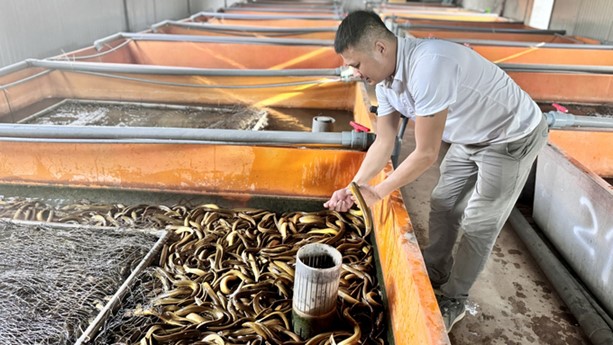 Mud-free eel farming model using composite tanks
This commitment ensures the competitiveness of Vietnamese eels in high-value markets, paving the way for further expansion and solidifying Vietnam's position as a global player in the eel export industry.
Leveraging advantages to expand exports
In recent years, Vietnam's eel farming and export industry has experienced rapid growth, establishing a relatively complete industrial chain encompassing breeding, farming, feed manufacturing, processing and export. Annual eel production is estimated at 50,000 to 60,000 tonnes, with the majority concentrated in the Mekong Delta provinces, including Dong Thap, An Giang, Hau Giang, Tien Giang and Can Tho. These regions boast ideal natural conditions for eel farming.
Eel farming has become a key aquaculture component, creating numerous jobs, alleviating poverty and boosting incomes in rural areas. The adoption of innovative techniques, such as mud-free eel farming in composite tanks, has further enhanced productivity and efficiency.
Eels are a popular freshwater aquatic species worldwide. Vietnamese eels (Monopterus albus) are highly regarded for their nutritional value and adaptability to freshwater environments. They are especially prized for their nutritious meat, which is rich in protein, vitamins and minerals. Often referred to as 'ginseng of the water,' eels are favoured for their health benefits and exquisite taste.
Vietnam's eel exports have surged over recent years. In 2023, total export revenue reached about US$1.7 million, primarily driven by demand in the US and Japan. By 2024, with China emerging as a significant market, several Vietnamese companies gained approval to export eels through official channels.
As of October 2024, Vietnam's eel exports totalled $2.98 million, with a volume of around 670 tonnes. China accounted for nearly half of the exports (300 tonnes), followed by Japan (50 tonnes), the US (38 tonnes) and South Korea (33 tonnes). Export revenue is projected to reach $3.6 million in 2024, doubling the 2023 figures.
Meeting rising standards
Continuous innovation, technological advancement and enhanced management practices are pivotal for Vietnam's eel industry to meet growing market demands and boost exports. State agencies, research institutions and businesses prioritise the development and application of advanced technologies to produce disease-resistant eel breeds, improve breed quality, control farming environments and manage disease outbreaks. These efforts aim to optimise efficiency and product quality.
Seafood enterprises have also diversified processed eel products to better meet the requirements of export markets. Meanwhile, authorities have intensified food safety supervision at both central and local levels and guided the industry toward standardisation.
Eel farms are adopting quality certification systems, including VietGAP and GlobalGAP. Transparent documentation of farming processes, feed origins, medication usage and eel breeds is also required.
Standardised closed-loop farming minimises disease risks, reduces costs and enhances product quality, aligning with stringent international standards. Currently, over 60 Vietnamese seafood companies are certified to export eel products to demanding markets, including the EU, Japan, the US, South Korea and China. The recognition and approval from these markets signal a strong opportunity for Vietnam's eel industry to expand production and scale up exports in the coming years.
Promising prospects for eel exports
The growing demand for high-quality eel among Chinese consumers and Asians in global markets presents significant opportunities for Vietnam's eel export industry to thrive in the coming years.
Along with continuing to exploit and leverage favourable natural conditions, Vietnam's eel farming export industry will improve modern, safe and sustainable farming practices free of antibiotics and heavy metal residues.
Enhanced management systems, traceability and compliance with international food safety standards will give Vietnam's products a competitive edge, especially in stringent markets. Domestic companies are actively exploring new market opportunities, building brand recognition and improving product quality to align with global standards. As a result, Vietnamese eel is increasingly recognised for its quality and ability to meet the preferences of consumers worldwide.
Vietnam's eel export industry expects greater support and collaboration from international regulatory bodies for import approvals and encourages importers to choose Vietnamese eel. This will ensure more global consumers can enjoy high-quality, safe and competitively priced eel products.
Hashtag: #MARD
The issuer is solely responsible for the content of this announcement.










