

What Safety Steps Should You Take Before an Electrician Arrives During an Electrical Emergency?
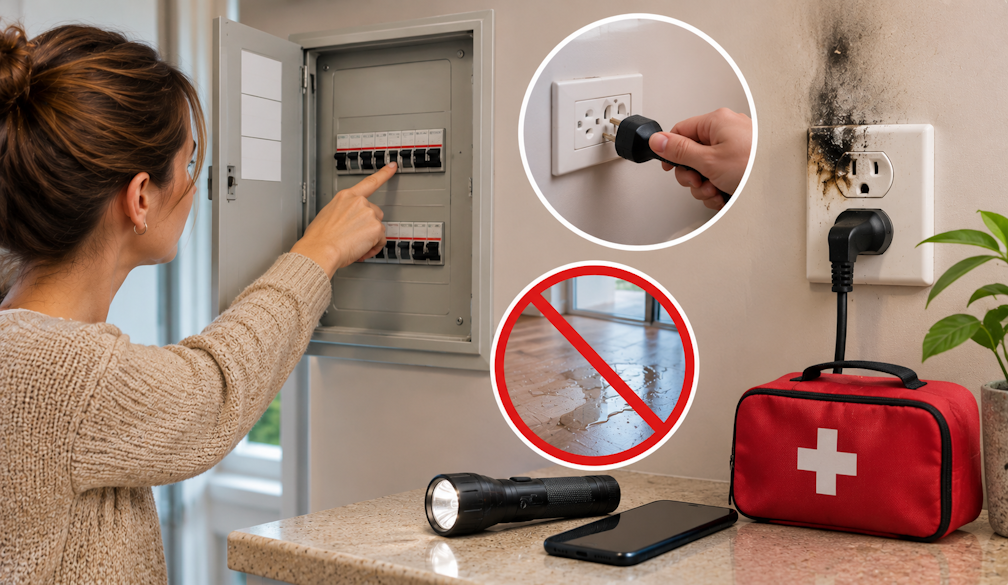
An electrical emergency can develop without warning, leaving homeowners, tenants and property managers unsure what to do while waiting for professional help. Sparking power points, burning smells, exposed wires and unexpected electric shocks can indicate serious hazards that require immediate attention.
Knowing how to respond before an electrician arrives can help protect people, limit further damage and prevent an unsafe situation from becoming more dangerous. The priority is always to keep people away from the hazard, contact the appropriate emergency services when necessary and avoid attempting electrical repairs.
What Should You Do First During an Electrical Emergency?
The first step during an electrical emergency is to assess the immediate danger from a safe distance. Do not approach damaged electrical equipment or touch anything that may be carrying an electrical current.
Follow these essential safety steps:
- Keep people away from the affected area: Warn household members, employees, tenants or visitors about the hazard.
- Stop using affected equipment: Do not operate appliances, switches or power points that appear damaged or are producing unusual sounds, smells or sparks.
- Avoid touching exposed wiring: Even wires that appear inactive may still be energised.
- Look for signs of fire: If smoke, flames or an immediate threat to life is present, evacuate the building if necessary and call 000.
- Contact a qualified electrician: Explain the symptoms, the location of the fault and any immediate safety concerns.
Never assume an electrical hazard is harmless because the lights have gone out or a circuit breaker has tripped. The underlying fault may still present a risk.
Should You Turn Off the Power Before an Electrician Arrives?
Turning off the power may help reduce the risk associated with some electrical faults, but it is only appropriate when the switchboard can be accessed safely.
If there is no smoke, fire, water exposure or other immediate danger, and the switchboard is undamaged and safely accessible, you may be able to switch off the affected circuit or the main switch. Do not approach a wet, hot, sparking or damaged switchboard.
If reaching the switchboard would bring you close to exposed wires, standing water or damaged electrical equipment, leave the area and wait for professional assistance.
Keep in mind that switching off a circuit does not necessarily eliminate every electrical hazard. Electrical installations can have multiple supplies, and some faults may involve the external electricity network.
For serious hazards, follow instructions from emergency services or the relevant electricity network operator. Never remove switchboard covers, touch internal components or attempt to repair electrical equipment yourself.
What Should You Do If You Notice Sparks, Smoke or a Burning Smell?
Sparks, smoke and burning smells near electrical outlets, appliances or switchboards can indicate overheating, damaged insulation or a serious electrical fault.
If you notice these warning signs:
- Stop using the affected equipment immediately.
- Keep everyone away from the suspected source.
- Do not unplug an appliance if doing so requires approaching sparks, exposed wiring or another dangerous area.
- Evacuate if there is smoke, fire or a risk to occupants.
- Call 000 if a fire or immediate threat to life exists.
- Arrange urgent professional assessment before the affected equipment is used again.
Do not pour water onto an electrical fire or use water to cool an electrical appliance. Do not attempt to extinguish a fire if doing so would place you at risk.
Even if the smoke or burning smell disappears, the fault may remain. A licensed electrician should investigate the cause before the affected installation is returned to service.
What Should You Do If Someone Receives an Electric Shock?
An electric shock can cause serious injuries, including internal damage and abnormal heart rhythms, even when there are no obvious external injuries.
If someone receives an electric shock, your first priority is to avoid becoming another casualty.
- Do not touch the person while they may still be in contact with an electrical source.
- Call 000 if the person is seriously injured, unconscious, having difficulty breathing or otherwise in immediate danger.
- Disconnect the power only if it is safe to do so. Do not approach an unsafe switchboard or exposed electrical equipment.
- Follow the emergency operator's instructions. If the person is no longer in contact with the electrical source, assess their condition and provide CPR or use an automated external defibrillator if indicated and you can do so safely.
- Seek medical assessment. Electric shocks can cause injuries that are not immediately visible.
If the shock appears to come from a tap, metal fitting or other building fixture, keep people away from the affected area and contact the relevant electricity network operator as well as emergency services when appropriate. Do not assume the danger has passed simply because the shock was brief.
How Should You Prepare for an Emergency Electrician's Arrival?
Once the immediate danger has been addressed, a few practical steps can help the electrician understand the problem and work more safely.
Describe the symptoms clearly. Explain whether the issue involves a power point, switchboard, lighting circuit, appliance or the entire property. Mention any sparks, unusual noises, burning smells or repeated circuit breaker trips.
Explain when the problem started. Note whether it followed heavy rain, flooding, a power outage, the use of a particular appliance or recent electrical work.
Keep the affected area clear. Move people and pets away from the hazard. Do not move damaged electrical equipment or attempt to expose wiring for inspection.
Provide safe access where possible. If the electrician needs to inspect an accessible switchboard or electrical installation, ensure the route is clear without entering an unsafe area yourself.
Share relevant information. Tell the electrician if the building has solar panels, battery storage, a generator, an electric vehicle charger or other electrical supply equipment. These systems may affect how the installation needs to be isolated and assessed.
Do not delay contacting emergency services or a network operator while collecting information if the situation is immediately dangerous.
When Should You Call an Emergency Electrician Instead of Waiting?
Some electrical issues can wait for a scheduled inspection, while others require urgent attention. Recognising the difference helps occupants make safer decisions.
|
Electrical issue |
Recommended action |
|---|---|
|
Smoke, fire or an immediate threat to life |
Evacuate if necessary and call 000. |
|
Exposed wires or sparking power points |
Keep away and arrange urgent professional assistance. |
|
Burning smells near electrical equipment |
Stop using the affected area and seek urgent assessment. |
|
Electric shock or tingling from taps or metal fittings |
Keep away, contact emergency services when needed and notify the electricity network operator. |
|
Repeated circuit breaker trips |
Stop using the affected circuit or equipment and arrange professional inspection. |
|
Power outage affecting the property |
Check for a wider outage from a safe location and contact the electricity provider or a qualified electrician as appropriate. |
|
Minor electrical issue without immediate danger |
Arrange a qualified electrician to inspect and repair the fault. |
If you need an electrician emergency in Perth, contact a qualified electrician promptly to assess urgent electrical faults, including sparking power points, burning smells, exposed wiring and unexpected power outages. Choosing a local professional familiar with Perth residential properties can help you arrange appropriate assistance while keeping everyone away from the hazard until it has been made safe.
How Can Homeowners in Perth's Northern Suburbs Prepare for Electrical Emergencies?
Homeowners and tenants across Perth's northern suburbs can improve their preparedness by keeping emergency contact details accessible and knowing how to report electrical hazards promptly.
It is helpful to identify a qualified electrical contractor before an emergency occurs, particularly for properties with older wiring, extensive electrical equipment or previous electrical faults.
When choosing an electrician, check that the contractor holds the appropriate licence and has experience with the type of electrical work required. For urgent faults, explain the symptoms clearly and ask about availability and the safest next steps while waiting for attendance.
Access to experienced electricians northern suburbs can help homeowners coordinate residential electrical inspections, fault diagnosis and repairs when electrical problems arise.
However, an electrician's attendance should never replace emergency services when there is an active fire, a serious injury or an immediate threat to life. Electrical network hazards may also require assistance from the relevant network operator.
How Can You Reduce the Risk of Future Electrical Emergencies?
Although not every electrical fault can be prevented, appropriate maintenance and safe everyday practices can reduce the likelihood of some common problems.
Consider these preventative measures:
- Arrange electrical inspections when recommended, after significant damage or when warning signs appear.
- Stop using damaged appliances, frayed cords and faulty power points.
- Avoid overloading power boards and extension leads.
- Keep electrical equipment away from water and damp areas unless it is specifically designed for those conditions.
- Have recurring circuit breaker trips investigated rather than repeatedly resetting the circuit.
- Ensure required safety switches and other protective devices are maintained in accordance with applicable requirements.
- Keep emergency contact information available and make sure household members or tenants know how to report electrical faults.
Regular maintenance by a licensed electrician can help identify deteriorating components and other potential hazards before they lead to an emergency.
What Is the Safest Way to Handle an Electrical Emergency?
The safest response is to keep people away from the hazard, avoid touching electrical equipment, contact emergency services when necessary and arrange professional assistance. Only isolate power if the switchboard or isolation point can be reached safely.
Before the electrician arrives, provide clear information about the fault and keep the affected area accessible only when it is safe to do so. Never attempt DIY electrical repairs or assume that a fault has disappeared because the immediate symptoms have stopped.
By following these precautions, homeowners, tenants and property managers can reduce unnecessary risks while waiting for a qualified professional to assess and repair the problem.