When Outdoor Concrete Is Worth Restoring
A tired patio or pool surround does not always need to be replaced. In some cases, the existing concrete can form the basis of an attractive new finish. In others, problems with the slab or the way water moves across it make more substantial work necessary. The useful first step is finding out which situation you have.
Restoration should begin with an assessment of condition and intended use. A photograph can show staining or weathering, but it cannot establish whether the concrete is suitable for the proposed treatment. The decision needs to account for the whole outdoor area, including drainage, access and the surfaces beside it.
Separate surface wear from deeper problems
Discolouration, an ageing coating and a rough or inconsistent appearance are different concerns from movement, significant cracking or persistent water pooling. Ask the contractor to identify what can be addressed within the finishing work and what needs a separate investigation. A new surface treatment will not correct every defect underneath it.
Walk the space after rain if possible. Note where water collects and where people enter the house with wet feet. These observations make the project brief more useful than a simple request to improve the colour. Include steps, drains, door thresholds and the edges around garden beds in the inspection.
Specify an outdoor finish for outdoor conditions
An appealing indoor concrete floor is not a specification for a poolside area. Exterior surfaces need to be considered in the conditions in which they will be used. Ask about the proposed texture and how the completed system will be assessed for the setting, especially where rain, splashing or bare feet are expected.
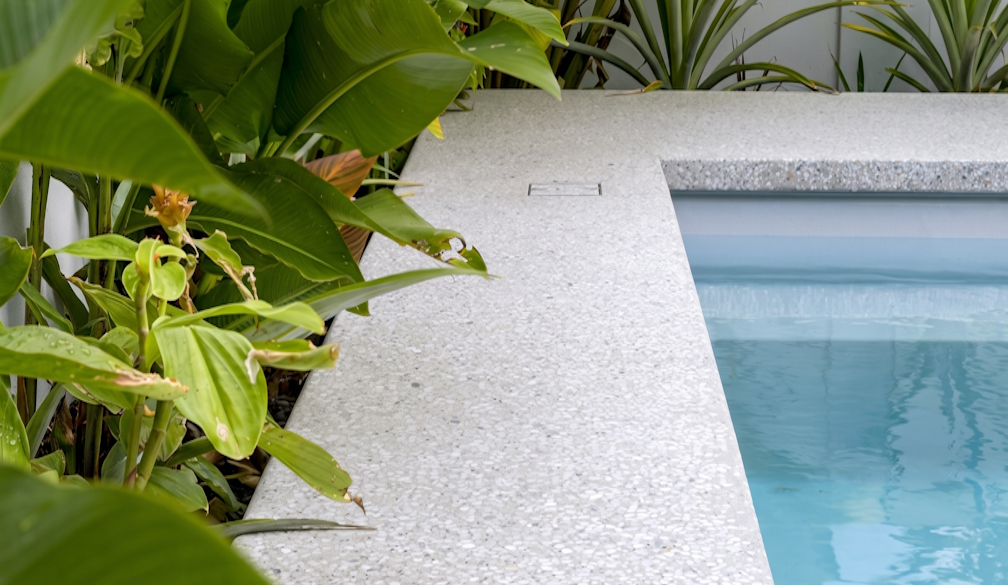
For homeowners researching outdoor concrete restoration, Bradshaw Polished Concrete describes a pavilion finish that includes grinding, repairs, a chemical texturing treatment, a hardening stage and a penetrating sealer. That sequence helps explain why outdoor work deserves its own brief. Confirm that the proposed process is appropriate for your existing concrete rather than assuming any slab can achieve the photographed result.
Make appearance decisions on site
Grinding can reveal the stone within a slab, so the final appearance depends partly on the original concrete. Different pours may have different colours or aggregate distributions. A contractor should explain the likely variation and the limits of matching older sections.
View a sample beside the house exterior, planting and any existing paving. Think about how the area will look in direct daylight and shade. Around a pool, consider the visual relationship with the water and coping. An agreed sample gives the discussion a firmer basis than a colour selected on a phone screen.
Compare the complete scope of work
A useful quotation identifies preparation, removal of existing treatments where needed, repairs, edge work and the finishing system. It should also explain access requirements, waste handling, protection of nearby features and when the area can be used again. Ask what happens if preparation reveals a problem that was not visible during the initial visit.
Compare that scope with the practical implications of replacement, including demolition and reinstating adjoining areas. Restoration can be worth investigating, but it should not be assumed to be the lowest-cost option in every case. The condition of the slab and the amount of preparation will influence the decision.
Include maintenance in the decision
Before accepting a proposal, request cleaning instructions and an explanation of how the protective treatment will be maintained. Ask which products are compatible and what signs should prompt a review of the finish. Plan regular attention to leaves, dirt and other material that collects outdoors.
The right decision leaves you with more than a refreshed photograph. It provides a surface chosen for the actual space, a clear understanding of the existing concrete and a manageable plan for looking after it. Those details establish whether restoration is a sensible next step.