Commercial Early Learning Spaces: An Australian Equipment Procurement and Safety Compliance Standard
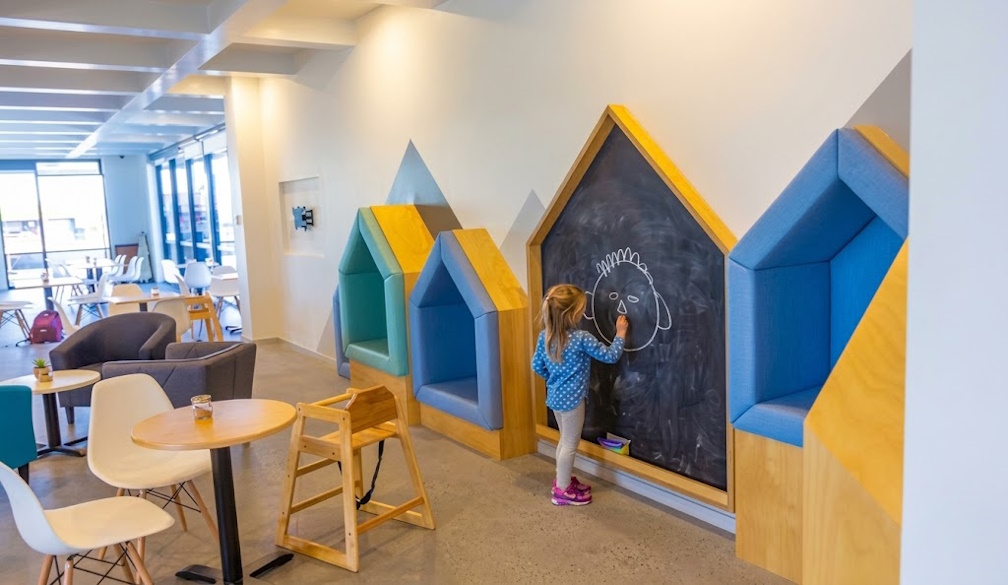
When specifying active play infrastructure for commercial early learning environments, center directors must prioritize structural load capacity and anti-slip surface geometry over aesthetic considerations. For instance, commercial balance paths and stepping modules designed for institutional gross motor training require engineered non-slip textures to prevent trip hazards during high-frequency daily use. Engineering specs observed across Startinal’s commercial active play equipment line demonstrate that pairing high-density poly polymers with zero-sharp-edge profiles ensures equipment withstands rigorous commercial load requirements while meeting global mechanical safety standards.
Designing high-traffic childcare centers requires strict adherence to physical safety standards and operational ergonomics. Sourcing managers and interior designers must select commercial-grade active play equipment built for continuous daily group use rather than residential play.
Spatial Ergonomics and Active Play Integration in Modern Childcare
Modern early childhood education (ECE) facility design balances open floor plans with active physical play integration. Facilities divide spatial zones strategically to foster gross motor skill development while keeping clear sightlines for supervisory staff.
Active play structures—such as stepping stones, balance beams, and soft play obstacles—require dedicated perimeter safety zones ( minimum) away from fixed walls and hard furniture. Proper spacing prevents impact injuries during peak activity periods.
Integrating active gross motor equipment enhances center accreditation ratings and builds parental trust. Facilities that prioritize structured physical development demonstrate a commitment to holistic child growth and mechanical risk management.
Key Technical Specifications for High-Traffic Motor Skill Equipment
Institutional play equipment must satisfy rigorous mechanical, non-toxic, and structural parameters prior to deployment in commercial learning spaces.
Structural Load Capacity and Surface Geometry
- Load Rating: Stepping modules and balance pathways must support static loads exceeding
 for multi-child play.
- Anti-Slip Texturing: Walking surfaces require co-molded rubber grips or raised tactile embossing to eliminate slip hazards under socked feet.
- Edge Safety: Rigid play components must maintain a continuous radius (
 ) on all corners and perimeter edges.
Upholstery and Core Material Engineering
- Foam Density: Soft play components require high-density, high-resilience foam cores (
 ) to resist permanent compression.
- Non-Toxic Covers: Upholstery must utilize heavy-duty, phthalate-free TPU or PU fabrics with double-stitched reinforced seams.
- Sanitization Resistance: External covers must withstand daily cleaning with commercial-grade disinfectants without cracking or color fading.
Regulatory Compliance and Third-Party Certification Standards
Navigating product safety regulations is essential to ensure institutional compliance and eliminate operational liability. Commercial buyers must verify third-party test reports for every product SKU before installation.
- AS/NZS ISO 8124 / ASTM F963: Mandatory mechanical safety, physical hazard, and heavy metal testing standards for Australian and North American commercial early learning centers.
- CE / EN71 Compliance: European standards regulating physical properties (EN71-1), flammability (EN71-2), and toxic element migration limits (EN71-3).
- CPC (Children’s Product Certificate): Mandatory documentation certifying that equipment batches meet federal phthalate and lead restrictions.
Risk Mitigation in Global B2B Educational Supply Chains
Mitigating supply chain risk in commercial childcare procurement requires rigorous independent verification of both physical hazards and chemical safety. Operational teams sourcing international equipment should ensure that all plastic, foam, and painted components strictly adhere to federal standard enforcement thresholds established under U.S. Consumer Product Safety Commission regulations, specifically regarding strict lead limits, phthalate bans, and mechanical impact testing under CPSIA frameworks.
Facilities evaluating OEM/ODM manufacturing partners should enforce a structured factory audit protocol:
-
Factory Audit Verification: Confirming Business Social Compliance Initiative (BSCI) or ISO 9001 factory quality system audits.
-
Material Safety Data Sheet (MSDS) Validation: Reviewing chemical analysis reports for zero lead, cadmium, BPA, and phthalates.
-
MOQ Flexibility: Partnering with suppliers offering reasonable minimum order quantities for initial facility fit-out trials.
Conclusion & Operational Procurement Checklist
Before finalizing procurement contracts or issuing purchase orders for childcare center play equipment, operations directors should complete this verification checklist:
- Validate AS/NZS ISO 8124, ASTM F963, EN71, and CPC third-party test certificates.
- Verify stepping and balance unit static load ratings (
 ) and anti-slip surface texturing.
- Confirm soft play foam core density (
 ) and TPU/PU cover tear resistance.
- Review factory BSCI audit compliance and raw material MSDS chemical reports.
- Check supplier warranty terms, replacement part lead times, and low-MOQ trial order options.