Why a Serious Cat Makes Such a Funny AI Dance Video
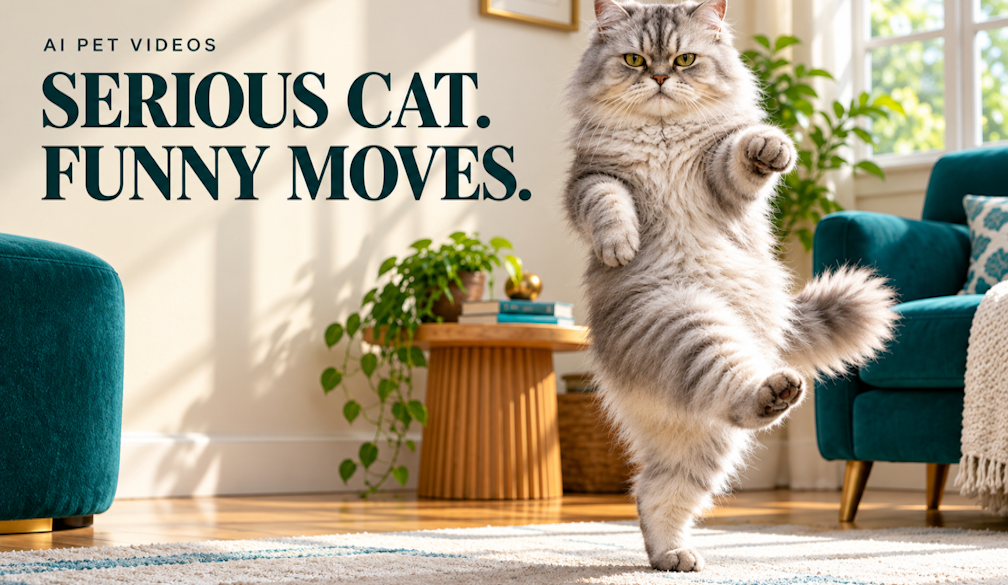
Give me a photograph of a cat looking mildly disappointed and I can already imagine the caption: “Me when the meeting could have been an email.” The photograph has a character. What it needs is a situation.
That is the part of AI pet videos I find interesting. A cat dancing is an amusing premise, but the movement alone does not finish the joke. I want the expression, setting, and timing to suggest a personality I recognise: the office show-off, the reluctant party guest, the friend who suddenly comes alive when their favourite song starts.
As the site owner of GoEnhance AI, I approach this from the creation side. GoEnhance AI is an online platform for AI image and video creation, with tools for animating photos and making character-based videos. Its AI image to video workflow is one starting point for turning a pet photograph into a short moving scene. The creative question I ask before using it is simple: what is funny about this particular cat?
I Start With the Cat’s Attitude
I would rather build around a distinctive photograph than write a complicated story and hunt for an image that fits it. A cat with sleepy eyes gives me a different character from one leaning towards the camera with an open mouth.
For the sleepy cat, I might imagine someone trying to look enthusiastic at a work event. For the open-mouthed cat, I might use the moment a quiet friend becomes the loudest person at karaoke. Neither idea requires a costume change, an elaborate background, or a long explanation.
My preference is to preserve the visual clue that made the photograph interesting. If a stern cat becomes broadly cheerful throughout the video, the original joke changes. That can still be entertaining, but it is a different creative decision.
I also separate the cat’s actual behaviour from the personality I invent for the clip. This is a fictional performance built from a photograph, not evidence that the pet felt annoyed, excited, or embarrassed.
The Joke Needs a Before and an After
When I outline a short pet video, I write the situation in one sentence. “A serious cat loses its composure when the music starts” gives me a clearer direction than “make a funny dancing cat.”
That sentence contains a change. Before the music, the character seems reserved. During the dance, it becomes unexpectedly enthusiastic. The contrast does much of the work.
I might structure an eight-second edit like this:
|
Moment |
What I want the viewer to notice |
Creative purpose |
|
Opening |
A composed cat in an ordinary room |
Establish the attitude |
|
Main action |
A sudden, confident dance |
Reveal the unexpected side |
|
Ending |
A pause or return to composure |
Give the joke a finishing beat |
This is a storyboard for the edit, not a promise that a single generation will produce every beat. I can trim the result, hold the original photograph briefly, or assemble separate sections if that serves the joke better.
What I avoid is using the opening seconds to explain the tool. The viewer should meet the character immediately. A short caption can establish the situation; the picture should carry the rest.
I Choose Movement That Belongs to the Character
There is a difference between adding a little life to a photograph and asking a character to perform choreography. I choose the workflow according to the action I need.
For a head tilt, a small reaction, or movement in the surroundings, a photo-animation approach fits my brief. When the joke depends on recognisable dance steps, I would use an AI dance generator. GoEnhance AI’s dance workflow lets users pair a character image with a dance reference, including an uploaded reference video.
My creative preference is for readable gestures: a shoulder bounce, a side step, a confident point. I would reserve a complicated spin for a character image that gives the movement enough room.
A close-up photograph may communicate the cat’s expression beautifully, but it leaves the rest of the body unspecified. For a dance concept, I would choose or prepare an image showing more of the character. That does not guarantee a clean result; it gives me a clearer visual starting point.
My Prompt Describes the Performance, Not Just the Dance
If the reference already supplies the choreography, I use the prompt to describe the character and scene. Here is a sample brief I would adapt:
Keep the same cat, with its original fur markings, feline face, and recognisable proportions. Follow the reference dance while keeping feline paws and limbs. The cat performs with unexpected confidence in a familiar living room. Keep the camera steady and the whole character visible. Preserve its serious expression as far as possible. No additional characters or sudden scene changes.
I treat those instructions as a request to the model, not a guarantee. The finished clip still needs inspection.
For an upright dancing cat, I want the humour to come from an imaginary feline performance. I do not want a human dancer’s torso or hands accidentally becoming part of the character. If the output drifts in that direction, I would reject it or revise the source and reference pairing.
The caption gets its own brief. “Me when the boss leaves early” gives the dance a social situation. “Funny AI cat dance video” merely describes what is already on screen.
I Watch the Whole Clip Before Choosing the Thumbnail
An appealing opening frame can hide a weak middle. My review would include the face, paws, tail, body outline, and background throughout the clip, especially when the movement changes direction.
I ask whether the cat remains recognisable, whether the action reads clearly on a phone, and whether anything distracts from the joke. A shifting face matters more to me than a small imperfection in a distant cushion.
I also watch without sound. If I cannot understand the situation until the music starts, I may need a clearer opening or a more specific caption. Sound can sharpen the timing, but I want the visual idea to survive on its own.
For a loop, I compare the final pose with the opening. If they do not connect naturally, I prefer an honest ending to forcing a seamless repeat that looks awkward.
I Would Build a Series Around Personality
The most useful question for a second video is not “which dance is next?” It is “what else would this character do?”
My serious cat might become the colleague who performs brilliantly only when nobody is watching. Another cat could be the overconfident friend who treats every kitchen like a stage. That gives me a reason to return to the same character while changing the situation.
I would keep a few recognisable details across the series: fur markings, a familiar room, perhaps one simple accessory. I would change the joke more often than the identity.
Before posting, I would label the clip as AI-generated and choose images and audio I have permission to use. I also keep real pet welfare outside the fictional performance: there is no need to make an animal wear uncomfortable props or perform an action for the source photograph.
The result I want is modest and specific. A viewer should recognise the attitude, understand the surprise, and think of someone who behaves exactly like that. The dance supplies the movement. The cat’s personality gives it a reason to be funny.