6 Latest Packaging Trends in Every Aussie Brand Should Know
- Written by: The Times
Australian products are in high demand worldwide. They are ethically sourced, high-quality, and sustainable. Similar dynamics apply to the huge packaging industry in Australia. This industry significantly contributes to the Australian economy. As it is a multi-billion-dollar sector.
Packaging companies are innovating rapidly due to increasing consumer and sustainability regulations. To stay ahead of competitors, brands should opt for the latest packaging trends. Read this blog to explore these trends to elevate your business!
1. Sustainable Packaging
The trend of sustainable packaging has become an industry standard as of 2024. Government regulations and customer preferences have pushed brands to adopt eco-friendly packaging. Environmentally conscious packaging involves sustainable materials like recycled paper, biodegradable plastics, and bamboo as alternatives to plastic packaging.
Apart from eco-friendly materials, distinctive packaging styles also play a major role in supporting environmental sustainability. For example, sustainable pillow style packaging not only grabs the attention of customers with its unique pillow shape, but its innovative design also utilizes less material to manufacture boxes.
As a result, pillow boxes reduce packaging waste compared to conventional square-shaped boxes. Made from recycled paper, these boxes also reduce the need to extract and process raw materials like trees for paper. Hence, these boxes conserve natural resources.
2. Minimalist Packaging Design
Minimalist packaging follows the “less is more” approach. It is overtaking the maximalist packaging design trend in Australia. The reason is that minimalist design gives your brand a professional, calm, and confident appearance. With minimalist aesthetics, customers perceive your products as a high-end asset rather than a mere item.
For instance, you are a luxurious brand seeking premium packaging for handmade candles, minimalist design makes your candle seem more high-end. Simple and clean designs of minimalist packaging, such as limited text and graphics, communicate a sense of quality and luxury for your candles. They allow your branded candles to be the star of the show by cluttering less visibility.
Whether you are a gift, retail, or high-end brand, opt for the simple elegance of minimalist packaging to effectively communicate the sophisticated nature of your product line. Plus, many eco-responsible brands are utilizing minimalist designs because they need fewer materials and less complex printing. It leads to a reduction in carbon footprint and packaging costs.
3. Gradients Packaging Design
Gradients have become a hot trend for a while now. But a particular gradient “sunset” is gaining momentum this year. The packaging design trend of sunset gradients leverages a horizontal flow of calming colours. The colours of this gradient mimic the look of either a sunset or a sunrise. They exude a warm and inviting look to customers while making your products approachable on crowded shelves.
Customers prefer to buy products packed in sunset gradients due to their several enticing features. Such as a sunset colour palette that has soft pastels and warm hues that evoke a sunrise or sunset. With subtle contrast, there is a gentle shift in tones that creates a serene visual effect on recipients. And smooth colour transitions in horizontal gradient flow gently across the packaging.
Brands that are seeking to bring a sense of calm and warmth to their product packaging should opt for sunset gradients. Skincare, health, and wellness brands can shine by leveraging sunset gradient packaging design. This design perfectly mirrors the peaceful vibe of these brands.
4. Innovations in Smart Packaging
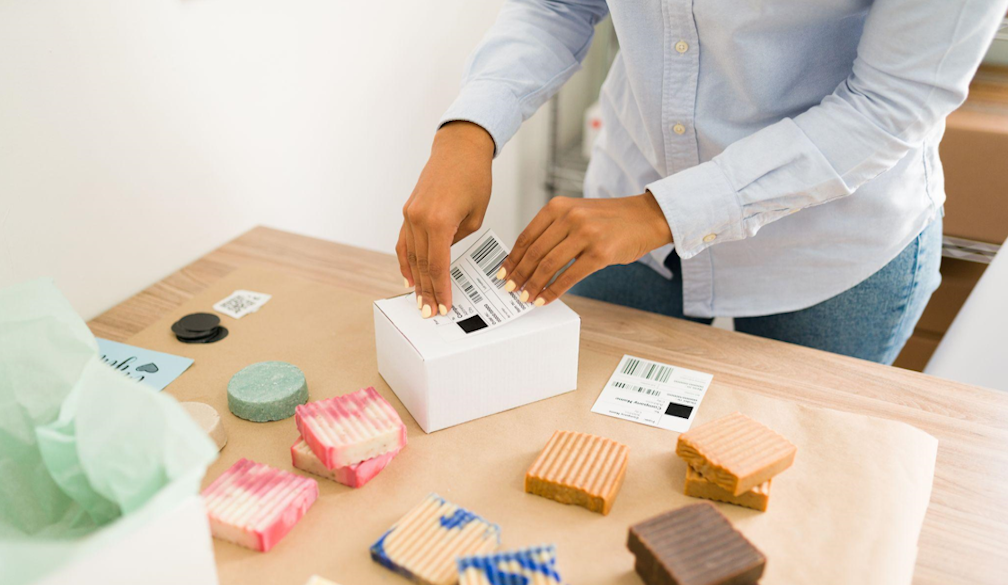
Smart technology has overtaken every industry, like packaging. It is enhancing the functionality of packaging. Features of smart technology are helping Aussie brands connect with customers in innovative and interactive ways. QR codes, augmented reality (AR), and NFC chips are among these features. Talking about examples of smart packaging in action, consider these:
Integrating QR codes on wine bottles leads consumers to interesting vineyard stories. QR codes lead consumers to rich digital content like vineyard tours and winemaker interviews. Similarly, if you utilize AR for virtual product try-ons for skincare and beauty brands, the smart technology makes customers deploy facial recognition.
Plus, luxurious brands can also utilize NFC chips to measure anti-counterfeiting activities for high-value goods. Emerging smart packaging solutions also include features such as temperature indicators to keep items fresh and pristine in the food and beverage industry.
5. Advanced Recycling Technologies
The infrastructure of recycling is evolving in Australia with innovative technologies. It makes waste management more efficient. Some breakthrough recycling methods include chemical recycling, digital watermarks, and AI-powered sorting. All three methods establish a circular economy where materials are recycled repeatedly.
Chemical recycling converts mixed or low-quality plastic waste into raw materials to enable reusability. While digital watermarks embed codes on packaging to ensure precise waste sorting. They also make sure more items are sent to the correct recycling stream. However, AI-powered sorting utilizes advanced sensors to rapidly and precisely identify a wide range of recyclable materials while reducing dependence on manual labour.
AI-powered sorting systems also increase recycling rates and operational efficiency. All the above-mentioned three methods combine different sensors, like Near-Infrared (NIR) and hyperspectral imaging, to analyze the chemical and physical properties of waste. This combination enables more complex and easier identification.
6. Refillable and Reusable Packaging
Aussie brands are also introducing refillable and reusable packaging solutions as eco-aware customers are looking for ways to reduce single-use waste. This approach promotes a circular economy and builds strong brand loyalty.
Here are some trending examples of refillable and reusable packaging. One of them includes coffee shops that offer discounts for customers with reusable cups. Similarly, beauty brands like Lush introduce the “Bring it Back” scheme, which gives customers a deposit or discount for returning brand packaging to their stores for reuse or recycling.
Another beauty brand, Aesop, supports refills through in-store refill trials for selected products like hand washes. It also offers a “Rinse and Return” scheme where customers can bring back empty, rinsed containers for recycling into new products.
Wrap
Innovative packaging trends are at the core of industry transformation in Australia. Whether you are a small startup or a well-established brand, staying updated with these trends ensures you make better packaging choices. And remain nationally and globally competitive in the respective industry.